Mednosis LogoMednosis
Aug 7, 2026

Clinical Innovation: Week of August 07, 2026

8 research items

Clinical Innovation: Week of August 07, 2026
Safety Alert
The System That Turned Paper Charts Into Digital Medical Records
IEEE Spectrum - BiomedicalPromising3 min read

How a 1960s Space Company Invented Digital Medical Records

Key Takeaway:

Pioneered in the 1960s, the first hospital-wide electronic health record system replaced paper charts using light pens, establishing the technical foundation for modern digital healthcare platforms.

Before computers entered hospitals, patient records were kept in paper folders inside heavy filing cabinets, making them slow to retrieve and easy to misplace. In the 1960s, aerospace engineers and doctors created the first hospital-wide electronic record system, known as MIS-I. Because most doctors could not type, engineers integrated a special light pen that worked like a modern touchscreen stylus, allowing clinicians to point at options on a screen to order medications, view test results, and update charts. Although some doctors initially resisted the new technology, this breakthrough laid the groundwork for the modern digital health records used by clinics and hospitals today.

What this means for you

This retrospective celebrates the 1960s invention of the first digital medical chart system, which introduced electronic records, order entry, and touch-like pens to replace bulky, error-prone paper folders in hospitals.

Citation:

IEEE Spectrum - Biomedical, 2026. Read article →
Safety Alert
ArXiv - AI in Healthcare (cs.AI + q-bio)Exploratory3 min read

A New Blueprint to Safely Run Hospital AI Systems

Key Takeaway:

This framework coordinates specialized AI agents with built-in human checkpoints to safely streamline hospital documentation across major electronic health record systems.

Many hospitals try to use artificial intelligence to help with tasks like booking appointments, sorting patient records, and writing clinical notes. However, most simple AI chatbots struggle to work safely and reliably with complex hospital software. Researchers designed a new system framework that allows multiple specialized AI helpers to work together as a governed team. Instead of letting AI act entirely on its own, this system enforces strict data privacy protections and requires human-in-the-loop checkpoints before critical actions are taken. This organized approach helps ensure hospital software runs smoothly and keeps patient information secure.

What this means for you

Researchers have designed a secure system to help hospitals safely manage multiple AI tools for tasks like scheduling and records. It is an early architectural blueprint and not yet standard practice.

Citation:

ArXiv, 2026. arXiv: 2608.07627 Read article →

Safety Alert
ArXiv - Quantitative BiologyExploratory3 min read

Can Blood RNA Patterns Help Computers Spot Multiple Sclerosis?

Key Takeaway:

Researchers created an open machine-learning benchmark analyzing blood RNA for multiple sclerosis, though clinical blood tests remain experimental and years away from practice.

Diagnosing multiple sclerosis (MS) currently requires clinical exams, brain scans, and ruling out other conditions. While blood contains genetic activity (RNA) that reflects immune system changes, scientists need standardized ways to test how well artificial intelligence can detect these patterns. Researchers developed MS-MLB, an open testing platform that lets scientists fairly compare computer algorithms using public blood data. When testing several tools, a Gradient Boosting model accurately identified MS cases with high sensitivity. However, this benchmark is solely a research tool to help scientists build better algorithms and cannot replace standard medical evaluations.

What this means for you

Scientists built a shared testing tool to study multiple sclerosis using blood RNA patterns. This is early research, not a diagnostic test, so current clinical care should not change.

Citation:

ArXiv, 2026. arXiv: 2608.05196 Read article →

Google News - AI in HealthcarePromising3 min read

First Health System Earns Official Certification for Safe AI Use

Key Takeaway:

Hackensack Meridian Health is the first health system to achieve the Joint Commission's responsible AI certification, establishing an accredited standard for safe clinical machine learning deployment.

As artificial intelligence becomes more common in hospitals, ensuring that these computerized tools are safe and dependable is critical. Hackensack Meridian Health has become the very first hospital network to earn an official certification for responsible health AI from the Joint Commission, a leading healthcare standards organization. This recognition shows that the health system has strong safety rules, privacy protections, and monitoring systems in place before using AI tools to assist doctors and nurses. For patients, this means the technology being used in their care is held to high safety standards, helping to prevent errors and improve overall medical care.

What this means for you

A major health system has met official safety standards for using artificial intelligence, providing reassurance that automated tools are being used safely and responsibly in patient care.

Citation:

Google News - AI in Healthcare, 2026. Read article →

Google News - AI in HealthcareExploratory2 min read

Most Young Adults Now Consult AI Before Seeing a Doctor

Key Takeaway:

Most Gen Z and millennial individuals now consult artificial intelligence before visiting a doctor, highlighting a major generational shift in how patients access initial healthcare information.

A recent report reveals that younger generations are turning to artificial intelligence as their first stop for medical guidance. According to the findings, 76% of Generation Z and 63% of millennials consult AI tools before reaching out to a traditional doctor or clinic. This shift shows how quickly modern technology is changing the way everyday people search for health advice and manage symptoms. While AI can offer fast and convenient general information, it is not a substitute for a licensed medical professional. Patients using these tools should always verify symptoms and treatment plans directly with a healthcare provider to ensure safe, accurate care.

What this means for you

While many young adults use AI for quick health advice, artificial intelligence cannot replace professional medical evaluations. Always confirm AI-generated health guidance with a qualified healthcare provider before making medical decisions.

Citation:

Google News - AI in Healthcare, 2026. Read article →

Best Examples Of Digital Health For Patients With Intellectual Disability
The Medical FuturistExploratory2 min read

How Digital Health Tools Are Finding Powerful New Roles

Key Takeaway:

Repurposing existing digital health technologies offers critical new ways to support patients with intellectual disabilities beyond standard medical uses over the coming years.

Modern digital health tools like health apps and monitoring devices are usually designed for general wellness or standard medical conditions. However, new discussions show that these existing technologies can take on vital new roles to support people with intellectual disabilities. By looking beyond the original uses of these tools, healthcare innovators hope to address unique everyday challenges and improve overall support for patients and their caregivers. While this concept is still emerging and requires further real-world testing, it represents an encouraging step toward making modern health technology more inclusive and helpful for everyone.

What this means for you

Digital health tools are being explored in new ways to help individuals with intellectual disabilities, but families should continue following established medical advice while these approaches develop.

Citation:

The Medical Futurist, 2026. Read article →

Trump’s AI protectionism has come for robotics
MIT Technology Review - AIExploratory2 min read

Why Today's Humanoid Robots Are Still Clumsy and Unready

Key Takeaway:

Humanoid robotics remains an early-stage, nascent technology with significant motor limitations, meaning reliable autonomous physical assistance in clinical settings is still many years away.

Humanoid robots are making headlines, but current technology is far from mature. Today's robots are still in an early, experimental phase and often struggle with basic physical movements. In practice, they frequently lose balance, trip over obstacles, and have much worse hand coordination than a human toddler. While researchers hope to build advanced machines that can help humans in daily life and work, the technology is not yet reliable or safe enough for complex environments like hospitals or homes. For now, humanoid robots remain an emerging experiment rather than practical helpers.

What this means for you

Humanoid robots are still in early development, often clumsy, and struggle with basic hand tasks. They are not ready for use in healthcare or home assistance anytime soon.

Citation:

MIT Technology Review - AI, 2026. Read article →

Guideline Update
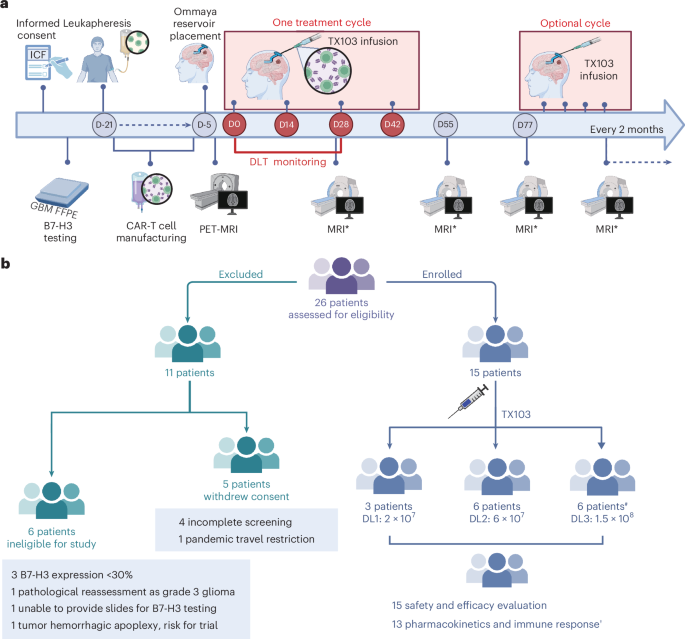
Intracranial delivery of B7-H3-targeting CAR-T cells for recurrent glioblastoma: a phase 1 trial
Nature Medicine - AI SectionExploratory3 min read

Brain-Delivered Immune Cells Show Promise Against Recurrent Glioblastoma

Key Takeaway:

Direct brain delivery of targeted immune cell therapy safely produced early anti-tumor benefits in recurrent brain cancer, though routine clinical availability remains several years away.

Glioblastoma is a severe, hard-to-treat brain cancer that frequently returns after treatment. In this early-stage clinical trial, researchers tested a new approach by delivering specially engineered immune cells, called CAR-T cells, directly into the brain. These modified cells were programmed to seek out and attack a specific marker on the cancer cells called B7-H3. The trial showed that this direct brain delivery was safe, caused no severe treatment-stopping toxicities, and provided encouraging early signs of fighting the cancer. While this offers new hope for treating difficult brain tumors, the therapy is still in early testing and requires further validation in larger studies.

What this means for you

A new targeted immune therapy delivered directly to the brain showed early safety in recurrent brain cancer, but larger studies are needed before it becomes widely available for patients.

Citation:

Nature Medicine - AI Section, 2026. DOI: s41591-026-04557-6 Read article →

New to reading medical AI research? Learn how to interpret these studies →