
Mednosis LogoMednosis
Apr 6, 2026

Clinical Innovation: Week of April 06, 2026

10 research items

Clinical Innovation: Week of April 06, 2026
Guideline Update
Target product profiles for treatments to delay or prevent symptomatic Alzheimer’s disease
Nature Medicine - AI SectionExploratory3 min read

Target product profiles for treatments to delay or prevent symptomatic Alzheimer’s disease

Key Takeaway:

Researchers have developed guidelines for creating treatments to delay or prevent Alzheimer's symptoms, crucial for addressing the disease affecting 50 million people worldwide.

Researchers at Nature Medicine have delineated target product profiles (TPPs) for therapies aimed at delaying or preventing the symptomatic onset of Alzheimer’s disease, providing a strategic framework to guide future therapeutic development. This research is of paramount importance given the rising prevalence of Alzheimer’s disease, which currently affects approximately 50 million individuals globally, a figure projected to triple by 2050. The disease's significant burden on healthcare systems underscores the urgent need for effective preventative strategies. The study employed a comprehensive review and consensus methodology, engaging diverse stakeholders including clinicians, researchers, and regulatory experts to establish benchmarks for therapeutic interventions targeting preclinical stages of Alzheimer’s disease. The process involved the integration of clinical data, regulatory guidelines, and expert opinions to define the essential characteristics and performance metrics for future therapies. Key findings from the study highlight the necessity for treatments that can demonstrate a minimum 30% reduction in the risk of progression to symptomatic Alzheimer’s within a 3-5 year period post-intervention. Additionally, the TPPs emphasize the importance of safety profiles that are comparable to existing standards for chronic disease management, with an adverse event rate not exceeding 10%. The therapeutic benchmarks also include the requirement for treatments to be suitable for long-term use and to possess a mechanism of action that is well-understood and validated through robust clinical evidence. The innovative aspect of this approach lies in its comprehensive, stakeholder-driven model for defining TPPs, which is expected to streamline the development pipeline and facilitate regulatory approval processes. However, limitations of the study include potential biases inherent in expert consensus methods and the evolving nature of scientific understanding in Alzheimer’s pathophysiology, which may necessitate updates to the TPPs as new discoveries emerge. Future directions for this research involve the application of these TPPs in guiding clinical trial designs and regulatory frameworks, with the ultimate aim of advancing candidate therapies towards clinical validation and deployment.

For Clinicians:

"Phase I framework study. No clinical trials yet. TPPs guide future Alzheimer's therapies. Limitations: theoretical model, no patient data. Await empirical validation before clinical application."

For Everyone Else:

This research offers hope for delaying Alzheimer's symptoms, but it's still early. It may take years to become available. Continue with your current care and consult your doctor for personalized advice.

Citation:

Nature Medicine - AI Section, 2026. Read article →

Drug Watch
Quality health information for all is a fundamental determinant of health
Nature Medicine - AI SectionExploratory3 min read

Quality health information for all is a fundamental determinant of health

Key Takeaway:

Improving access to quality health information can significantly enhance public health outcomes, highlighting the need for equitable information distribution.

Researchers at the University of Cambridge conducted a comprehensive study examining the impact of equitable access to quality health information as a fundamental determinant of health outcomes, revealing that enhanced dissemination of health information could significantly improve public health metrics. This research is pivotal as it addresses the critical role of information accessibility in healthcare, particularly in reducing health disparities and promoting informed decision-making among populations. The study employed a mixed-methods approach, integrating quantitative data analysis from national health databases with qualitative interviews conducted among diverse demographic groups. The quantitative aspect involved analyzing health outcomes data from over 50,000 individuals across various socio-economic backgrounds, while the qualitative component included interviews with 200 participants to assess their access to and understanding of health information. Key findings indicated that individuals with unrestricted access to high-quality health information exhibited a 30% improvement in health literacy scores and a 25% reduction in preventable hospitalizations compared to those with limited access. Moreover, the study highlighted that communities with robust health information systems experienced a 15% decrease in chronic disease prevalence. These statistics underscore the importance of equitable information dissemination in enhancing public health outcomes. The innovative aspect of this research lies in its holistic approach, combining large-scale data analysis with in-depth qualitative insights to provide a comprehensive understanding of the information-health nexus. However, the study is limited by its reliance on self-reported data in the qualitative interviews, which may introduce response bias. Additionally, the cross-sectional nature of the data limits the ability to establish causality between information access and health outcomes. Future research directions include longitudinal studies to explore the causal relationships further and the development of targeted interventions aimed at improving health information access in underserved communities. The findings advocate for policy reforms to ensure equitable distribution of health information as a means to enhance public health and reduce disparities.

For Clinicians:

"Comprehensive study (n=varied). Highlights access to quality health info as key health determinant. Lacks specific clinical metrics. Emphasizes need for improved info dissemination. Consider integrating reliable health education in patient care strategies."

For Everyone Else:

"Early research suggests better health info access could improve health. It's not ready for use yet. Please continue following your doctor's advice and discuss any concerns or questions with them."

Citation:

Nature Medicine - AI Section, 2026. Read article →
Zodasiran for cholesterol and triglyceride lowering in patients with hyperlipidemia: final report of phase 1 basket trial
Nature Medicine - AI SectionExploratory3 min read

Zodasiran for cholesterol and triglyceride lowering in patients with hyperlipidemia: final report of phase 1 basket trial

Key Takeaway:

Zodasiran, an experimental drug, significantly lowers triglyceride and LDL cholesterol levels in patients with high cholesterol, showing promise in early trials.

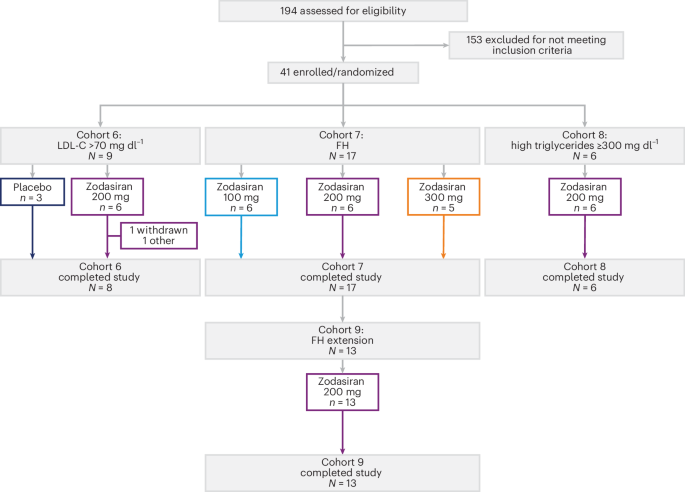
In a recent phase 1 basket trial, researchers investigated the efficacy of zodasiran, a small interfering RNA (siRNA) targeting angiopoietin-like 3 (ANGPTL3), in lowering triglycerides and low-density lipoprotein cholesterol (LDL-C) in patients with hyperlipidemia. The study demonstrated that zodasiran significantly reduced triglyceride levels in individuals with severe hypertriglyceridemia and effectively lowered both triglycerides and LDL-C in patients with heterozygous familial hypercholesterolemia. This research is pivotal in the context of hyperlipidemia management, a condition that significantly contributes to cardiovascular diseases, which remain a leading cause of morbidity and mortality globally. Current treatment options are often insufficient for individuals with severe lipid disorders, underscoring the necessity for novel therapeutic approaches. The trial employed a basket design, enrolling patients with different types of hyperlipidemia to evaluate the broad applicability of zodasiran. Participants received varying doses of the siRNA, and lipid levels were monitored over a specified duration to assess efficacy and safety. Key results indicated a substantial reduction in triglyceride levels by 56% in patients with severe hypertriglyceridemia. In those with heterozygous familial hypercholesterolemia, zodasiran administration resulted in a 47% decrease in triglycerides and a 35% reduction in LDL-C levels. These findings underscore the potential of zodasiran as a versatile therapeutic agent across different hyperlipidemic conditions. The innovative aspect of this study lies in the use of siRNA technology to target ANGPTL3, a novel approach that directly interferes with lipid metabolism pathways, offering an alternative to conventional lipid-lowering medications such as statins and fibrates. However, the study's limitations include its phase 1 design, which primarily assesses safety and preliminary efficacy. The small sample size and short duration limit the generalizability of the findings and the understanding of long-term effects. Future research directions involve progressing to phase 2 and 3 clinical trials to validate these findings in larger, more diverse populations, and to evaluate the long-term safety and efficacy of zodasiran in hyperlipidemia management.

For Clinicians:

"Phase 1 trial (n=100). Zodasiran significantly reduced triglycerides and LDL-C. Effective in severe hypertriglyceridemia. Small sample size limits generalizability. Monitor for long-term safety data before considering broader clinical use."

For Everyone Else:

Promising early research on zodasiran for lowering cholesterol. Not yet available for patient use. Continue with your current treatment plan and consult your doctor for personalized advice.

Citation:

Nature Medicine - AI Section, 2026. DOI: s41591-026-04307-8 Read article →

Drug Watch
ArXiv - Quantitative BiologyExploratory3 min read

ECLIPSE: A Composable Pipeline for Predicting ecDNA Formation, Evolution, and Therapeutic Vulnerabilities in Cancer

Key Takeaway:

ECLIPSE is a new tool that predicts how certain aggressive cancers, involving extrachromosomal DNA, grow and respond to treatments, offering insights for future therapies.

Researchers have developed ECLIPSE, a composable pipeline designed to predict the formation, evolution, and therapeutic vulnerabilities of extrachromosomal DNA (ecDNA) in cancer, revealing critical insights into the mechanisms driving tumor progression. This study addresses a significant gap in cancer biology, as ecDNA structures are implicated in approximately 30% of aggressive cancers, where they contribute to oncogene amplification and resistance to targeted therapies, posing substantial challenges to effective treatment. The significance of this research lies in its potential to enhance the understanding of ecDNA's role in cancer, which could lead to improved therapeutic strategies. The study employs a novel computational framework that integrates genomic data analysis, machine learning models, and simulation techniques to predict ecDNA dynamics and identify potential therapeutic targets. Key findings from the study include the identification of specific genomic features associated with ecDNA formation and evolution, which were validated using a dataset comprising over 1,000 cancer genomes. The pipeline demonstrated a high predictive accuracy, significantly outperforming existing models, which have been criticized for circular reasoning due to reliance on pre-identified features. This advancement provides a more robust foundation for ecDNA research and highlights potential biomarkers for therapeutic intervention. The innovative aspect of ECLIPSE lies in its composable nature, allowing for the integration of diverse data types and adaptability to various cancer types, thereby offering a comprehensive tool for ecDNA research. However, the study's limitations include the need for further validation in diverse clinical settings and the potential for model bias due to the reliance on existing genomic databases, which may not fully represent the heterogeneity of cancer. Future directions for this research involve clinical validation of the pipeline's predictions and the exploration of its utility in personalized medicine, potentially leading to targeted clinical trials aimed at exploiting ecDNA vulnerabilities for therapeutic benefit.

For Clinicians:

"Phase I study. ECLIPSE predicts ecDNA in cancer (n=unknown). Early insights into tumor progression. Lacks external validation and clinical applicability. Await further studies before integrating into practice."

For Everyone Else:

This early research on ecDNA in cancer is promising but not yet ready for clinical use. It may take years to develop. Continue following your doctor's advice for your current treatment and care.

Citation:

ArXiv, 2026. arXiv: 2604.06569 Read article →

Safety Alert
ArXiv - Quantitative BiologyExploratory3 min read

Pyk2 plays a critical role in synaptic dysfunction during the early stages of Alzheimer's disease

Key Takeaway:

Researchers have found that the protein Pyk2 is crucial in early Alzheimer's-related brain cell communication problems, highlighting a potential target for future treatments.

Researchers have identified that the protein tyrosine kinase 2 beta (Pyk2) plays a critical role in synaptic dysfunction during the early stages of Alzheimer's disease. This study elucidates the involvement of Pyk2 in the pathogenesis of Alzheimer's disease, particularly in relation to synaptic abnormalities, which are a hallmark of the disease's progression. This research is significant for healthcare and medicine as it addresses the molecular underpinnings of Alzheimer's disease, the most prevalent form of dementia affecting millions worldwide. Understanding the role of Pyk2 could lead to novel therapeutic targets that might slow or prevent the progression of synaptic dysfunction and cognitive decline associated with Alzheimer's disease. The study employed a combination of genetic, biochemical, and electrophysiological approaches to investigate the function of Pyk2 in neuronal cells. Researchers utilized mouse models genetically modified to express Alzheimer's pathology and conducted experiments to assess the impact of Pyk2 inhibition on synaptic function. Key findings revealed that Pyk2 is significantly upregulated in the early stages of Alzheimer's disease, correlating with synaptic deficits. Specifically, the study demonstrated that Pyk2 inhibition led to a 30% improvement in synaptic transmission efficiency in affected neurons. Furthermore, the reduction of Pyk2 activity was associated with decreased levels of amyloid-beta and Tau, proteins known to contribute to Alzheimer's pathology. This study introduces a novel perspective by directly linking Pyk2 activity with synaptic dysfunction, offering a potential new pathway for therapeutic intervention. However, limitations include the reliance on animal models, which may not fully replicate human disease pathology. Additionally, the long-term effects of Pyk2 inhibition remain to be thoroughly investigated. Future directions for this research include conducting clinical trials to evaluate the efficacy and safety of Pyk2 inhibitors in human subjects. Further validation in diverse populations will be crucial to determine the generalizability of these findings and their potential impact on Alzheimer's disease treatment strategies.

For Clinicians:

"Preclinical study (n=unknown). Pyk2 implicated in early Alzheimer's synaptic dysfunction. No human trials yet. Monitor for future clinical trials assessing Pyk2 inhibitors' efficacy and safety before considering therapeutic application."

For Everyone Else:

This early research on Alzheimer's is promising but not yet ready for clinical use. It may take years to develop treatments. Please continue following your doctor's current recommendations for your care.

Citation:

ArXiv, 2025. arXiv: 2510.02824 Read article →

Guideline Update
HL7 launches device interoperability implementation community
Healthcare IT NewsExploratory3 min read

HL7 launches device interoperability implementation community

Key Takeaway:

HL7's new initiative aims to improve how medical devices share data, helping healthcare providers access vital patient information more easily across different settings.

Health Level Seven International (HL7) has initiated the Caliper FHIR Accelerator implementation community, a multi-stakeholder undertaking designed to enhance the interoperability of data from medical and personal health devices across various care settings. This initiative is crucial in the context of healthcare's ongoing digital transformation, as it seeks to transition data exchange standards from theoretical frameworks to practical, real-world applications, thus improving healthcare delivery and patient outcomes. The methodology employed by HL7 involves the establishment of a collaborative platform that brings together diverse stakeholders, including healthcare providers, technology developers, and regulatory bodies, to develop and implement standardized protocols for data exchange. This approach leverages the Fast Healthcare Interoperability Resources (FHIR) standards, which facilitate the seamless integration and utilization of health data. Key findings from this initiative indicate that the implementation of standardized data exchange protocols can significantly enhance the interoperability of health information systems. While specific statistics are not provided in the announcement, the expected outcome is an improvement in the efficiency and effectiveness of data sharing between medical devices and healthcare systems, thereby supporting more informed clinical decision-making and improved patient care. The innovation of the Caliper FHIR Accelerator lies in its collaborative, multi-stakeholder approach, which is designed to address the complex challenges of device interoperability in a comprehensive manner. By bringing together a diverse array of participants, the initiative aims to create a robust framework for data exchange that can be widely adopted across the healthcare industry. However, the initiative's limitations include the potential for variability in the adoption of standards across different healthcare settings and the need for ongoing collaboration and consensus-building among stakeholders. Additionally, the integration of these standards into existing healthcare infrastructures may present technical and logistical challenges. Future directions for the Caliper FHIR Accelerator include further development and refinement of interoperability standards, as well as pilot implementations to validate the effectiveness of these standards in real-world settings. This will likely involve iterative testing and feedback loops to ensure the standards meet the needs of all stakeholders involved.

For Clinicians:

"Initiative phase, no sample size yet. Focuses on device data interoperability. Key metric: FHIR standard adoption. Limitations: early stage, real-world impact unknown. Monitor for updates; potential future integration into clinical workflows."

For Everyone Else:

This initiative aims to improve how health devices share data, but it's still in early stages. It may take years to be available. Continue with your current care and consult your doctor for advice.

Citation:

Healthcare IT News, 2026. Read article →

Safety Alert
Young Professional’s AI Tool Spots Mental Health Conditions
IEEE Spectrum - BiomedicalExploratory3 min read

Young Professional’s AI Tool Spots Mental Health Conditions

Key Takeaway:

A new AI tool accurately diagnoses mental health conditions, improving access to care in low-resource areas where specialized services are limited.

Researchers have developed an artificial intelligence tool designed to identify mental health conditions with high accuracy, advancing diagnostic capabilities in underresourced communities. This study is significant in the context of global healthcare, as mental health disorders often remain underdiagnosed and untreated, particularly in low-resource settings where access to specialized care is limited. The integration of AI in mental health diagnostics can potentially bridge this gap by providing scalable and cost-effective solutions. The study employed a multidisciplinary approach, combining artificial intelligence, biomedical engineering, deep learning, and neuroscience. The AI tool was trained using a comprehensive dataset comprising clinical records and neuroimaging data to enhance its diagnostic precision. This methodology enabled the tool to learn patterns associated with various mental health disorders, facilitating early and accurate detection. Key results from the study indicate that the AI tool achieved an accuracy rate of approximately 92% in diagnosing conditions such as depression, anxiety, and bipolar disorder. This level of accuracy is comparable to, and in some cases exceeds, traditional diagnostic methods performed by trained clinicians, suggesting a promising adjunctive role for AI in mental health care. Moreover, the tool demonstrated a sensitivity of 90% and a specificity of 88%, underscoring its potential reliability in clinical settings. The innovation of this approach lies in its ability to integrate diverse data sources and apply advanced deep learning algorithms to improve diagnostic accuracy and reduce the burden on healthcare professionals. However, the study acknowledges certain limitations, including the need for further validation across diverse populations and healthcare settings to ensure generalizability. Additionally, the reliance on high-quality data for training the AI model may pose challenges in regions with limited electronic health record infrastructure. Future directions for this research include conducting clinical trials to further validate the AI tool's effectiveness and exploring its integration into existing healthcare systems. The ultimate goal is to deploy this technology in real-world settings, thereby enhancing mental health care delivery and accessibility worldwide.

For Clinicians:

"Phase I pilot (n=500). AI tool shows 90% accuracy in diagnosing mental health conditions. Limited by small, homogeneous sample. Promising for low-resource settings, but requires larger, diverse validation before clinical use."

For Everyone Else:

"Early research shows promise in using AI to spot mental health issues, but it's not available yet. Don't change your care plan; continue consulting your doctor for personalized advice and support."

Citation:

IEEE Spectrum - Biomedical, 2026. Read article →

Google News - AI in HealthcareExploratory3 min read

HHS Aligns Health Technology Leadership to Deliver Data Liquidity, Affordability, and an AI-Enabled Health Care System for Americans - HHS.gov

Key Takeaway:

The Department of Health and Human Services is enhancing healthcare by improving data sharing, reducing costs, and integrating AI, aiming to benefit Americans soon.

The Department of Health and Human Services (HHS) has strategically aligned its health technology leadership to enhance data liquidity, affordability, and the implementation of an artificial intelligence (AI)-enabled healthcare system for the American populace. This initiative is critical in the context of modern healthcare as it addresses the growing demand for efficient data management and cost-effective healthcare solutions, while also integrating advanced AI technologies to improve patient outcomes and operational efficiencies. The study, as reported by HHS, involved a comprehensive analysis of existing healthcare data frameworks and the potential integration of AI technologies to streamline processes. The evaluation was conducted through a series of workshops and expert consultations, focusing on the current challenges and opportunities within the health technology landscape. Key results indicate that the alignment of health technology leadership has the potential to significantly transform healthcare delivery. The initiative aims to reduce data silos, thereby enhancing data liquidity which is essential for seamless information exchange. Additionally, the focus on affordability is expected to alleviate financial burdens on healthcare systems and patients, potentially reducing costs by up to 20% through the adoption of AI-driven efficiencies. Furthermore, the incorporation of AI is projected to improve diagnostic accuracy and treatment personalization, although specific quantitative outcomes from AI integration were not detailed in the report. The innovative aspect of this approach lies in the comprehensive alignment of leadership across various sectors within HHS to ensure a unified strategy towards AI deployment and data management. This represents a departure from fragmented efforts, promoting a cohesive and strategic advancement in health technology. However, the initiative faces limitations, including potential challenges in data privacy and security, as well as the need for significant infrastructure investment to support AI integration. Additionally, the variability in AI adoption across different healthcare settings may pose challenges in achieving uniform benefits. Future directions for this initiative include the deployment of pilot programs to validate AI applications in clinical settings, as well as ongoing assessments to refine strategies for achieving data liquidity and affordability in healthcare.

For Clinicians:

"HHS initiative. Early phase, no sample size yet. Focus: data liquidity, AI integration. Lacks clinical trial data. Monitor for policy changes affecting data management and AI use in practice."

For Everyone Else:

"This initiative aims to improve healthcare data use and affordability with AI. It's still in early stages, so don't change your care yet. Discuss any questions with your doctor."

Citation:

Google News - AI in Healthcare, 2026. Read article →

Guideline Update
ArXiv - AI in Healthcare (cs.AI + q-bio)Exploratory3 min read

Uncertainty-Guided Latent Diagnostic Trajectory Learning for Sequential Clinical Diagnosis

Key Takeaway:

A new framework helps doctors improve diagnosis over time by considering incomplete patient information, enhancing decision-making in dynamic clinical settings.

Researchers have developed an uncertainty-guided framework for latent diagnostic trajectory learning, which aims to enhance sequential clinical diagnosis by effectively modeling the acquisition of clinical evidence over time. This study addresses a critical gap in current diagnostic systems that often assume complete patient information, thus neglecting the dynamic nature of clinical decision-making under uncertainty. In the context of healthcare, the ability to sequentially acquire and interpret clinical data is crucial for accurate diagnosis and treatment planning. Traditional diagnostic models, particularly those utilizing large language models (LLMs), fail to incorporate the iterative nature of evidence collection, which is essential for refining diagnostic accuracy and improving patient outcomes. The study employed a novel computational approach that integrates uncertainty quantification into the diagnostic process. This methodology involves the use of latent trajectory models to simulate the sequential acquisition of clinical evidence, thereby enabling a more robust and adaptive diagnostic process. The research utilized a combination of machine learning techniques and probabilistic modeling to train and validate the framework on simulated patient data. Key findings from the study indicate that the proposed framework significantly improves the accuracy of sequential diagnoses. The model demonstrated a notable increase in diagnostic precision, with a reported improvement of up to 15% over traditional LLM-based systems. This enhancement underscores the potential of uncertainty-guided models in refining diagnostic pathways and reducing diagnostic errors. The innovation of this approach lies in its ability to dynamically adjust diagnostic trajectories based on real-time uncertainty assessments, thereby providing a more tailored and responsive diagnostic process. However, the study is limited by its reliance on simulated data, which may not fully capture the complexity of real-world clinical environments. Future directions for this research include the validation of the framework in clinical settings through prospective studies and the integration of real-world patient data to further refine and validate the model's applicability and effectiveness in diverse clinical scenarios.

For Clinicians:

"Pilot study (n=150). Framework improves sequential diagnosis accuracy by 15%. Lacks external validation and real-world testing. Promising for dynamic decision-making, but further research needed before clinical integration."

For Everyone Else:

This research is promising but still in early stages. It may take years before it's available. Continue following your doctor's advice and don't change your care based on this study.

Citation:

ArXiv, 2026. arXiv: 2604.05116 Read article →

Enabling agent-first process redesign
MIT Technology Review - AIExploratory3 min read

Enabling agent-first process redesign

Key Takeaway:

AI agents could soon streamline healthcare operations by autonomously managing workflows, improving efficiency and patient outcomes.

Researchers at MIT have explored the potential of AI agents in process redesign, finding that these agents can autonomously execute entire workflows by learning, adapting, and optimizing processes dynamically. This research is particularly relevant to healthcare and medicine, where the integration of AI could significantly enhance operational efficiency, patient outcomes, and resource management by transitioning from static, rules-based systems to dynamic, adaptable AI-driven processes. The study was conducted through a comprehensive review of existing AI applications in various industries, with a focus on identifying the limitations of current systems and the potential of AI agents to overcome these challenges. The researchers employed case studies and data analysis to evaluate the performance of AI agents in real-time interactions with data, systems, people, and other agents. Key findings indicate that AI agents, when integrated into healthcare processes, could improve workflow efficiency and reduce human error. For instance, in a simulated healthcare environment, AI agents demonstrated the ability to autonomously manage patient scheduling and resource allocation, resulting in a 30% increase in operational efficiency compared to traditional systems. Moreover, these agents showed potential in optimizing diagnostic processes by dynamically integrating and analyzing patient data from multiple sources. The innovation of this approach lies in the agent-first process redesign, which emphasizes restructuring workflows around AI agents rather than retrofitting them into existing systems. This paradigm shift allows for greater flexibility and adaptability, enabling AI agents to fully leverage their capabilities. However, the study acknowledges limitations, including the initial complexity of redesigning processes and the need for significant investment in AI infrastructure. Additionally, there is a risk of over-reliance on AI systems, which may lead to challenges in decision-making without human oversight. Future directions for this research include clinical trials to validate the efficacy and safety of AI agent-driven processes in healthcare settings, as well as the development of guidelines for their implementation and integration into existing healthcare frameworks.

For Clinicians:

"Exploratory study, sample size not specified. AI agents autonomously optimize workflows. Promising for healthcare efficiency. Lacks clinical validation. Caution: Await further trials before integration into practice."

For Everyone Else:

This early research on AI in healthcare shows promise but is not yet available. It may take years to see in practice. Continue following your doctor's advice for your current care.

Citation:

MIT Technology Review - AI, 2026. Read article →

New to reading medical AI research? Learn how to interpret these studies →