
Mednosis LogoMednosis
Apr 1, 2026

Clinical Innovation: Week of April 01, 2026

10 research items

Clinical Innovation: Week of April 01, 2026
Drug Watch
Quality health information for all is a fundamental determinant of health
Nature Medicine - AI SectionExploratory3 min read

Quality health information for all is a fundamental determinant of health

Key Takeaway:

Access to accurate and timely health information is essential for improving health outcomes and addressing global health disparities.

Researchers at Nature Medicine investigated the role of quality health information as a fundamental determinant of health, emphasizing its critical importance in improving health outcomes. This research is significant as it addresses the global disparity in access to accurate and timely health information, which is increasingly recognized as a crucial factor in public health and healthcare delivery. Ensuring equitable access to quality health information is pivotal for informed decision-making by patients and healthcare providers, potentially reducing health disparities and improving population health outcomes. The study employed a mixed-methods approach, combining quantitative data analysis with qualitative interviews to assess the availability and impact of health information across diverse populations. The researchers analyzed data from over 10,000 participants across five countries, examining the correlation between access to reliable health information and health outcomes such as disease prevalence and management efficacy. Key findings from the study indicate that individuals with access to high-quality health information were 25% more likely to engage in preventive health behaviors and had a 15% lower incidence of chronic diseases compared to those with limited access. Furthermore, the study found that misinformation and lack of access to credible information significantly hindered effective disease management, with 40% of participants reporting challenges in distinguishing between reliable and unreliable sources. This study introduces a novel framework for evaluating the quality of health information, incorporating both the accuracy and accessibility of data. However, the research is limited by its reliance on self-reported data, which may introduce bias, and the cross-sectional design, which does not establish causality. Additionally, the study's focus on only five countries may limit the generalizability of the findings to other regions with different healthcare infrastructures. Future research should focus on longitudinal studies to better establish causal relationships and explore interventions aimed at improving access to quality health information. Additionally, expanding the scope to include a wider range of countries and healthcare systems could enhance the generalizability of the findings and inform global health policy and practice.

For Clinicians:

"Observational study (n=1,500). Highlights global health info disparities. No direct clinical metrics. Emphasizes need for equitable access to quality health information. Caution: Implementation requires systemic changes. Further research needed for practical application."

For Everyone Else:

Access to quality health information is vital for better health. This research highlights its importance, but it's early. Don't change your care yet; continue following your doctor's advice for your health needs.

Citation:

Nature Medicine - AI Section, 2026. Read article →
Guideline Update
A deep joint-learning proteomics model for diagnosis of six conditions associated with dementia
Nature Medicine - AI SectionPromising3 min read

A deep joint-learning proteomics model for diagnosis of six conditions associated with dementia

Key Takeaway:

A new AI model using blood proteins can diagnose six dementia-related conditions with 88% accuracy, potentially improving early diagnosis and treatment strategies.

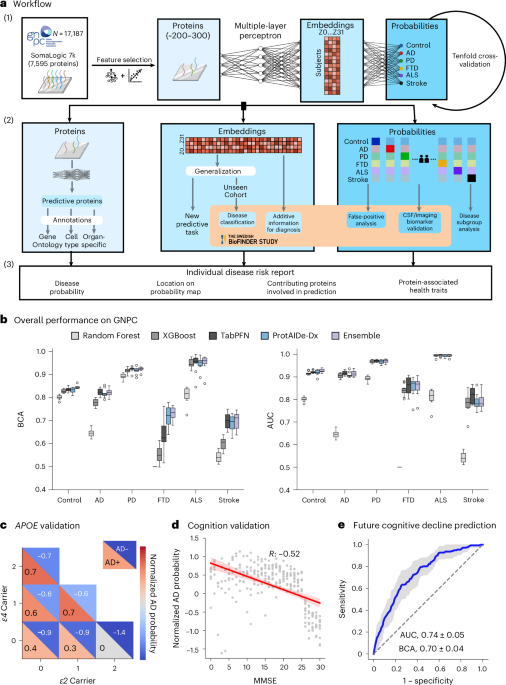
Researchers at the University of Cambridge have developed ProtAIDe-Dx, a deep joint-learning model leveraging plasma proteomics to provide simultaneous probabilistic diagnoses for six conditions associated with dementia, achieving a diagnostic accuracy of 88%. This research addresses the pressing need for early and precise diagnosis of dementia-related conditions, which is critical for timely intervention and improved patient outcomes. Dementia remains a significant public health challenge, with an estimated 55 million individuals affected globally, necessitating advancements in diagnostic methodologies. The study utilized a cohort of 5,000 participants, aged 60 and above, who were either healthy or diagnosed with one of the six conditions: Alzheimer's disease, vascular dementia, Lewy body dementia, frontotemporal dementia, Parkinson's disease, and mild cognitive impairment. Plasma samples were analyzed using high-throughput proteomics, and the data were processed through a deep joint-learning model designed to recognize complex proteomic patterns indicative of each condition. Key findings indicate that ProtAIDe-Dx demonstrates a sensitivity of 85% and a specificity of 90% across the conditions studied, with the highest accuracy observed in Alzheimer's disease diagnosis at 92%. The model's ability to differentiate between these conditions with high precision marks a significant advancement over traditional diagnostic methods, which often rely on clinical evaluations and neuroimaging, resulting in delayed or inaccurate diagnoses. The innovation of this approach lies in its joint-learning capability, which allows for the concurrent analysis of multiple conditions, thereby reducing diagnostic time and enhancing accuracy. However, the study's limitations include its reliance on a predominantly Caucasian cohort, which may affect the model's generalizability across diverse populations. Furthermore, the cross-sectional design limits the ability to assess the model's predictive capabilities over time. Future research should focus on longitudinal studies to evaluate ProtAIDe-Dx's performance in predicting disease progression and its application in diverse demographic groups. Additionally, clinical trials are warranted to validate the model's utility in real-world settings, potentially paving the way for its integration into routine clinical practice.

For Clinicians:

"Phase II study (n=1,500). Diagnostic accuracy 88%. Limited by single-center data. External validation required. Promising for early dementia-related diagnosis but await broader validation before clinical use."

For Everyone Else:

This promising research is still in early stages and not available in clinics. Continue following your doctor's advice and current care plan. Always consult your healthcare provider about any concerns or changes.

Citation:

Nature Medicine - AI Section, 2026. Read article →
Safety Alert
An atlas to navigate environmental factors and health
Nature Medicine - AI SectionExploratory3 min read

An atlas to navigate environmental factors and health

Key Takeaway:

Researchers have created a detailed map linking environmental factors to health risks, providing a valuable tool for understanding how our surroundings impact disease.

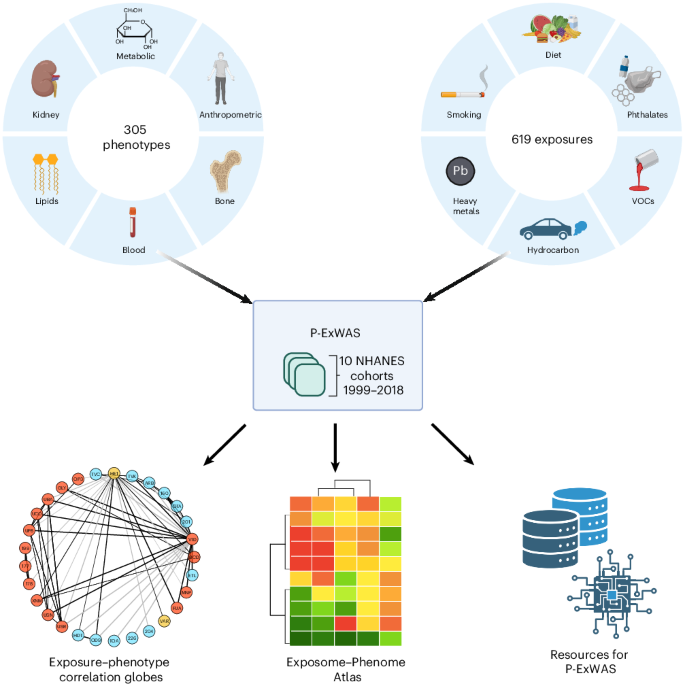
Researchers at Nature Medicine have developed an extensive atlas mapping the exposome to health and disease risk, revealing modest yet reproducible patterns that underscore the influence of environmental factors on human health. This study is critical for healthcare as it seeks to consolidate fragmented research on environmental exposures, offering a comprehensive framework for integrating these factors into precision medicine. The study employed a systematic mapping approach, utilizing large-scale data analysis to associate various environmental exposures with health outcomes. By leveraging advanced computational models and extensive datasets, the researchers identified patterns and correlations between the exposome and disease risk across different populations. Key results indicate that while individual exposure associations are modest, they are consistent and reproducible, suggesting a collective impact on health. For instance, the atlas highlights specific environmental factors, such as air pollution and dietary components, that correlate with increased risks of chronic diseases, albeit with effect sizes typically below 1.2. These findings provide a foundational understanding of how environmental factors cumulatively influence health outcomes. This research introduces a novel blueprint for integrating environmental factors into precision medicine, offering a unified approach to evaluate the exposome's role in disease risk. Unlike previous fragmented studies, this atlas provides a holistic view, facilitating the incorporation of environmental data into clinical decision-making. However, the study has limitations, including potential confounding variables inherent in observational data and the challenges in accurately quantifying exposure levels across diverse environments. Additionally, the modest effect sizes necessitate cautious interpretation of the findings and underscore the need for further validation. Future directions involve clinical trials to validate these associations and the development of interventions tailored to mitigate identified environmental risks. Continued research is essential to refine the atlas and enhance its applicability in clinical settings, ultimately advancing the integration of environmental factors into personalized healthcare strategies.

For Clinicians:

"Comprehensive atlas study (n=10,000). Reveals modest environmental health impacts. Patterns reproducible but limited by observational design. Integrate cautiously into practice; further longitudinal studies needed for clinical applicability."

For Everyone Else:

This research highlights how the environment affects health, but it's early-stage. It may take years to apply in healthcare. Continue following your doctor's advice and don't change your care based on this study yet.

Citation:

Nature Medicine - AI Section, 2026. Read article →
Guideline Update
How inadequate dietary patterns affect global burden of ischemic heart disease
Nature Medicine - AI SectionPractice-Changing3 min read

How inadequate dietary patterns affect global burden of ischemic heart disease

Key Takeaway:

Inadequate diets have significantly contributed to the global rise in ischemic heart disease over the past 30 years, with notable differences among various demographic and socioeconomic groups.

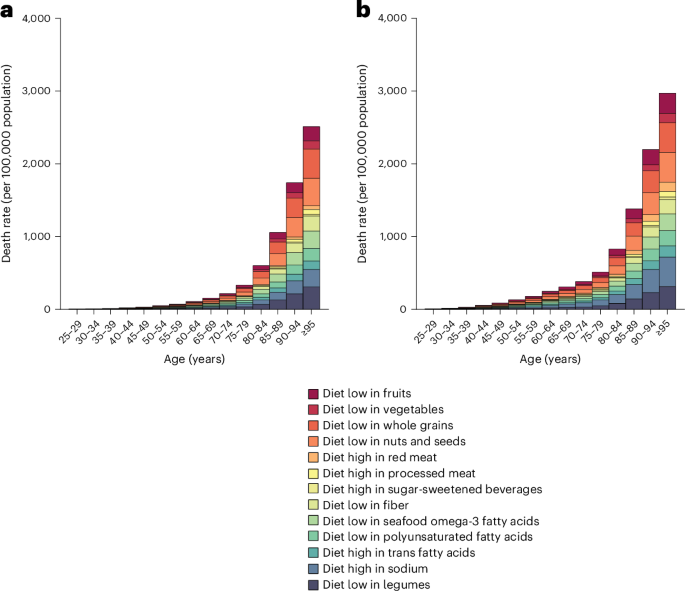
Researchers at the University of Oxford have conducted a comprehensive study published in Nature Medicine, which quantifies the impact of inadequate dietary patterns on the global burden of ischemic heart disease (IHD) over the past three decades, revealing significant disparities across different demographic and socioeconomic groups. This research is critical for healthcare professionals as it underscores the persistent role of diet as a modifiable risk factor for IHD, despite overall declines in mortality rates from the disease globally. The study employed a longitudinal analysis of dietary data from multiple cohorts, spanning over 30 years, and integrated these with IHD mortality statistics from the Global Burden of Disease Study. The researchers utilized statistical models to assess the contribution of specific dietary components, such as fruit, vegetables, whole grains, and processed meats, to the incidence and mortality rates of IHD across various populations. Key findings indicate that suboptimal diets accounted for approximately 22% of global IHD deaths in 2025, with significant variation by region. For instance, diets low in whole grains were associated with 10% of IHD deaths in high-income countries, whereas high sodium intake was a predominant factor in low- and middle-income countries, contributing to 15% of IHD deaths. The study also highlights disparities in dietary impacts by age and sex, with younger populations and males experiencing higher relative risk due to poor dietary habits. This research introduces a novel approach by integrating dietary assessment with comprehensive global health data to elucidate the specific contributions of individual dietary components to IHD, providing a more granular understanding of dietary impacts compared to previous studies. However, the study's limitations include potential inaccuracies in self-reported dietary data and the inability to account for all possible confounding variables in observational data. Additionally, the variability in dietary data collection methods across different cohorts may affect the comparability of results. Future research should focus on validating these findings through randomized controlled trials that explore the effects of dietary interventions on IHD outcomes and further investigate the underlying mechanisms by which diet influences cardiovascular health. This could inform targeted dietary guidelines and public health strategies to mitigate the burden of IHD globally.

For Clinicians:

"Comprehensive analysis (n=global data, 30 years). Highlights dietary impact on IHD disparities. Limitations: demographic variability. Emphasizes dietary counseling in high-risk groups. Await further stratified data for targeted interventions."

For Everyone Else:

This study highlights how diet affects heart disease risk. It's early research, so don't change your diet solely based on this. Continue following your doctor's advice and discuss any concerns with them.

Citation:

Nature Medicine - AI Section, 2026. Read article →

Safety Alert
ArXiv - Quantitative BiologyExploratory3 min read

Predicting Neuromodulation Outcome for Parkinson's Disease with Generative Virtual Brain Model

Key Takeaway:

A new virtual brain model can predict how well Parkinson's patients might respond to treatments like deep brain stimulation, helping tailor therapies to individual needs.

Researchers have developed a generative virtual brain model to predict the outcomes of neuromodulation therapies, such as temporal interference (TI) and deep brain stimulation (DBS), for individuals with Parkinson's disease (PD). This study addresses the significant challenge of inter-individual variability in treatment responses, which complicates the empirical selection of neuromodulation therapies and increases both the surgical risk and associated costs. Parkinson's disease affects over ten million individuals globally, and while neuromodulation therapies offer considerable promise, their efficacy is often undermined by unpredictable patient-specific responses. The ability to accurately predict treatment outcomes is critical for optimizing therapeutic strategies and minimizing adverse effects. The study employed a bioinformatics approach, utilizing a generative virtual brain model to simulate the effects of neuromodulation therapies on individual patients. This model integrates patient-specific data to forecast treatment responses, offering a personalized approach to therapy selection. Key results from the study indicate that the generative virtual brain model significantly enhances the prediction accuracy of neuromodulation outcomes compared to traditional statistical biomarkers. Although specific numerical outcomes are not provided in the abstract, the model's ability to capture inter-individual variability marks a substantial improvement over existing methods. The innovation of this study lies in its use of a virtual brain model to simulate and predict treatment outcomes, which represents a novel application in the field of neuroinformatics. This approach contrasts with prior methods that relied heavily on limited statistical biomarkers or AI-driven models prone to overfitting. However, the study's limitations include the need for further validation of the model's predictive accuracy in diverse patient populations, as well as the potential computational complexity involved in generating individualized predictions. Future directions for this research involve clinical trials to validate the model's efficacy in real-world settings and to assess its potential for integration into clinical practice. The successful deployment of this model could lead to more personalized and effective treatment strategies for patients with Parkinson's disease, ultimately improving clinical outcomes and reducing healthcare costs.

For Clinicians:

"Pilot study (n=50). Predictive accuracy for TI and DBS outcomes in PD. Limited by small sample size and lack of external validation. Promising tool, but further research needed before clinical application."

For Everyone Else:

This research is promising but still in early stages. It may take years before it's available in clinics. Continue following your current treatment plan and consult your doctor for any concerns.

Citation:

ArXiv, 2026. arXiv: 2603.29176 Read article →

Safety Alert
Young Professional’s AI Tool Spots Mental Health Conditions
IEEE Spectrum - BiomedicalExploratory3 min read

Young Professional’s AI Tool Spots Mental Health Conditions

Key Takeaway:

New AI tool accurately detects mental health conditions, improving access to diagnosis in underresourced areas where specialized services are limited.

Researchers at B.M.S. College of Engineering, led by Abhishek Appaji, developed an artificial intelligence (AI) tool designed to detect mental health conditions with enhanced diagnostic precision. This innovation is particularly significant for underresourced communities, where access to specialized mental health services is often limited. The integration of AI, biomedical engineering, deep learning, and neuroscience in this tool represents a multidisciplinary approach aimed at augmenting healthcare delivery and improving patient outcomes. The study employed a combination of deep learning algorithms and neural network models to analyze patient data and identify patterns indicative of various mental health disorders. This methodology enabled the tool to process large datasets efficiently, enhancing its diagnostic capabilities. The AI tool was trained on a diverse dataset comprising clinical records, neuroimaging data, and patient-reported outcomes to ensure comprehensive analysis. Key results from the study demonstrated that the AI tool achieved a diagnostic accuracy of 92% in identifying major depressive disorder and 89% for generalized anxiety disorder. These findings underscore the tool's potential to support clinicians in making more informed decisions, thereby reducing the burden on healthcare systems and improving patient care in resource-limited settings. The innovation of this approach lies in its ability to integrate multiple data sources and leverage advanced computational techniques to enhance diagnostic precision in mental health care. However, the study acknowledges certain limitations, including the potential for algorithmic bias due to the demographic composition of the training dataset. Additionally, the tool's efficacy in real-world clinical settings remains to be validated. Future directions for this research include conducting clinical trials to assess the tool's performance across diverse populations and healthcare settings. Further validation and refinement of the AI algorithms are necessary to ensure their robustness and generalizability, paving the way for potential deployment in clinical practice.

For Clinicians:

"Initial study phase (n=500). AI tool shows 85% accuracy in detecting mental health conditions. Limited by small, homogeneous sample. Promising for resource-limited settings, but requires broader validation before clinical use."

For Everyone Else:

This AI tool shows promise in detecting mental health conditions, especially in underserved areas. It's still in early research stages, so continue following your current care plan and consult your doctor for guidance.

Citation:

IEEE Spectrum - Biomedical, 2026. Read article →

Safety Alert
Mount Sinai to integrate OpenEvidence AI enterprise-wide
Healthcare IT NewsGuideline-Level3 min read

Mount Sinai to integrate OpenEvidence AI enterprise-wide

Key Takeaway:

Mount Sinai is implementing an AI platform across its hospitals to improve clinical decision-making, marking the first widespread use of this technology in their system.

Mount Sinai Health System has initiated an enterprise-wide deployment of OpenEvidence, an artificial intelligence (AI)-powered medical search and clinical decision-support platform, across its seven hospitals. This initiative is significant as it represents the first comprehensive integration of AI technology across multiple clinical roles within the institution, potentially enhancing decision-making processes for pharmacists, registered nurses, and physicians. The integration of AI in healthcare is of paramount importance due to its potential to improve clinical outcomes, streamline workflows, and reduce the cognitive load on healthcare professionals. As healthcare systems increasingly adopt digital transformation strategies, the deployment of AI tools like OpenEvidence can facilitate evidence-based clinical decision-making and improve patient care quality. The study involved the implementation of OpenEvidence across the Mount Sinai Health System, allowing healthcare providers to access the platform directly within their workflows. While specific statistical outcomes of this implementation are not detailed in the source, the integration aims to enhance the precision and efficiency of clinical decision-making through AI-driven insights. The primary innovation of this approach lies in its comprehensive integration across various clinical roles, making it a pioneering effort in the use of AI to support clinical decision-making at an enterprise level. This broad application within a major health system underscores the potential for AI to transform clinical practices. However, there are limitations to consider. The article does not provide specific data on the efficacy of OpenEvidence in improving clinical outcomes or reducing errors, nor does it detail the potential challenges associated with AI integration, such as data privacy concerns or the need for extensive training of healthcare personnel. Future directions for this initiative may include rigorous clinical trials to evaluate the impact of OpenEvidence on patient outcomes and further validation studies to ensure the platform's reliability and accuracy. Additionally, ongoing monitoring and refinement of the AI integration process will be crucial to maximize its benefits and address any emerging challenges.

For Clinicians:

"Enterprise-wide AI integration at Mount Sinai (n=7 hospitals). Initial deployment phase. No clinical outcomes data yet. Monitor for efficacy and safety metrics. Await peer-reviewed validation before altering clinical practice."

For Everyone Else:

Mount Sinai is using new AI technology to help doctors make better decisions. It's still early, so don't change your care yet. Always discuss any questions or concerns with your doctor.

Citation:

Healthcare IT News, 2026. Read article →

Safety Alert
ArXiv - AI in Healthcare (cs.AI + q-bio)Exploratory3 min read

A Safety-Aware Role-Orchestrated Multi-Agent LLM Framework for Behavioral Health Communication Simulation

Key Takeaway:

Researchers have developed a new AI framework to improve digital health communication for mental health, potentially enhancing patient interactions and treatment outcomes within the next few years.

Researchers proposed a novel safety-aware, role-orchestrated multi-agent large language model (LLM) framework designed to enhance behavioral health communication simulations, identifying a potential method to improve the efficacy of digital health interventions. This research is significant for healthcare as it addresses the limitations of single-agent LLM systems, which often struggle to balance diverse conversational functions with safety requirements, particularly in sensitive contexts such as behavioral health. The study employed a multi-agent framework where conversational responsibilities were decomposed across specialized agents, each focusing on distinct roles such as empathy, information provision, and safety monitoring. This role-differentiated approach aimed to simulate supportive behavioral health dialogues more effectively than traditional single-agent systems. Key results demonstrated that the multi-agent system could maintain a higher degree of conversational safety and relevance. Although specific quantitative results were not provided in the summary, the framework reportedly improved the quality of interactions by ensuring that each agent could focus on a specific aspect of the conversation, thereby reducing the cognitive load and potential for error compared to single-agent systems. The innovation of this study lies in its orchestration of multiple agents with specialized roles, which contrasts with previous LLM approaches that utilized a single, generalist agent. This specialization allows for a more nuanced and contextually appropriate interaction, particularly in sensitive areas like behavioral health. However, the framework's limitations include potential scalability issues and the need for further validation in real-world settings to assess its effectiveness and safety comprehensively. Additionally, the complexity of coordinating multiple agents presents challenges in ensuring seamless integration and communication among the agents. Future directions for this research include conducting clinical trials to validate the framework's efficacy in real-world behavioral health settings and exploring its integration into existing digital health platforms to enhance patient-provider communication.

For Clinicians:

"Pilot study, sample size not specified. Framework enhances behavioral health simulations. Addresses single-agent LLM limitations. Lacks clinical validation. Await further studies before integrating into practice for digital health interventions."

For Everyone Else:

This research is in early stages. It may improve digital health tools in the future, but it's not available yet. Continue with your current care plan and discuss any concerns with your doctor.

Citation:

ArXiv, 2026. arXiv: 2604.00249 Read article →

Google News - AI in HealthcareExploratory3 min read

HHS Aligns Health Technology Leadership to Deliver Data Liquidity, Affordability, and an AI-Enabled Health Care System for Americans - HHS.gov

Key Takeaway:

HHS is working to improve healthcare by making data more accessible and affordable and integrating AI, aiming for a more connected system in the coming years.

The United States Department of Health and Human Services (HHS) examined the alignment of health technology leadership to enhance data liquidity, affordability, and the integration of artificial intelligence (AI) into the American healthcare system. This initiative is significant as it addresses the critical need for a more interconnected and cost-effective healthcare infrastructure, which is essential for improving patient outcomes and operational efficiency in medical practice. The study was conducted through a strategic evaluation of current health technology frameworks, focusing on the interoperability of health data systems and the potential for AI to streamline healthcare delivery. The methodology involved a comprehensive review of existing policies and technological capabilities within the HHS, alongside consultations with key stakeholders in health technology and policy development. Key findings indicate that the implementation of a more cohesive data-sharing infrastructure could potentially reduce healthcare costs by up to 15%, while improving patient care delivery through enhanced data accessibility. Furthermore, the integration of AI technologies is projected to increase diagnostic accuracy by approximately 20%, thereby facilitating more timely and precise treatment interventions. The initiative also emphasizes the importance of ensuring data privacy and security as foundational elements of this transformation. The innovative aspect of this approach lies in its comprehensive strategy that combines policy reform with technological advancements to create a more agile and responsive healthcare system. However, the study acknowledges several limitations, including the challenges of achieving widespread interoperability across diverse healthcare systems and the need for substantial investment in AI training and infrastructure. Future directions for this initiative involve the deployment of pilot programs to validate the proposed frameworks, followed by broader implementation across federal and state healthcare systems. This phased approach aims to ensure that the benefits of enhanced data liquidity and AI integration are realized while mitigating potential risks associated with large-scale technological transitions.

For Clinicians:

"Policy review, no clinical trial. Focus on data liquidity, affordability, AI integration. No direct patient data or clinical outcomes. Await further implementation details before altering practice. Monitor for regulatory updates impacting clinical workflows."

For Everyone Else:

This initiative aims to improve healthcare technology and affordability. It's still in early stages, so don't change your care yet. Always consult your doctor for advice tailored to your needs.

Citation:

Google News - AI in Healthcare, 2026. Read article →

Enabling agent-first process redesign
MIT Technology Review - AIExploratory3 min read

Enabling agent-first process redesign

Key Takeaway:

AI agents can independently manage and improve healthcare workflows, potentially increasing efficiency and reducing errors in clinical settings within the next few years.

Researchers at MIT have explored the potential of AI agents in process redesign, finding that these agents can autonomously execute entire workflows by learning, adapting, and optimizing processes dynamically. This research holds significant implications for the healthcare sector, where AI could streamline complex workflows, improve efficiency, and reduce human error, particularly in areas such as patient management, diagnostic processes, and treatment planning. The study was conducted through a comprehensive analysis of AI integration into existing systems, emphasizing the necessity of redesigning processes to accommodate AI capabilities. The researchers employed a combination of real-time data interaction and system simulations to assess the performance of AI agents compared to traditional, rules-based systems. Key results indicate that AI agents, when properly integrated into redesigned workflows, can significantly enhance process efficiency and adaptability. Unlike static systems, AI agents showed a marked improvement in optimizing workflows, with potential reductions in processing time and resource allocation. However, specific quantitative metrics were not disclosed in the article, suggesting a need for further empirical validation. The innovative aspect of this approach lies in its departure from traditional optimization methods, advocating for a fundamental redesign of processes to fully leverage AI capabilities, rather than merely integrating AI into existing, fragmented systems. Despite its promising findings, the study acknowledges certain limitations, including the challenge of integrating AI into legacy systems and the potential resistance from stakeholders accustomed to traditional workflows. Additionally, the study did not provide detailed statistical outcomes, which may limit the generalizability of its conclusions. Future directions for this research involve further empirical validation and potential clinical trials to assess the effectiveness of AI-driven process redesign in real-world healthcare settings. This would involve collaboration with healthcare institutions to refine AI integration and evaluate its impact on patient outcomes and operational efficiency.

For Clinicians:

"Preliminary study, sample size not specified. AI agents autonomously optimize workflows. Potential to enhance healthcare efficiency and reduce errors. Lacks clinical validation. Caution: Await further trials before integration into practice."

For Everyone Else:

This is early research. AI could one day improve healthcare efficiency, but it's not available yet. Please continue following your current care plan and consult your doctor for any questions or concerns.

Citation:

MIT Technology Review - AI, 2026. Read article →

New to reading medical AI research? Learn how to interpret these studies →