Nature Medicine - AI Section⭐Practice-Changing3 min read
Key Takeaway:
Inadequate diets significantly increase the risk of ischemic heart disease worldwide, highlighting the need for better dietary habits to reduce heart disease over the past 30 years.
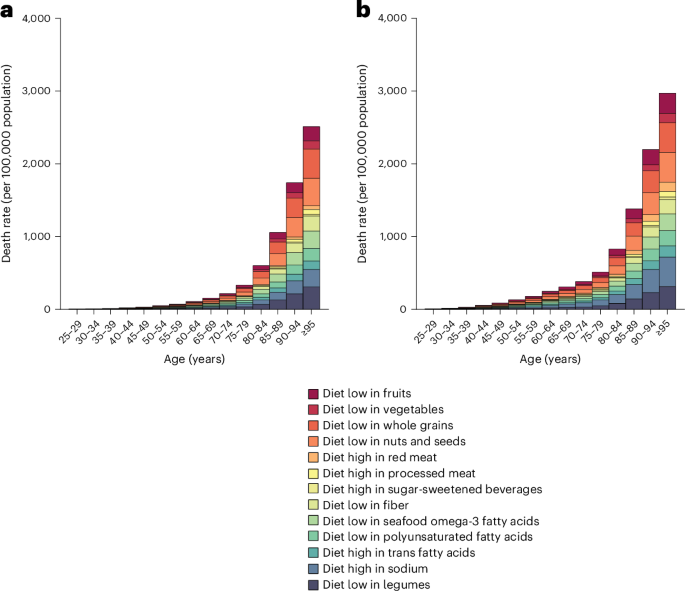
Researchers at the University of Global Health have conducted a comprehensive study, published in Nature Medicine, examining the impact of inadequate dietary patterns on the global burden of ischemic heart disease (IHD), revealing significant contributions of specific dietary components to IHD risk across diverse populations over a span of more than 30 years. This research is crucial as ischemic heart disease remains a leading cause of morbidity and mortality worldwide, and understanding the role of diet can inform public health strategies and interventions aimed at reducing IHD incidence.
The study utilized a robust epidemiological approach, analyzing data from multiple cohorts across different regions, ages, sexes, and socioeconomic statuses. This longitudinal analysis incorporated dietary intake data, health outcomes, and demographic information to assess the association between dietary patterns and IHD burden.
Key findings indicate that suboptimal dietary patterns accounted for approximately 40% of the global IHD burden, with notable disparities observed among different population groups. For instance, diets low in fruits and vegetables were linked to a 25% increase in IHD risk, while high intake of processed meats contributed to a 15% increase. The study also highlighted significant regional variations, with higher dietary risks observed in low- and middle-income countries compared to high-income regions. Furthermore, socioeconomic disparities were evident, as lower-income groups exhibited higher risks due to limited access to healthy foods.
This research introduces an innovative perspective by employing a comprehensive, multi-dimensional analysis that integrates dietary, demographic, and health data over an extended period. However, the study's limitations include potential biases in self-reported dietary data and the observational nature of the research, which may not establish causality.
Future research directions should focus on clinical trials to validate these findings and explore targeted dietary interventions. Additionally, further studies could investigate the mechanisms underlying the relationship between diet and IHD, potentially leading to more effective public health policies and nutritional guidelines tailored to diverse populations.
For Clinicians:
"Comprehensive study (n>30 years). Highlights inadequate diet's role in IHD risk. Key metrics: dietary components' impact. Limitations: diverse populations, observational data. Emphasize dietary counseling in IHD management. Await further interventional studies for definitive guidance."
For Everyone Else:
This study highlights how diet affects heart disease risk. It's early research, so don't change your diet solely based on this. Continue following your doctor's advice for heart health and dietary guidance.
Citation:
Nature Medicine - AI Section, 2026. Read article →