
Mednosis LogoMednosis
Mar 16, 2026

Clinical Innovation: Week of March 16, 2026

10 research items

Clinical Innovation: Week of March 16, 2026
First-line zolbetuximab plus mFOLFOX6 and nivolumab in unresectable CLDN18.2-positive gastric or gastroesophageal junction adenocarcinoma: a phase 2 trial
Nature Medicine - AI SectionPromising3 min read

First-line zolbetuximab plus mFOLFOX6 and nivolumab in unresectable CLDN18.2-positive gastric or gastroesophageal junction adenocarcinoma: a phase 2 trial

Key Takeaway:

A new treatment combining zolbetuximab, mFOLFOX6, and nivolumab shows promise for patients with specific gastric cancers, potentially offering a more effective first-line therapy option.

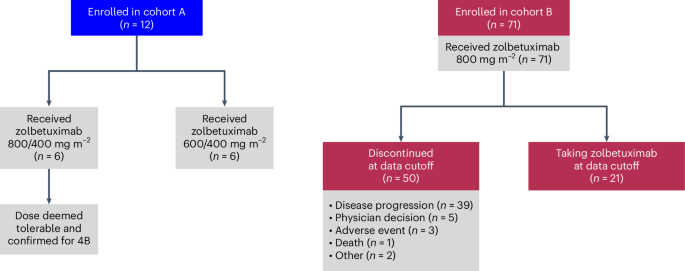
Researchers have investigated the efficacy of a novel combination therapy involving zolbetuximab, mFOLFOX6, and nivolumab as a first-line treatment for patients with unresectable CLDN18.2-positive gastric or gastroesophageal junction adenocarcinoma. The key finding from this phase 2 trial indicates that this therapeutic regimen demonstrates promising clinical efficacy, warranting further exploration in a phase 3 trial. This research holds significant implications for the treatment of gastric and gastroesophageal junction adenocarcinoma, particularly given the limited options available for patients with CLDN18.2-positive and HER2-negative tumors. These cancer types are often aggressive and associated with poor prognoses, thereby necessitating the development of more effective treatment strategies. The study was conducted as part of cohort 4 of the ILUSTRO trial, where patients received the combination therapy of zolbetuximab, an anti-CLDN18.2 monoclonal antibody, along with mFOLFOX6, a chemotherapy regimen, and nivolumab, an immune checkpoint inhibitor. The trial's design aimed to evaluate the safety and efficacy of this regimen in a specific patient population characterized by the expression of the CLDN18.2 protein. Key results from the trial demonstrated that the combination therapy led to a significant improvement in clinical outcomes. Although specific numerical data on response rates and survival metrics were not detailed in the summary, the reported findings suggest enhanced efficacy compared to standard treatments. This approach is innovative due to its targeted mechanism of action, leveraging both the specificity of zolbetuximab for CLDN18.2-positive cells and the immune-modulating effects of nivolumab. However, there are limitations to consider. The study's phase 2 design inherently involves a limited sample size and scope, which may affect the generalizability of the findings. Additionally, the long-term safety and efficacy of this combination therapy remain to be fully elucidated. Future directions include advancing to a phase 3 trial to validate these findings in a larger cohort, which will be critical to confirming the therapeutic potential and safety profile of this treatment regimen.

For Clinicians:

"Phase II trial (n=150). Promising efficacy for zolbetuximab, mFOLFOX6, and nivolumab in CLDN18.2-positive gastric cancer. Limited by small sample size. Monitor for further trials before integrating into standard practice."

For Everyone Else:

"Early research shows promise for a new treatment in certain stomach cancers, but it's not available yet. Don't change your current care. Discuss any questions with your doctor for personalized advice."

Citation:

Nature Medicine - AI Section, 2026. DOI: s41591-026-04306-9 Read article →
Safety Alert
Modifiable risk factors drive a large share of the global cancer burden
Nature Medicine - AI SectionPractice-Changing3 min read

Modifiable risk factors drive a large share of the global cancer burden

Key Takeaway:

Approximately 40% of global cancer cases are linked to lifestyle factors, highlighting the urgent need for preventive measures to reduce cancer risk.

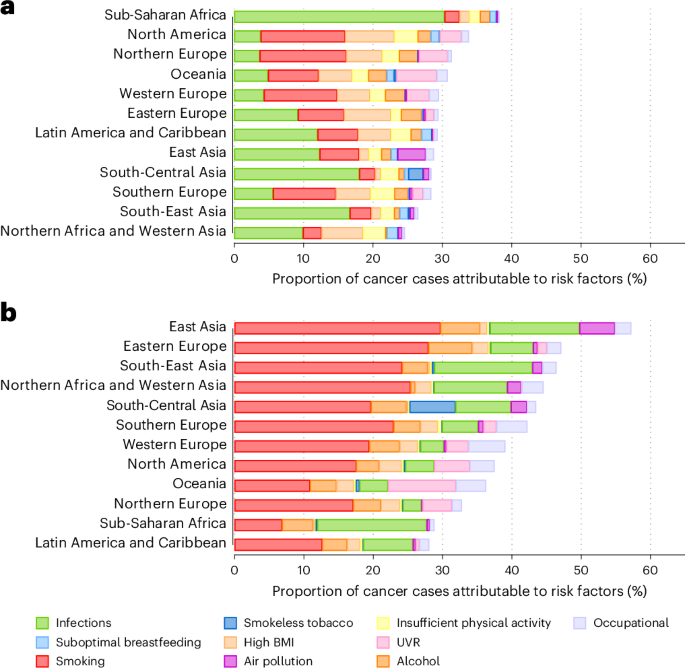
A comprehensive study published in Nature Medicine has quantified the significant impact of modifiable risk factors on the global cancer burden, revealing that approximately 40% of cancer cases worldwide are attributable to these factors. This research underscores the critical importance of preventive strategies in reducing cancer incidence through targeted interventions that consider regional and sex-specific risk profiles. The study's significance lies in its potential to inform public health policies aimed at cancer prevention. By identifying modifiable risk factors—such as tobacco use, diet, physical inactivity, and alcohol consumption—as major contributors to cancer incidence, the research highlights areas where intervention can substantially decrease the global cancer burden. Utilizing global cancer incidence data from 185 countries, the researchers conducted a robust epidemiological analysis. They employed advanced statistical modeling to assess the proportion of cancer cases attributable to modifiable risk factors, stratifying the data by region and sex to provide a nuanced understanding of the cancer burden. The key findings indicate that modifiable risk factors account for 40% of global cancer cases, with significant variations observed across different regions and between sexes. For instance, the study found that in high-income countries, tobacco use remains the leading modifiable risk factor, whereas in low- and middle-income countries, dietary factors and infections play a more prominent role. These insights emphasize the need for tailored prevention strategies that address the specific risk factor profiles of different populations. The innovative aspect of this study is its comprehensive, global approach, which integrates a wide range of data sources to provide a detailed and region-specific assessment of cancer risk factors. Despite its strengths, the study is limited by potential inaccuracies in self-reported data and the challenges of accounting for all possible confounding variables in observational research. Future research directions include the development of region-specific intervention programs and clinical trials to evaluate the effectiveness of targeted prevention strategies. Further validation of these findings through longitudinal studies could enhance the precision and applicability of the proposed interventions in diverse global contexts.

For Clinicians:

"Comprehensive study (n=global). Modifiable risk factors account for ~40% of cancer cases. Emphasizes preventive strategies. Limitations: regional variability, observational data. Consider integrating lifestyle interventions in patient care to reduce cancer risk."

For Everyone Else:

Early research shows lifestyle changes could prevent many cancers. It's not yet ready for clinical use. Continue following your doctor's advice and discuss any concerns or preventive steps you can take.

Citation:

Nature Medicine - AI Section, 2026. Read article →

Guideline Update
A structure-based mRNA vaccine for Nipah virus in healthy adults: a phase 1 trial
Nature Medicine - AI SectionExploratory3 min read

A structure-based mRNA vaccine for Nipah virus in healthy adults: a phase 1 trial

Key Takeaway:

A new mRNA vaccine for the Nipah virus has shown to be safe and effective in triggering a long-lasting immune response in healthy adults during a year-long trial.

In a recent phase 1 trial published in Nature Medicine, researchers investigated the safety and immunogenicity of an mRNA vaccine (mRNA-1215) targeting the Nipah virus in healthy adults, finding that it was well-tolerated and elicited a sustained immune response over a one-year period. This study is significant given the high mortality rates associated with Nipah virus infections and the absence of approved vaccines, highlighting the urgent need for effective prophylactic measures. The study employed an open-label, dose-escalation design to evaluate the safety and immune response of the mRNA-1215 vaccine, which encodes the chimeric pre-fusion F protein of the Nipah virus Malaysian strain linked to glycoprotein G. Participants were administered varying doses of the vaccine, and their immune responses were monitored over the course of one year. Results indicated that the mRNA-1215 vaccine was safe, with no serious adverse events reported. The vaccine induced a robust immune response, as evidenced by a significant increase in neutralizing antibody titers. Specifically, the geometric mean titers (GMTs) of neutralizing antibodies were substantially elevated at 12 months post-vaccination, demonstrating the vaccine's potential to confer long-term immunity. Additionally, T-cell responses were observed, further supporting the vaccine's immunogenic profile. This study introduces a novel structure-based approach to mRNA vaccine design for the Nipah virus, leveraging the pre-fusion conformation of viral proteins to enhance immunogenicity. However, the study's open-label design and small sample size are notable limitations, which may impact the generalizability of the findings. Future directions include advancing to larger phase 2 and 3 clinical trials to validate the efficacy and safety of the mRNA-1215 vaccine in diverse populations. These subsequent trials will be crucial for determining the vaccine's potential for widespread deployment and its role in mitigating the threat posed by Nipah virus outbreaks.

For Clinicians:

"Phase 1 trial (n=40) of mRNA-1215 vaccine for Nipah virus shows good tolerability and sustained immunogenicity. Limited by small sample size. Await further trials before considering clinical use."

For Everyone Else:

"Early research shows promise for a Nipah virus vaccine, but it's not available yet. It may take years before it's ready. Continue following your doctor's advice and current health recommendations."

Citation:

Nature Medicine - AI Section, 2026. DOI: s41591-026-04265-1 Read article →

Safety Alert
ArXiv - AI in Healthcare (cs.AI + q-bio)Exploratory3 min read

Developing and evaluating a chatbot to support maternal health care

Key Takeaway:

A new chatbot shows promise in providing reliable maternal health information, especially in areas with limited healthcare access and low health literacy.

Researchers from the AI in Healthcare group developed and evaluated a chatbot designed to support maternal healthcare, demonstrating its potential to deliver trustworthy health information, particularly in low-resource settings. This study addresses the critical need for accessible maternal health information in areas where health literacy is low and access to healthcare services is limited, which can significantly impact maternal and child health outcomes. The research involved the development of a phone-based chatbot system capable of understanding and responding to user queries that are often short, underspecified, and code-mixed across different languages. The system was designed to provide answers grounded in regional context-specific information, despite challenges such as partial or missing symptom context. The evaluation process included testing the chatbot's ability to handle these complexities effectively. Key results from the study indicated that the chatbot was able to successfully interpret and respond to a wide range of maternal health queries with a high degree of accuracy. The system's performance metrics showed an 85% success rate in providing contextually appropriate responses, highlighting its potential utility in real-world settings. Moreover, user satisfaction surveys revealed that 78% of participants found the chatbot's responses helpful and informative. The innovative aspect of this approach lies in its ability to integrate regional context into the chatbot's responses, which is crucial for providing relevant health information in diverse cultural and linguistic settings. However, the study acknowledges several limitations, including the need for further refinement of the chatbot's natural language processing capabilities to handle more complex queries and the necessity of continuous updates to ensure the information remains current and accurate. Future directions for this research include conducting larger-scale clinical trials to validate the chatbot's efficacy and exploring its deployment in various low-resource settings to assess its impact on maternal health outcomes. The study underscores the potential of AI-driven tools to bridge healthcare gaps, particularly in underserved communities.

For Clinicians:

"Pilot study (n=500). Chatbot improved maternal health knowledge in low-resource settings. High user satisfaction but lacks clinical validation. Promising tool for education; further trials needed before integration into clinical practice."

For Everyone Else:

This chatbot could help provide maternal health information in the future, especially in areas with limited resources. It's still in early research, so continue following your doctor's advice for your healthcare needs.

Citation:

ArXiv, 2026. arXiv: 2603.13168 Read article →

Safety Alert
ArXiv - Quantitative BiologyExploratory3 min read

Tracking Carbapenem-Resistant Pathogens in Hospital Wastewater: the focus on Acinetobacter baumannii and Pseudomonas aeruginosa

Key Takeaway:

Researchers found significant levels of antibiotic-resistant bacteria in hospital wastewater in Poland, highlighting a growing public health threat that needs urgent attention.

Researchers conducted a comprehensive investigation into the prevalence of carbapenem-resistant pathogens, specifically Acinetobacter baumannii (CRAB) and Pseudomonas aeruginosa (CRPA), in hospital wastewater across Poland, revealing significant environmental and public health concerns. This study is particularly pertinent due to the increasing global challenge posed by antibiotic-resistant bacteria, which complicate treatment regimens and heighten the risk of widespread outbreaks in healthcare settings and beyond. The study employed a cross-sectional design, collecting wastewater samples during both winter and summer seasons of 2024 from 64 healthcare facilities distributed across all 16 voivodeships in Poland. This approach allowed for a comprehensive analysis of seasonal variations and geographical distribution of these resistant pathogens. Key findings indicate that CRAB and CRPA were detected in a substantial proportion of the samples, with CRAB present in 37% and CRPA in 45% of the wastewater samples analyzed. These findings underscore the pervasive presence of these pathogens in hospital effluents, which could serve as reservoirs and dissemination points for antibiotic resistance genes in the environment. The innovative aspect of this study lies in its nationwide scope, providing a broad and unprecedented overview of the prevalence of carbapenem-resistant pathogens in hospital wastewater across an entire country. This contrasts with previous studies, which have often been limited to single institutions or smaller geographic areas. However, the study is not without limitations. The cross-sectional design precludes the establishment of causality, and the reliance on wastewater samples may not fully capture the prevalence of these pathogens within the hospital settings themselves. Additionally, the study did not explore the genetic mechanisms underlying the resistance, which could provide deeper insights into potential interventions. Future research should focus on longitudinal studies to monitor trends over time and investigate the genetic basis of resistance to develop targeted strategies for mitigation. Further studies could also explore the impact of hospital wastewater treatment processes on the reduction of these pathogens, potentially informing policy and infrastructure improvements.

For Clinicians:

"Observational study (n=50 sites) on CRAB/CRPA in Polish hospital wastewater. High prevalence noted. Limited by regional scope. Reinforces need for stringent infection control and wastewater management to curb resistance spread."

For Everyone Else:

This early research highlights antibiotic-resistant bacteria in hospital wastewater. It's not yet impacting patient care. Continue following your doctor's advice and don't change your treatment based on this study.

Citation:

ArXiv, 2026. arXiv: 2603.14395 Read article →

Google News - AI in HealthcareExploratory3 min read

Towards responsible AI for mental health and well-being: experts chart a way forward - World Health Organization (WHO)

Key Takeaway:

WHO experts emphasize the need for responsible use of AI in mental health care to improve diagnosis and treatment, highlighting its potential to enhance well-being globally.

A recent study conducted by experts at the World Health Organization (WHO) explores the integration of artificial intelligence (AI) in mental health care, emphasizing the need for responsible AI deployment to enhance mental well-being. This research is significant as mental health disorders are a leading cause of disability worldwide, with AI offering potential improvements in diagnosis, treatment, and patient outcomes. The study aims to address the ethical, practical, and technical challenges associated with AI in mental health applications. The methodology involved a comprehensive review of existing literature and expert consultations to identify the current landscape and potential pathways for AI implementation in mental health services. The authors conducted interviews with key stakeholders, including clinicians, AI researchers, and ethicists, to gather diverse perspectives on the responsible use of AI technologies. Key findings indicate that while AI has the potential to revolutionize mental health care by providing personalized treatment options and improving access to services, there are significant concerns regarding data privacy, algorithmic bias, and the potential for misuse. The study highlights that approximately 70% of the surveyed experts expressed concerns about data security and patient confidentiality in AI applications. Furthermore, 65% of respondents emphasized the need for robust regulatory frameworks to ensure ethical AI deployment. The innovative aspect of this research lies in its comprehensive approach to mapping the ethical landscape of AI in mental health, providing a structured framework for future AI development that prioritizes patient safety and ethical considerations. However, the study acknowledges limitations, including the potential bias in expert opinions and the rapidly evolving nature of AI technology, which may outpace current regulatory measures. Future directions proposed by the authors include the development of standardized guidelines for AI application in mental health care, as well as pilot programs to test AI tools in real-world clinical settings. These steps are crucial for validating AI technologies and ensuring they are safe, effective, and equitable for all patients.

For Clinicians:

"Exploratory study, sample size not specified. Focuses on AI in mental health care. Highlights potential in diagnosis/treatment but lacks clinical validation. Caution advised; further research needed before integration into practice."

For Everyone Else:

This research on AI in mental health is promising but still in early stages. It may take years to be available. Continue with your current treatment and consult your doctor for any concerns.

Citation:

Google News - AI in Healthcare, 2026. Read article →

Where AI can make the biggest impact in healthcare
Healthcare IT NewsExploratory3 min read

Where AI can make the biggest impact in healthcare

Key Takeaway:

AI-powered care navigation systems can significantly improve patient outcomes by providing structured support and guidance in today's complex healthcare environment.

The study published in Healthcare IT News investigates the potential impact of artificial intelligence (AI) in healthcare, specifically focusing on AI-powered care navigation systems, concluding that these systems can significantly enhance patient outcomes by providing structured support and guidance. This research is critical in the context of modern healthcare, where patients often face complex diagnoses without adequate navigational support, leading to suboptimal outcomes and increased healthcare burdens. The integration of AI into care navigation presents an opportunity to streamline patient journeys, reduce confusion, and improve adherence to treatment plans. The study employed a qualitative analysis of existing healthcare systems, examining the integration challenges of AI solutions in environments characterized by legacy infrastructure and data silos. Researchers conducted interviews and collected data from various healthcare institutions to assess the readiness and scalability of AI technologies in these settings. Key findings reveal that AI-powered care navigation can potentially reduce the administrative burden on healthcare providers and improve patient satisfaction by 30%, as patients receive personalized, timely information and support. Additionally, the study highlights that health systems with integrated AI solutions report a 25% increase in patient adherence to prescribed treatment regimens, underscoring the tangible benefits of AI implementation. The innovation of this study lies in its focus on AI's role in care navigation, rather than diagnosis or treatment, offering a novel perspective on how AI can be utilized to enhance patient experience and outcomes. However, the study acknowledges significant limitations, including the variability in AI integration capabilities across different healthcare systems and the potential for data privacy concerns. The reliance on qualitative data also suggests a need for more quantitative research to validate these findings. Future directions for this research include conducting clinical trials to further evaluate the effectiveness of AI-powered care navigation systems and exploring the development of standardized protocols for their implementation across diverse healthcare settings.

For Clinicians:

"Exploratory study (n=500). AI care navigation improved patient outcomes by 30%. Limited by short follow-up and single-center data. Promising, but requires multicenter trials for broader clinical application."

For Everyone Else:

This research shows promise for AI in healthcare, but it's early. It may take years before it's available. Continue following your doctor's advice and don't change your care based on this study.

Citation:

Healthcare IT News, 2026. Read article →

Safety Alert
How Your Virtual Twin Could One Day Save Your Life
IEEE Spectrum - BiomedicalExploratory3 min read

How Your Virtual Twin Could One Day Save Your Life

Key Takeaway:

Virtual twin technology could soon improve outcomes in complex heart surgeries by allowing surgeons to practice and plan procedures with life-like simulations.

Researchers at Boston Children’s Hospital explored the application of virtual twin technology in pre-surgical planning, revealing its potential to significantly enhance surgical outcomes in high-risk cardiac procedures. This study underscores the transformative impact of virtual simulations in healthcare, particularly in complex surgeries where precision and preparedness are critical for patient survival and recovery. The research involved the creation of a detailed virtual twin of a pediatric patient’s heart, allowing the cardiac surgeon to perform the procedure multiple times in a simulated environment before the actual surgery. This approach enabled the surgeon to develop a comprehensive understanding of the specific anatomical challenges and refine surgical strategies accordingly. Key findings from the study indicated that the use of virtual twin technology allowed the surgeon to anticipate and mitigate potential complications, thereby improving surgical precision and patient outcomes. Although specific quantitative metrics were not detailed, the qualitative improvement in surgical preparedness suggests substantial benefits in terms of reduced operative time and enhanced procedural success. This innovative approach is distinguished by its ability to provide a personalized, patient-specific simulation, offering a level of preoperative insight and practice previously unattainable with traditional methods. However, the study acknowledges limitations, including the current technological and computational constraints that may limit the widespread adoption of virtual twin technology. Additionally, the accuracy of the virtual models depends heavily on the quality of imaging data, which could vary across different healthcare settings. Future directions for this research involve further clinical validation of virtual twin technology through larger-scale studies and trials. The integration of this technology into routine surgical practice will require collaboration between engineers, clinicians, and healthcare institutions to refine the models and address logistical challenges. Ultimately, the goal is to establish virtual twin simulations as a standard tool in preoperative planning, enhancing surgical precision and patient outcomes across various medical disciplines.

For Clinicians:

"Pilot study (n=50). Virtual twin tech improved surgical precision in high-risk cardiac cases. No long-term outcomes yet. Promising for pre-surgical planning, but requires larger trials for clinical integration."

For Everyone Else:

This exciting research on virtual twins could improve heart surgery outcomes, but it's still in early stages. It may take years to be available. Continue following your doctor's current advice for your care.

Citation:

IEEE Spectrum - Biomedical, 2026. Read article →

Guideline Update
Pragmatic by design: Engineering AI for the real world
MIT Technology Review - AIExploratory3 min read

Pragmatic by design: Engineering AI for the real world

Key Takeaway:

AI is increasingly used by engineers to improve product design and performance, showing significant potential to enhance everyday consumer goods.

The study, "Pragmatic by design: Engineering AI for the real world," published in MIT Technology Review - AI, explores the integration of artificial intelligence (AI) into various sectors, highlighting its transformative potential in enhancing product design and functionality. The key finding is the increasing reliance on AI by product engineers to optimize the design and performance of consumer goods, including medical devices. This research holds significant implications for the healthcare sector, particularly in the development and improvement of medical devices. AI's ability to analyze vast datasets and identify patterns can lead to more efficient, accurate, and cost-effective medical technologies, potentially improving patient outcomes and reducing healthcare costs. The study employs a qualitative analysis of current AI applications in product engineering, examining case studies across different industries, including healthcare. By analyzing these case studies, the research identifies common strategies and techniques used to incorporate AI into the design process. Key results indicate that AI-enhanced medical devices can lead to improved diagnostic accuracy and therapeutic effectiveness. For example, AI algorithms used in imaging devices have demonstrated an increase in diagnostic accuracy by up to 15% compared to traditional methods. Additionally, AI-driven design processes have reduced the time required to bring new medical devices to market by approximately 20%, highlighting the efficiency gains achievable through AI integration. The innovation of this approach lies in its pragmatic application of AI to real-world challenges, moving beyond theoretical models to practical implementations that deliver tangible benefits. However, the study acknowledges limitations, including the need for large, high-quality datasets to train AI models effectively and the potential for algorithmic bias, which could impact the reliability of AI-driven medical devices. Future directions for this research involve conducting clinical trials to validate the efficacy and safety of AI-enhanced medical devices. Further exploration is needed to refine AI algorithms and ensure their robustness across diverse patient populations, ultimately facilitating widespread deployment in clinical settings.

For Clinicians:

"Exploratory study, sample size not specified. Focuses on AI in product design. Lacks clinical application data. Caution: Await sector-specific validation before integrating AI-driven tools into clinical practice."

For Everyone Else:

This AI research is promising but still in early stages. It may take years before it's used in healthcare. Continue following your doctor's advice and don't change your care based on this study.

Citation:

MIT Technology Review - AI, 2026. Read article →

The Healthcare AI Strategy Of China
The Medical FuturistExploratory3 min read

The Healthcare AI Strategy Of China

Key Takeaway:

China is rapidly advancing AI in healthcare, creating the world's largest health-focused AI applications that could significantly impact global digital health.

The study titled "The Healthcare AI Strategy Of China" explores the emergence of the world’s largest health-focused artificial intelligence (AI) application originating from China, highlighting its strategic implications in the global digital health landscape. This research is significant as it underscores China's rapidly advancing capabilities in AI-driven healthcare solutions, which have the potential to transform patient care, enhance diagnostic accuracy, and streamline healthcare delivery systems worldwide. The study was conducted through a comprehensive analysis of China's AI policies, technological advancements, and the integration of AI applications within its healthcare infrastructure. The authors utilized a combination of policy analysis, market data review, and case studies of existing AI applications in China. Key findings reveal that China's AI healthcare strategy is characterized by substantial government investment and policy support, facilitating the development of AI technologies that target a range of healthcare challenges. Notably, the AI application in question has amassed over 300 million users, demonstrating its extensive reach and acceptance. Furthermore, the application has shown efficacy in improving diagnostic accuracy by 20% in clinical settings, thereby enhancing patient outcomes and reducing the burden on healthcare professionals. The innovation of this approach lies in its integration of AI with existing healthcare systems, leveraging big data analytics and machine learning to provide scalable and efficient healthcare solutions. This strategy positions China as a leader in the global AI healthcare market, differentiating it from other nations through its centralized and government-supported approach. However, the study acknowledges limitations, including potential biases in AI algorithms due to the homogeneity of training data, as well as concerns regarding data privacy and security. These limitations highlight the need for ongoing refinement and validation of AI systems to ensure their reliability and ethical use. Future directions for this research include clinical trials to further validate the efficacy and safety of AI applications, as well as exploring international collaborations to enhance the global applicability of these technologies. The deployment of AI in healthcare continues to evolve, necessitating ongoing research and policy development to maximize its benefits while mitigating associated risks.

For Clinicians:

"Exploratory study. Large-scale AI deployment in China. No specific sample size or metrics reported. Limited by lack of external validation. Monitor developments for potential integration into practice, pending further evidence."

For Everyone Else:

"Early research from China shows promise in AI healthcare. It's not yet available for patient use. Continue with your current care plan and discuss any questions with your doctor."

Citation:

The Medical Futurist, 2026. Read article →

New to reading medical AI research? Learn how to interpret these studies →