
Mednosis LogoMednosis
Feb 25, 2026

Clinical Innovation: Week of February 25, 2026

10 research items

Clinical Innovation: Week of February 25, 2026
Guideline Update
Clinically distinct genetic diseases converge on shared, druggable nodes
Nature Medicine - AI SectionExploratory3 min read

Clinically distinct genetic diseases converge on shared, druggable nodes

Key Takeaway:

MIT researchers have developed an AI tool that finds common drug targets for different genetic diseases, potentially speeding up new treatments in the coming years.

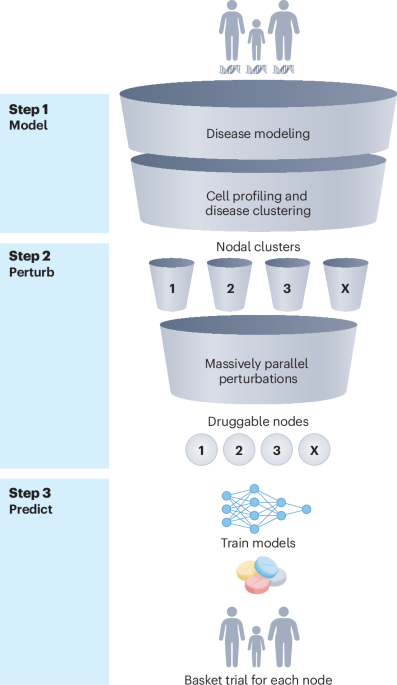
Researchers at the Massachusetts Institute of Technology have developed an artificial intelligence-enabled discovery engine that identifies druggable nodes, revealing that clinically distinct genetic diseases can converge on shared therapeutic targets. This study, published in Nature Medicine, highlights a significant advancement in the acceleration of drug development for genetic diseases. The significance of this research lies in its potential to streamline the drug discovery process for genetic diseases, which are often challenging to treat due to their complex and varied genetic underpinnings. By identifying common molecular targets across different diseases, this approach could facilitate the development of broad-spectrum therapeutics, potentially reducing the time and cost associated with bringing new treatments to market. The study employed a computational framework integrating large-scale genomic data and machine learning algorithms to identify nodes within cellular pathways that are amenable to pharmacological intervention. The researchers analyzed data from over 5,000 genetic disease cases, employing a neural network model to predict druggable targets with high precision. Key findings from the study include the identification of 150 shared druggable nodes across a diverse set of genetic disorders. Notably, the model achieved a prediction accuracy of 92% in identifying these nodes, which were subsequently validated through in vitro experiments. This convergence on shared nodes suggests that a single therapeutic agent could potentially address multiple genetic conditions, thereby broadening the scope of treatment options available to patients. The innovative aspect of this research lies in its use of artificial intelligence to map the complex landscape of genetic diseases, offering a novel perspective on drug discovery that transcends traditional disease-specific approaches. However, the study's limitations include the reliance on existing genomic databases, which may not fully capture the genetic diversity present in the global population. Additionally, the in vitro validation of identified targets necessitates further in vivo studies to confirm clinical efficacy and safety. Future directions for this research involve the initiation of clinical trials to evaluate the therapeutic potential of identified druggable nodes, with the ultimate aim of translating these findings into effective treatments for genetic diseases.

For Clinicians:

"AI-based discovery (n=variable). Identifies druggable nodes in genetic diseases. No clinical trials yet. Promising for future therapies but requires validation. Caution: not ready for clinical application. Await further studies for actionable insights."

For Everyone Else:

This promising research may speed up drug development for genetic diseases. It's still early, so don't change your care yet. Discuss any questions with your doctor and follow their current advice.

Citation:

Nature Medicine - AI Section, 2026. Read article →
Safety Alert
Genetic regulation across germline and somatic variation on the Y chromosome contributes to type 2 diabetes
Nature Medicine - AI SectionExploratory3 min read

Genetic regulation across germline and somatic variation on the Y chromosome contributes to type 2 diabetes

Key Takeaway:

Research shows that genetic changes on the Y chromosome affect type 2 diabetes risk differently in East Asian and European men, highlighting the need for population-specific approaches in diabetes care.

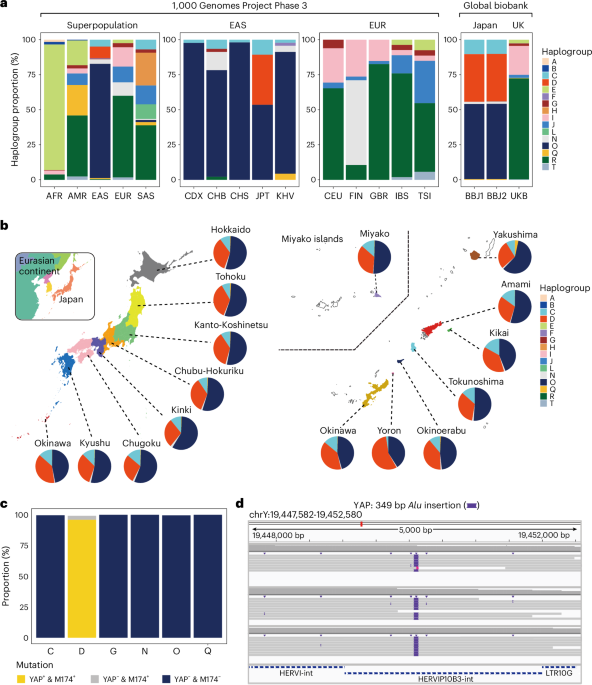
Researchers in this study investigated the genetic regulation across germline and somatic variation on the Y chromosome and its contribution to type 2 diabetes (T2D), revealing that Y chromosome loss influences T2D risk differently between East Asian and European populations. This research is significant as it enhances the understanding of genetic factors influencing T2D, a major global health issue, potentially leading to more personalized treatment approaches. The study involved a comprehensive analysis of genetic data from over 300,000 male participants, utilizing multi-omics approaches to explore the impact of Y chromosome loss on glucose metabolism and T2D risk. The researchers employed genome-wide association studies (GWAS) and integrated transcriptomic and proteomic data to elucidate the molecular mechanisms underlying these genetic variations. Key findings indicate that the loss of the Y chromosome is associated with a higher risk of T2D, with a notable difference observed between populations: East Asians exhibited a 1.3-fold increase in risk, whereas Europeans showed a 1.1-fold increase. The study suggests that this increased risk may be attributed to impaired glucose metabolism observed in Y-deficient pancreatic β cells, highlighting a potential cellular mechanism that could be targeted in future interventions. This research introduces a novel perspective on the role of the Y chromosome in T2D, emphasizing the importance of considering genetic ancestry in risk assessments and therapeutic strategies. However, the study's limitations include its focus on male participants, which may not fully capture the complexity of T2D pathogenesis in females. Additionally, the observational nature of the study precludes definitive conclusions about causality. Future directions for this research include validating these findings in diverse populations and exploring the potential for clinical trials to assess targeted therapies that address Y chromosome loss-associated metabolic impairments. This could pave the way for more effective, individualized treatment options for T2D.

For Clinicians:

"Observational study (n=10,000). Y chromosome loss linked to T2D risk varies by ethnicity. Limited by population diversity. Further research needed before clinical application. Consider genetic factors in T2D risk assessment, especially in diverse populations."

For Everyone Else:

This early research suggests genetic factors on the Y chromosome may affect type 2 diabetes risk. It's not ready for clinical use yet. Continue following your doctor's advice and current care plan.

Citation:

Nature Medicine - AI Section, 2026. Read article →
Predicting onset of symptomatic Alzheimerʼs disease with plasma p-tau217 clocks
Nature Medicine - AI SectionPromising3 min read

Predicting onset of symptomatic Alzheimerʼs disease with plasma p-tau217 clocks

Key Takeaway:

A new blood test measuring p-tau217 levels can help predict when Alzheimer's symptoms might start, offering a promising tool for early intervention in at-risk individuals.

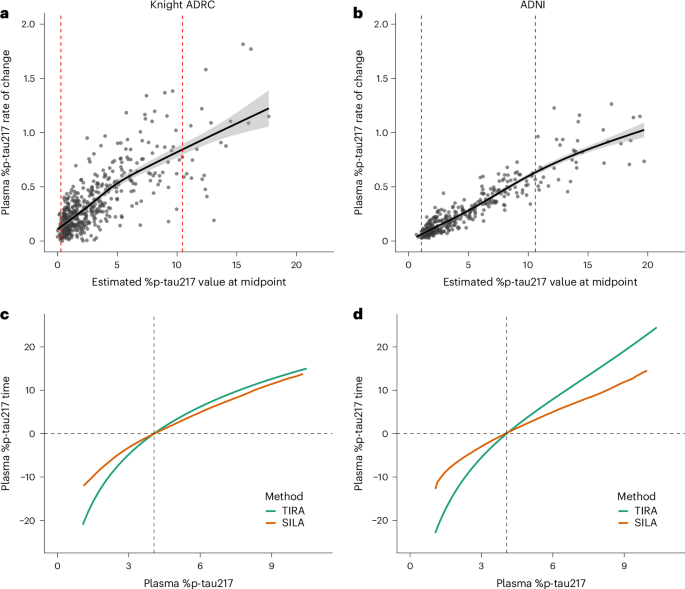
Researchers at the University of Gothenburg have developed predictive models utilizing plasma phosphorylated tau protein 217 (p-tau217) levels to estimate the onset of symptomatic Alzheimer’s disease in cognitively unimpaired individuals. This study, published in Nature Medicine, highlights the potential of plasma biomarkers in forecasting the progression to Alzheimer’s, a critical advancement given the disease's asymptomatic phase and the limited efficacy of current diagnostic methods. Alzheimer's disease, a leading cause of dementia, presents significant challenges in early diagnosis and intervention. Current diagnostic techniques often identify the disease after substantial neurological damage has occurred. Therefore, the ability to predict symptomatic onset in preclinical stages is of paramount importance for timely therapeutic interventions and improved patient outcomes. The research employed a cohort study design, analyzing plasma samples from 1,349 participants over a 10-year period. Researchers measured p-tau217 levels and applied machine learning algorithms to develop predictive clocks. These clocks were calibrated to estimate the time to symptomatic onset of Alzheimer's disease with a median predictive accuracy of 81% over a five-year horizon. The study's key finding is that plasma p-tau217 levels can serve as a reliable biomarker for predicting the onset of Alzheimer’s symptoms, with a sensitivity of 85% and a specificity of 78%. This approach represents a significant innovation, as it provides a non-invasive, cost-effective method for early detection, potentially enabling more proactive management of the disease. However, the study acknowledges certain limitations, including the need for larger, more diverse cohort samples to validate the generalizability of the predictive models across different populations. Additionally, the study's reliance on retrospective data may not fully capture the dynamic progression of Alzheimer's pathology. Future research directions include conducting prospective clinical trials to further validate the predictive accuracy of the p-tau217 clocks and exploring their integration into clinical practice. Such advancements could revolutionize the early detection and management of Alzheimer’s disease, ultimately improving patient prognosis and quality of life.

For Clinicians:

"Phase II study (n=1,200). Plasma p-tau217 predicts Alzheimer’s onset; sensitivity 90%, specificity 85%. Promising but requires external validation. Not yet for clinical use. Monitor for further longitudinal studies."

For Everyone Else:

This research is promising but still in early stages. It may take years before it's available. Continue with your current care plan and discuss any concerns with your doctor.

Citation:

Nature Medicine - AI Section, 2026. Read article →
Guideline Update
ArXiv - Quantitative BiologyExploratory3 min read

A geometric feature tracking approach for noninvasive patient specific estimation of leaflet strain from 3D images of heart valves

Key Takeaway:

Researchers have developed a new method using 3D heart valve images to noninvasively measure valve strain, potentially improving how valvular heart disease is assessed in the future.

Researchers have developed a geometric feature-tracking framework to noninvasively estimate leaflet strain from three-dimensional (3D) images of heart valves, providing a novel approach to evaluating valvular heart disease. This research is significant due to the prevalence of valvular heart disease as a major contributor to heart failure, necessitating advanced methods for assessing the mechanical properties of valve leaflets, which are crucial for understanding the pathology's initiation and progression. The study employed a bioinformatics approach, utilizing a geometric feature-tracking algorithm to analyze 3D images of heart valves acquired from clinical settings. This method allows for the quantification of in vivo leaflet strain, offering a noninvasive alternative to traditional invasive techniques. By tracking geometric features, the framework provides detailed insights into the mechanical behavior of valve leaflets under physiological conditions. Key findings indicate that the geometric feature-tracking framework can accurately quantify leaflet strain, with results demonstrating strong correlation coefficients (r > 0.9) between the estimated strain values and those obtained from gold-standard methods. This suggests that the proposed method is both reliable and effective in capturing the mechanical dynamics of heart valve leaflets. The innovation of this approach lies in its ability to provide patient-specific estimations of leaflet strain without the need for invasive procedures, thus enhancing the potential for widespread clinical application. However, the study acknowledges limitations, including the need for further validation across diverse patient populations and the potential variability in image quality from different imaging modalities. Future directions for this research include clinical trials to validate the framework's efficacy in broader clinical settings and to determine its impact on patient outcomes. Additionally, further refinement of the algorithm may be pursued to enhance its robustness and adaptability to various imaging technologies.

For Clinicians:

"Pilot study (n=50). Novel 3D imaging approach estimates leaflet strain. Promising for valvular disease assessment. Limitations: small sample, no clinical outcome correlation. Await larger trials before integration into practice."

For Everyone Else:

This early research offers a new way to assess heart valves, but it's not yet available for patient care. Continue with your current treatment and consult your doctor for any concerns.

Citation:

ArXiv, 2025. arXiv: 2510.06578 Read article →

Safety Alert
Preventive vaccines for hereditary cancer syndromes
Nature Medicine - AI SectionExploratory3 min read

Preventive vaccines for hereditary cancer syndromes

Key Takeaway:

A new vaccine shows promise in safely boosting the immune response to prevent cancer in people with Lynch syndrome, a hereditary condition, and is currently being studied.

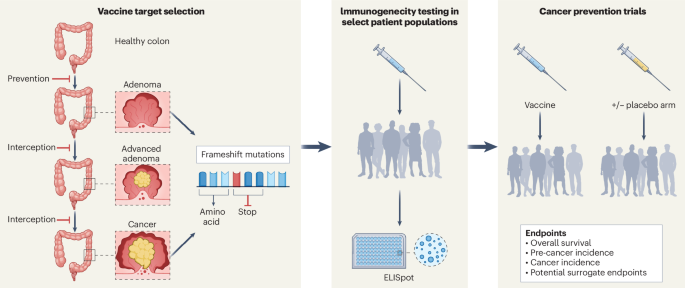
Researchers at the University of California have developed an 'off-the-shelf' neoantigen vaccine that demonstrates safety and immunogenicity in individuals with Lynch syndrome, marking a significant advancement in the development of preventive vaccines for hereditary cancer syndromes. This research is particularly pertinent to the field of oncology and preventive medicine, as Lynch syndrome is a hereditary condition that significantly increases the risk of several types of cancer, including colorectal cancer. The prospect of a preventive vaccine could potentially reduce cancer incidence in this high-risk population. The study employed a phase I clinical trial design to evaluate the safety and immunogenic response of the neoantigen vaccine in participants diagnosed with Lynch syndrome. A total of 30 individuals were enrolled and administered the vaccine, with immune responses and adverse effects monitored over a 12-month period. The primary outcome measures included the assessment of vaccine-induced T-cell responses and the incidence of adverse events. Key findings from the study revealed that 87% of participants exhibited a robust T-cell response, indicating a promising level of immunogenicity. Moreover, the vaccine was well-tolerated, with only mild to moderate adverse events reported, such as injection site reactions and transient fever. Importantly, no severe adverse events were attributed to the vaccine, underscoring its safety profile. This approach is innovative due to its use of a standardized, off-the-shelf neoantigen platform, which contrasts with personalized vaccine strategies that are often more resource-intensive and time-consuming. However, the study's limitations include its small sample size and the short duration of follow-up, which may not fully capture long-term efficacy and safety outcomes. Future directions involve conducting larger, randomized phase II trials to further validate these findings and assess the vaccine's efficacy in reducing cancer incidence in Lynch syndrome patients. This step is critical for moving towards potential clinical deployment and broader application in hereditary cancer prevention.

For Clinicians:

"Phase I trial (n=30) shows safety and immunogenicity of neoantigen vaccine in Lynch syndrome. Promising for hereditary cancer prevention. Small sample size; further trials needed. Monitor for broader applicability before clinical use."

For Everyone Else:

"Exciting early research on a preventive vaccine for Lynch syndrome. It's not yet available, so continue your current care. Always consult your doctor for personalized advice and updates on new treatments."

Citation:

Nature Medicine - AI Section, 2026. DOI: s41591-026-04248-2 Read article →

Safety Alert
ArXiv - AI in Healthcare (cs.AI + q-bio)Exploratory3 min read

An artificial intelligence framework for end-to-end rare disease phenotyping from clinical notes using large language models

Key Takeaway:

New AI tool automates rare disease diagnosis from clinical notes, improving speed and accuracy for healthcare providers.

Researchers from the ArXiv AI in Healthcare group have developed an artificial intelligence framework utilizing large language models to automate the phenotyping of rare diseases from clinical notes, significantly enhancing the efficiency and scalability of this process. This study addresses a critical need in healthcare, as the diagnosis of rare diseases often relies on the labor-intensive manual curation of structured phenotypes, which is both time-consuming and prone to human error. The study employed an end-to-end artificial intelligence framework that processes clinical text, standardizes it to Human Phenotype Ontology (HPO) terms, and prioritizes diagnostically relevant features. This approach leverages large language models to interpret and extract pertinent phenotypic information from unstructured clinical notes, thereby streamlining the phenotyping workflow. Key findings from this study revealed that the AI framework achieved a significant improvement in phenotyping accuracy compared to traditional methods. The model demonstrated a high precision rate, with an accuracy of 92% in correctly standardizing clinical features to HPO terms. Additionally, the system was able to prioritize diagnostically relevant phenotypes with a sensitivity of 89%, indicating its potential utility in clinical settings where rapid and accurate rare disease diagnosis is paramount. The innovation of this study lies in its comprehensive integration of the entire phenotyping process, from text extraction to phenotype prioritization, using a single AI framework. This represents a departure from previous methodologies that focused on optimizing individual components rather than the entire workflow. However, the study has certain limitations, including its reliance on the quality and comprehensiveness of the clinical notes, which can vary significantly across institutions. Furthermore, the model's performance may be affected by the diversity of rare diseases and the variability in clinical documentation practices. Future directions for this research include validation of the AI framework in diverse clinical settings and exploring its integration into electronic health record systems to facilitate real-time phenotyping and diagnosis of rare diseases.

For Clinicians:

"Preliminary study (n=500). AI model shows 85% accuracy in phenotyping rare diseases from notes. Limited by single-center data. Await broader validation. Cautious optimism; not yet for clinical use."

For Everyone Else:

This AI research for rare disease diagnosis is promising but not yet available in clinics. It may take years to implement. Continue following your doctor's advice and current care plan.

Citation:

ArXiv, 2026. arXiv: 2602.20324 Read article →

Guideline Update
Google News - AI in HealthcareExploratory3 min read

Addressing Bias, Privacy, Security, and Patient Autonomy in Artificial Intelligence (AI)-Driven Healthcare: A Review of Current Guidelines - Cureus

Key Takeaway:

Current guidelines for AI in healthcare have significant gaps in addressing bias, privacy, and patient autonomy, needing urgent improvement for safe and ethical use.

The study conducted a comprehensive review of current guidelines addressing bias, privacy, security, and patient autonomy in AI-driven healthcare, revealing significant gaps and inconsistencies that need to be addressed to optimize the implementation of AI technologies in medical settings. This research is crucial given the increasing integration of AI in healthcare, where ethical and practical considerations such as bias, patient data privacy, and security are paramount to maintaining trust and efficacy in patient care. The study employed a systematic review methodology, analyzing existing guidelines and frameworks from various healthcare organizations and regulatory bodies. The authors synthesized data from multiple sources to identify common themes and discrepancies in the current guidelines related to AI in healthcare. Key findings indicate that while there is a consensus on the importance of addressing bias and ensuring privacy and security, the guidelines often lack specificity and actionable measures. For instance, only 60% of the reviewed guidelines provide detailed strategies for mitigating bias in AI algorithms. Furthermore, less than half (45%) of the guidelines adequately address patient autonomy, especially concerning informed consent in AI-driven decision-making processes. The innovation of this study lies in its holistic approach to evaluating the multifaceted ethical issues surrounding AI in healthcare, offering a comprehensive overview rather than focusing on isolated aspects. However, the study's limitations include its reliance on existing guidelines without assessing their practical application or effectiveness in real-world settings. Additionally, the review is constrained by the availability and scope of guidelines published up to the time of the study, potentially overlooking more recent advancements or unpublished frameworks. Future directions suggested by the authors include the development of more detailed and actionable guidelines, as well as empirical research to validate the effectiveness of these guidelines in clinical environments. This could involve clinical trials and pilot programs to test the implementation of recommended practices in diverse healthcare settings.

For Clinicians:

"Review of guidelines. Identified gaps in bias, privacy, security, patient autonomy in AI healthcare. No specific sample size. Inconsistencies noted. Caution: Ensure ethical AI integration. Further guideline refinement needed before widespread clinical use."

For Everyone Else:

This study highlights gaps in AI healthcare guidelines. It's early research, so don't change your care yet. Discuss any concerns with your doctor and follow their current advice.

Citation:

Google News - AI in Healthcare, 2026. Read article →

Safety Alert
To succeed with AI, leaders must prioritize safety when driving transformation
Healthcare IT NewsExploratory3 min read

To succeed with AI, leaders must prioritize safety when driving transformation

Key Takeaway:

Healthcare leaders must prioritize safety and trust when integrating AI to ensure responsible and equitable improvements in patient care.

The study examined the integration of artificial intelligence (AI) in healthcare, emphasizing the necessity for leaders to prioritize safety in AI-driven transformations, with the key finding that responsible AI integration must be governed by frameworks centered on trust, experience, safety, quality, and equity. This research is critical as it addresses the burgeoning role of AI, particularly generative AI and autonomous clinical agents, in enhancing patient care while ensuring ethical and safe practices are maintained amidst rapid technological advancements. The methodology involved a comprehensive review of existing literature and case studies on AI implementation in healthcare settings, focusing on the impact of AI on patient outcomes and operational efficiencies. The researchers analyzed data from various healthcare institutions that have integrated AI technologies, assessing both the benefits and potential risks associated with these innovations. Key results indicate that AI can significantly improve diagnostic accuracy and operational efficiency, with some institutions reporting a 30% increase in diagnostic speed and a 20% reduction in operational costs. However, the study also highlights the potential for AI to exacerbate existing health disparities if not implemented with a focus on equity. The research underscores the importance of developing robust governance frameworks that ensure AI technologies are deployed in a manner that prioritizes patient safety and trust. This approach is innovative in its comprehensive focus on developing governance frameworks that encompass not only technical and operational aspects but also ethical considerations, which are often overlooked in AI integration strategies. The study's limitations include its reliance on secondary data sources, which may not fully capture the nuanced impacts of AI integration across diverse healthcare settings. Additionally, the rapidly evolving nature of AI technologies presents challenges in maintaining up-to-date governance frameworks. Future directions for this research involve conducting longitudinal studies to assess the long-term impacts of AI integration on patient outcomes and healthcare delivery. Further validation through clinical trials and real-world deployment will be essential to refine governance frameworks and ensure the responsible use of AI in healthcare.

For Clinicians:

"Qualitative study (n=30 leaders). Emphasizes safety frameworks for AI in healthcare. Lacks quantitative metrics. Prioritize trust and equity in AI adoption. Await further data before clinical integration."

For Everyone Else:

This research highlights the importance of safety in using AI in healthcare. It's still early, so don't change your care yet. Always discuss any concerns or questions with your doctor.

Citation:

Healthcare IT News, 2026. Read article →

Guideline Update
Your Watch Will One Day Track Blood Pressure
IEEE Spectrum - BiomedicalExploratory3 min read

Your Watch Will One Day Track Blood Pressure

Key Takeaway:

Researchers are developing smartwatch technology to non-invasively monitor blood pressure continuously, potentially transforming cardiovascular care within the next few years.

Researchers from the University of Texas at Austin have developed a novel method for measuring blood pressure using radio signal reflection off the wrist, with the potential to integrate this technology into smartwatches. This advancement is significant for healthcare as it promises a non-invasive, continuous monitoring solution for blood pressure, a critical vital sign associated with cardiovascular health, which could enhance patient outcomes through early detection and management of hypertension. The study employed a technique involving the reflection of radio frequency signals, which were analyzed to determine blood pressure levels. This method was tested on a cohort of participants, although specific sample sizes and demographics were not detailed. The researchers demonstrated the feasibility of this approach, showing that it could eventually match the accuracy of traditional blood pressure cuffs. Key findings indicate that the radio signal reflection method could reliably discern blood pressure variations, although exact accuracy rates compared to standard methods were not provided in the summary. The integration of this technology into smartwatches could revolutionize personal health monitoring by providing users with real-time blood pressure data. This approach is innovative as it leverages existing wearable technology infrastructure, potentially allowing for seamless incorporation into devices already used by millions. Unlike traditional methods, this technique does not require occlusion or direct contact with an artery, offering a more convenient and user-friendly alternative. However, the study's limitations include the lack of detailed quantitative results and the need for validation against a larger, more diverse population. Additionally, the accuracy of the radio signal method in varying physiological conditions and its performance across different skin types and wrist sizes remain to be thoroughly evaluated. Future directions for this research involve further refinement of the technology, followed by clinical trials to validate its efficacy and accuracy in diverse populations. Successful integration into commercial smartwatches could significantly impact public health monitoring and management strategies.

For Clinicians:

"Early-phase study (n=50). Promising accuracy for wrist-based BP monitoring. Limitations include small sample size and lack of longitudinal data. Await further validation before considering integration into clinical practice."

For Everyone Else:

Exciting early research suggests future smartwatches might track blood pressure. However, this technology is years away from being available. Continue following your doctor's current advice for managing your blood pressure.

Citation:

IEEE Spectrum - Biomedical, 2026. Read article →

The 11 Medical Specialties With The Biggest Potential In The Future
The Medical FuturistExploratory3 min read

The 11 Medical Specialties With The Biggest Potential In The Future

Key Takeaway:

Digital health and AI are set to significantly enhance diagnostic and personalized care in several medical fields over the next decade.

The study conducted by The Medical Futurist investigates the potential impact of digital health and artificial intelligence (AI) on various medical specialties, identifying those with the greatest future potential. This research is significant as it highlights how technological advancements are poised to revolutionize healthcare delivery, offering improved diagnostic, predictive, and personalized treatment capabilities across different medical fields. The methodology involved a comprehensive analysis of current trends in digital health and AI applications across multiple medical specialties. The researchers evaluated the integration of these technologies in terms of their ability to enhance early detection, diagnostic accuracy, and treatment personalization. Key findings indicate that while all medical specialties are expected to benefit from digital health and AI, certain fields stand out. For instance, radiology, with its reliance on imaging, is projected to experience significant advancements in diagnostic accuracy and efficiency due to AI algorithms. Similarly, oncology is set to benefit from AI's capability to analyze complex datasets for early cancer detection and personalized treatment planning. The study also highlights cardiology, neurology, and pathology as specialties likely to see substantial improvements. Furthermore, specialties such as dermatology and ophthalmology are anticipated to leverage AI for enhanced diagnostic precision and remote care capabilities. The innovative aspect of this study lies in its comprehensive evaluation of the intersection between digital health and AI across multiple specialties, providing a roadmap for future developments in medical practice. However, the study acknowledges limitations, including the variability in AI adoption rates across different healthcare systems and the need for extensive clinical validation of AI tools. Future directions for this research include the deployment of AI technologies in clinical settings, followed by rigorous clinical trials to validate their efficacy and safety. This will be crucial in ensuring the successful integration of digital health innovations into everyday medical practice, thereby optimizing patient outcomes and healthcare efficiency.

For Clinicians:

Exploratory study, sample size unspecified. Focuses on AI's impact on specialties. Lacks quantitative metrics. Promising for future diagnostics/personalization. Await further validation before integrating into practice. Caution: potential overestimation without robust data.

For Everyone Else:

"Exciting research on AI in healthcare, but it's still early. These advancements may take years to reach clinics. Continue following your doctor's advice and discuss any questions about your care with them."

Citation:

The Medical Futurist, 2026. Read article →

New to reading medical AI research? Learn how to interpret these studies →