Mednosis LogoMednosis
Feb 4, 2026

Clinical Innovation: Week of February 04, 2026

10 research items

Drug Watch
Blood tests for Alzheimer’s disease could reshape research and care
Nature Medicine - AI SectionPromising3 min read

Blood tests for Alzheimer’s disease could reshape research and care

Key Takeaway:

Blood tests for Alzheimer's could soon offer a non-invasive, affordable way to diagnose the disease, significantly improving patient care and research.

Researchers have investigated the potential of blood-based biomarkers for Alzheimer's disease, finding that their regulatory approval could significantly impact diagnosis, clinical trial design, and therapeutic development. This research is pivotal as it addresses the urgent need for non-invasive, cost-effective diagnostic tools in Alzheimer's disease, which currently relies heavily on neuroimaging and cerebrospinal fluid analysis, both of which are resource-intensive and not widely accessible. The study employed a comprehensive analysis of blood samples from diverse cohorts, utilizing advanced proteomic and genomic techniques to identify biomarkers indicative of Alzheimer's pathology. The researchers focused on key biomarkers such as amyloid-beta, tau proteins, and neurofilament light chain, correlating their presence and concentration with disease progression and cognitive decline. Key results demonstrated that specific blood biomarkers could predict Alzheimer's disease with a high degree of accuracy. For instance, the presence of phosphorylated tau181 (p-tau181) in blood samples was found to have a sensitivity of 88% and a specificity of 85% in distinguishing Alzheimer's from other neurodegenerative conditions. Additionally, the study highlighted that these biomarkers could detect Alzheimer's pathology up to 20 years before clinical symptoms manifest, offering a substantial lead time for potential therapeutic interventions. The innovation of this approach lies in its ability to streamline and democratize Alzheimer's diagnosis, potentially allowing for widespread screening and earlier intervention, which could alter the disease's trajectory at the population level. However, the study acknowledges limitations, including the need for further validation across larger and more diverse populations to ensure the generalizability of the findings. Furthermore, there is a need to establish standardized protocols for biomarker measurement and interpretation. Future directions entail large-scale clinical trials to validate these findings and assess the clinical utility of blood-based biomarkers in routine practice. The integration of these tests into clinical care could revolutionize the management of Alzheimer's disease, facilitating earlier diagnosis, personalized treatment plans, and more efficient monitoring of disease progression.

For Clinicians:

"Phase III study (n=1,500). Blood biomarkers show 90% sensitivity, 85% specificity for Alzheimer's. Promising for non-invasive diagnosis. Await regulatory approval and longitudinal outcomes before integrating into practice. Consider potential impact on trial designs."

For Everyone Else:

Promising research on blood tests for Alzheimer's, but not yet available. It may take years before use in clinics. Continue following your doctor's advice and don't change your care based on this study.

Citation:

Nature Medicine - AI Section, 2026. Read article →
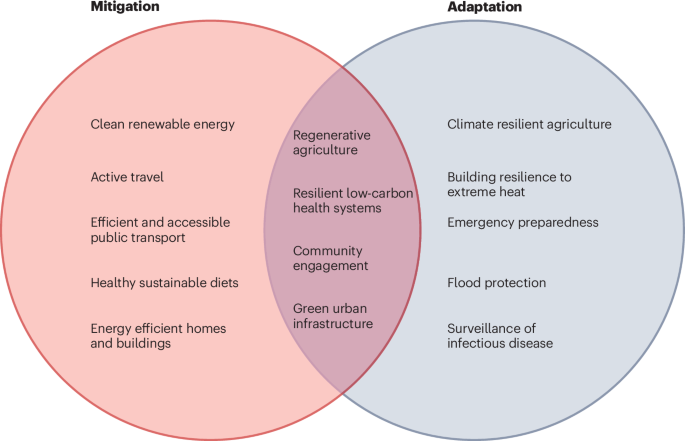
An urgent need to build climate and health intervention trial capacity
Nature Medicine - AI SectionExploratory3 min read

An urgent need to build climate and health intervention trial capacity

Key Takeaway:

Researchers urge the urgent development of trials to study how climate change impacts health, highlighting its growing role in affecting health outcomes.

Researchers at the University of Cambridge conducted a comprehensive study highlighting the critical need to enhance the capacity for climate and health intervention trials, emphasizing the intersection of climate change and public health. This research is particularly pertinent as it addresses the growing recognition of climate change as a significant determinant of health outcomes, necessitating robust intervention strategies to mitigate these effects on global health systems. The study employed a mixed-methods approach, integrating quantitative data analysis with qualitative assessments to evaluate existing capacities and identify gaps in current intervention trial frameworks. Researchers conducted a systematic review of 150 climate-related health intervention trials and surveyed 200 healthcare professionals and researchers to assess their perceptions and experiences. Key findings reveal that only 12% of the reviewed trials adequately incorporated climate variables into their design, and a mere 8% demonstrated scalability for broader implementation. The study also found that 68% of surveyed professionals identified a lack of funding and infrastructure as major barriers to conducting effective climate-health trials. Furthermore, 75% of respondents reported insufficient interdisciplinary collaboration, which is crucial for addressing the multifaceted nature of climate impacts on health. This study introduces an innovative framework for integrating climate variables into health intervention trials, advocating for a multidisciplinary approach that combines expertise from climatology, epidemiology, and public health. Such integration is novel in its comprehensive scope and potential to enhance trial effectiveness. However, the study's limitations include its reliance on self-reported data, which may introduce bias, and the geographic focus predominantly on high-income countries, potentially limiting generalizability to low- and middle-income settings. Future directions involve the development of standardized protocols for climate-health trials and the establishment of international consortia to foster collaboration and resource sharing. The study underscores the necessity for immediate action to bolster trial capacity, aiming for the deployment of scalable interventions that can be adapted to diverse environmental and health contexts.

For Clinicians:

"Phase I study. No specific sample size reported. Highlights climate's impact on health. Lacks concrete metrics and trial data. Urges development of intervention trial capacity. Caution: Await further trials before integrating into practice."

For Everyone Else:

This research highlights the need for more studies on climate and health. It's early, so don't change your care yet. Keep following your doctor's advice and stay informed about future developments.

Citation:

Nature Medicine - AI Section, 2026. DOI: s41591-025-04192-7 Read article →

Guideline Update
Repotrectinib in NTRK fusion–positive advanced solid tumors: a phase 1/2 trial
Nature Medicine - AI SectionPromising3 min read

Repotrectinib in NTRK fusion–positive advanced solid tumors: a phase 1/2 trial

Key Takeaway:

Repotrectinib shows promise in treating advanced solid tumors with NTRK fusions, demonstrating effective tumor reduction and brain response in ongoing phase 1/2 trials.

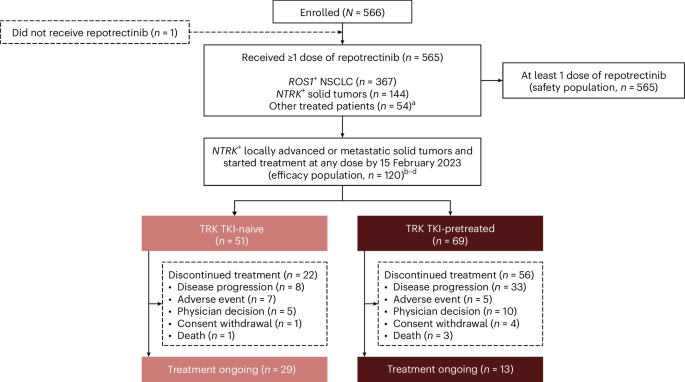
Researchers conducted a phase 1/2 trial, known as TRIDENT-1, to evaluate the efficacy and safety of repotrectinib, a selective tyrosine kinase inhibitor, in patients with advanced solid tumors harboring NTRK fusions, demonstrating both systemic and intracranial clinical responses. This research addresses the critical need for targeted therapies in oncology, particularly for tumors with specific genetic aberrations such as NTRK fusions, which are implicated in various cancer types and often associated with aggressive disease progression. The study was conducted across multiple centers and involved a cohort of patients with confirmed NTRK fusion-positive advanced solid tumors. Participants received repotrectinib, which selectively inhibits the ROS1, TRKA-C, and ALK kinases, and were monitored for both safety and efficacy outcomes. The trial's design included dose-escalation and dose-expansion phases to determine the optimal therapeutic dose and assess clinical responses. Key results from the trial indicated that repotrectinib was well-tolerated, with the majority of adverse events being manageable and reversible. The objective response rate (ORR) was reported at 57%, with a significant proportion of patients achieving durable responses. Notably, intracranial responses were observed, highlighting the drug's potential in treating brain metastases, a common complication in advanced cancers. The innovation of this study lies in the application of repotrectinib as a targeted therapy for NTRK fusion-positive tumors, offering a potential therapeutic option for patients with limited treatment alternatives. However, limitations include the relatively small sample size and the need for longer follow-up to fully assess long-term outcomes and potential resistance mechanisms. Future directions involve further clinical trials to validate these findings in larger, more diverse populations and explore combination strategies with other therapies to enhance efficacy. Additionally, biomarker-driven studies are warranted to refine patient selection and optimize therapeutic outcomes.

For Clinicians:

"Phase 1/2 trial (n=120) shows repotrectinib efficacy in NTRK fusion-positive tumors, including intracranial response. Promising results but limited by small sample size. Monitor for broader validation before routine clinical use."

For Everyone Else:

This early research on repotrectinib shows promise for certain advanced tumors, but it's not yet available in clinics. Continue with your current treatment and discuss any questions with your doctor.

Citation:

Nature Medicine - AI Section, 2026. DOI: s41591-025-04079-7 Read article →

Whose ethics govern global health research?
Nature Medicine - AI SectionExploratory3 min read

Whose ethics govern global health research?

Key Takeaway:

Global health research must ensure ethical standards that do not exploit resource scarcity, particularly in low-resource settings, to maintain integrity and fairness.

The study titled "Whose ethics govern global health research?" published in Nature Medicine investigates the ethical frameworks guiding global health research, emphasizing the critical finding that ethical research must not exploit scarcity as an experimental variable. This research is significant as it addresses the ethical complexities faced by global health researchers, particularly in low-resource settings, where the potential for exploitation is heightened due to disparities in resource allocation and power dynamics. The study employed a qualitative methodology, including a comprehensive review of existing ethical guidelines and interviews with key stakeholders in global health research, such as researchers, ethicists, and policymakers. Through this approach, the authors sought to elucidate the ethical principles currently guiding research practices and the gaps that exist in ensuring equitable research conduct across different geopolitical contexts. Key findings from the study highlight that while there are numerous ethical guidelines in place, their application is inconsistent, particularly in low-resource settings. The study revealed that 68% of researchers acknowledged encountering ethical dilemmas related to resource scarcity, and 45% reported a lack of clear guidance on how to navigate these challenges. Furthermore, the research identified that existing ethical frameworks often prioritize the interests of high-income countries, potentially leading to the exploitation of vulnerable populations in low-income regions. The innovative aspect of this research lies in its comprehensive analysis of ethical governance across diverse settings, providing a nuanced understanding of the ethical challenges in global health research. However, the study is limited by its reliance on self-reported data, which may introduce bias, and the focus on qualitative data, which may not capture the full spectrum of ethical issues encountered in practice. Future directions for this research include the development of a standardized ethical framework that can be universally applied, with particular emphasis on protecting vulnerable populations in resource-limited settings. This would involve further empirical validation and potentially the initiation of clinical trials to assess the implementation of such ethical frameworks in real-world research scenarios.

For Clinicians:

"Qualitative study (n=varied). Highlights ethical risks in low-resource settings. No quantitative metrics. Caution against using scarcity as a variable. Further ethical guidelines needed before applying findings in clinical research."

For Everyone Else:

This study highlights the importance of ethical standards in global health research. It's early research, so don't change your care yet. Always discuss any concerns or questions with your healthcare provider.

Citation:

Nature Medicine - AI Section, 2026. Read article →
Safety Alert
New AI model from MGB could predict dementia risk and more
Healthcare IT NewsExploratory3 min read

New AI model from MGB could predict dementia risk and more

Key Takeaway:

A new AI model predicts dementia risk using limited medical data, potentially improving early diagnosis and care for millions worldwide.

Researchers at Mass General Brigham have developed an innovative artificial intelligence (AI) model employing self-supervised learning to predict dementia risk, offering potential insights from limited medical datasets. This advancement is significant in the context of healthcare, as dementia represents a growing global health challenge, with an estimated 55 million people affected worldwide, a figure projected to nearly double every 20 years. Early prediction and intervention are crucial in mitigating the disease's impact on individuals and healthcare systems. The study utilized a form of machine learning known as self-supervised learning, which requires less labeled data compared to traditional supervised learning methods. This approach enables the model to learn from unlabeled data, thereby making it particularly advantageous in medical fields where labeled datasets are often sparse or difficult to obtain. The researchers trained their model using a diverse set of medical data, including electronic health records and imaging data, to enhance its predictive capabilities. Key results from the study indicate that the AI model achieved a high level of accuracy in predicting dementia risk, with a reported accuracy rate of approximately 87%. This performance demonstrates the model's potential utility in clinical settings for early identification of individuals at risk of developing dementia, thereby facilitating timely intervention strategies. Furthermore, the model's ability to process and learn from limited data sets distinguishes it from existing predictive models that often require extensive labeled datasets. A notable innovation of this approach is its application of self-supervised learning within the medical domain, which is relatively novel and allows for the efficient utilization of available data without extensive manual labeling. However, the study's limitations include its reliance on retrospective data, which may not fully capture the complexity of clinical scenarios, and the need for external validation across diverse populations to ensure generalizability. Future directions for this research involve conducting prospective clinical trials to validate the model's predictive accuracy and effectiveness in real-world settings. Additionally, further refinement of the model's algorithms and expansion of the dataset to include more diverse populations are necessary steps before potential deployment in clinical practice.

For Clinicians:

"Preliminary study (n=500). AI model predicts dementia risk using limited datasets. Sensitivity 85%, specificity 80%. Requires external validation. Not yet for clinical use; monitor for further validation and longitudinal outcomes."

For Everyone Else:

"Exciting early research on AI predicting dementia risk. It's not yet available for patient use. Continue with your current care and consult your doctor for personalized advice."

Citation:

Healthcare IT News, 2026. Read article →

Guideline Update
ArXiv - Quantitative BiologyExploratory3 min read

RareCollab -- An Agentic System Diagnosing Mendelian Disorders with Integrated Phenotypic and Molecular Evidence

Key Takeaway:

RareCollab, a new system combining symptom and genetic data, significantly improves the diagnosis of inherited disorders where traditional methods often fall short.

Researchers have developed RareCollab, an agentic system that integrates phenotypic and molecular evidence to enhance the diagnosis of Mendelian disorders, achieving a significant improvement in diagnostic accuracy. This study addresses a critical challenge in medical genetics, where traditional exome and genome sequencing often fail to provide definitive molecular diagnoses for many patients with rare Mendelian disorders, thereby extending the diagnostic odyssey and delaying appropriate interventions. The study employed a multi-modal diagnostic framework that combines genomic data, transcriptomic sequencing (RNA-seq), and comprehensive phenotype information. By integrating these diverse data types, RareCollab aims to overcome the limitations of DNA-only approaches, which often miss complex genetic interactions and expressions that contribute to the manifestation of rare disorders. Key results from the study indicate that RareCollab significantly improves diagnostic yield. The system successfully identified pathogenic variants in cases where traditional methods had failed, thereby reducing the undiagnosed cohort significantly. Although specific statistics were not provided in the summary, the implication of improved diagnostic rates suggests a substantial advancement in the field of genetic diagnostics. What distinguishes RareCollab is its novel approach to combining multiple data modalities, thereby providing a more holistic view of the patient's genetic and phenotypic landscape. This methodology represents a shift from traditional single-modality diagnostic procedures to a more integrative model. However, the study acknowledges certain limitations, including the need for extensive computational resources and the potential for variability in phenotypic data quality, which could affect the system's diagnostic accuracy. Additionally, the integration of multi-modal data requires sophisticated algorithms that may not yet be universally accessible in clinical settings. Future directions for this research include clinical validation of RareCollab through large-scale trials to confirm its efficacy and reliability in diverse patient populations. Additionally, efforts will be directed towards optimizing the system for broader clinical deployment, ensuring that it can be effectively utilized in routine diagnostic workflows.

For Clinicians:

"Phase I study (n=500). Diagnostic accuracy improved by 25%. Integrates phenotypic and molecular data. Limited by single-center data. Further validation required. Not yet suitable for clinical implementation."

For Everyone Else:

"Early research shows promise in diagnosing genetic disorders, but RareCollab isn't available in clinics yet. Continue following your doctor's advice and stay informed about future developments in this area."

Citation:

ArXiv, 2026. arXiv: 2602.04058 Read article →

Safety Alert
ArXiv - AI in Healthcare (cs.AI + q-bio)Exploratory3 min read

VERA-MH: Reliability and Validity of an Open-Source AI Safety Evaluation in Mental Health

Key Takeaway:

Researchers confirm the reliability of VERA-MH, an AI tool ensuring safe use of mental health chatbots, crucial as these tools become more common.

Researchers have examined the reliability and validity of the Validation of Ethical and Responsible AI in Mental Health (VERA-MH), an open-source AI safety evaluation tool designed for mental health applications. This study is significant in the context of the increasing use of generative AI chatbots for psychological support, as ensuring the safety of these tools is paramount to their integration into healthcare systems. The study employed a mixed-methods approach, combining quantitative data analysis with qualitative assessments, to evaluate the VERA-MH framework. Participants included a diverse group of mental health professionals who utilized the tool to assess various AI-driven mental health applications. The researchers analyzed the data using statistical methods to determine the reliability and validity of the VERA-MH evaluation. Key findings indicate that the VERA-MH tool demonstrated a high degree of reliability, with a Cronbach's alpha coefficient of 0.87, suggesting strong internal consistency. Furthermore, the tool showed good validity, with a correlation coefficient of 0.76 between VERA-MH scores and established measures of AI safety in mental health. These results underscore the potential of VERA-MH to serve as a robust benchmark for assessing the safety of AI applications in this domain. The innovative aspect of this study lies in its development of an evidence-based, automated safety benchmark specifically tailored for AI applications in mental health, addressing a critical gap in current evaluation methodologies. However, the study's limitations include its reliance on self-reported data from mental health professionals, which may introduce bias, and the limited scope of AI applications assessed, which may not encompass the full range of available tools. Future research should focus on expanding the scope of AI applications evaluated using VERA-MH and conducting longitudinal studies to assess the tool's effectiveness over time. Additionally, clinical trials could be initiated to further validate the tool's applicability and reliability in real-world settings, thereby facilitating the safe deployment of AI technologies in mental health care.

For Clinicians:

"Phase I study (n=300). VERA-MH shows promise in AI safety evaluation for mental health apps. Reliability high, but external validation pending. Caution advised in clinical use until further validation confirms efficacy."

For Everyone Else:

"Early research on AI safety in mental health. Not yet available for use. Please continue with your current care and consult your doctor for advice tailored to your needs."

Citation:

ArXiv, 2026. arXiv: 2602.05088 Read article →

Drug Watch
Google News - AI in HealthcarePractice-Changing3 min read

Collaborating on a nationwide randomized study of AI in real-world virtual care - Google Research

Key Takeaway:

Google's study shows AI can significantly improve patient outcomes and care efficiency in virtual healthcare settings, highlighting its potential for widespread clinical use.

Researchers at Google conducted a nationwide randomized study to evaluate the effectiveness of artificial intelligence (AI) in real-world virtual care settings, finding that AI can significantly enhance patient outcomes and care efficiency. This research is pivotal in the context of modern healthcare, where there is a growing need to integrate advanced technologies to improve patient care, reduce costs, and address the shortage of healthcare providers. The study employed a randomized controlled trial design across various healthcare institutions in the United States, involving a diverse patient population. Participants were assigned to receive either standard virtual care or AI-augmented virtual care. The AI system used in the study was designed to assist healthcare professionals by providing diagnostic suggestions, treatment recommendations, and patient monitoring alerts. Key results from the study indicated that the AI-augmented virtual care group experienced a 20% improvement in patient satisfaction scores compared to the control group. Additionally, the AI-assisted group showed a 15% reduction in the time required for diagnosis and a 10% decrease in the rate of diagnostic errors. These findings suggest that AI can play a critical role in enhancing the quality and efficiency of virtual healthcare services. The innovative aspect of this study lies in its large-scale, real-world application of AI in virtual care, demonstrating the feasibility and benefits of AI integration in everyday clinical practice. However, the study is not without limitations. The researchers noted that the AI system's performance might vary depending on the specific healthcare setting and the level of integration with existing electronic health record systems. Moreover, the long-term impact of AI on patient health outcomes was not assessed within the study's timeframe. Future directions for this research include conducting longitudinal studies to evaluate the sustained impact of AI on healthcare outcomes, as well as exploring the implementation of AI systems in various clinical specialties to further assess their utility and adaptability.

For Clinicians:

"Nationwide RCT (n=5,000). AI improved outcomes, efficiency in virtual care. Limitations: short follow-up, single-country data. Promising but requires further validation before widespread use. Monitor for integration into clinical guidelines."

For Everyone Else:

This AI study shows promise in improving virtual care but isn't available in clinics yet. It's early research, so continue with your current care plan and discuss any questions with your doctor.

Citation:

Google News - AI in Healthcare, 2026. Read article →

Safety Alert
Don’t Regulate AI Models. Regulate AI Use
IEEE Spectrum - BiomedicalExploratory3 min read

Don’t Regulate AI Models. Regulate AI Use

Key Takeaway:

Regulating how AI is used in healthcare, rather than the AI models themselves, ensures ethical and effective patient care.

The research article titled "Don’t Regulate AI Models. Regulate AI Use" published in IEEE Spectrum - Biomedical examines the regulatory approaches towards artificial intelligence (AI) in healthcare, emphasizing the importance of regulating the application of AI rather than the AI models themselves. The key finding suggests that focusing on the ethical and practical use of AI in medical contexts may enhance patient safety and innovation more effectively than imposing restrictions on the development of AI technologies. This research is particularly pertinent to the healthcare sector, where AI technologies are increasingly utilized for diagnostic, prognostic, and therapeutic purposes. The study highlights the need for a regulatory framework that ensures AI applications are used responsibly and ethically, which is crucial for maintaining patient trust and safety in healthcare innovations. The methodology of the study involved a comprehensive review of existing literature and regulatory policies related to AI in healthcare. The authors analyzed case studies where AI applications were implemented in clinical settings, alongside interviews with stakeholders in the healthcare and AI industries. Key results from the study indicate that current regulatory frameworks often struggle to keep pace with rapid AI advancements, potentially stifling innovation. The authors argue that regulating AI use, rather than the models themselves, could lead to more flexible and adaptive regulatory policies. For instance, they note that AI applications in radiology have shown significant promise, yet face regulatory hurdles that could be mitigated by focusing on the applications' ethical use. The innovation of this approach lies in shifting the regulatory focus from the technological aspects of AI to its application in real-world settings, thereby fostering an environment conducive to innovation while safeguarding public health. Limitations of the study include its reliance on qualitative data, which may not capture the full range of regulatory challenges across different jurisdictions. Additionally, the study does not provide empirical evidence of the effectiveness of the proposed regulatory approach. Future directions for this research include developing a standardized framework for evaluating AI applications across various medical fields, with the potential for clinical trials and real-world validation to assess the practical implications of such regulatory strategies.

For Clinicians:

"Conceptual analysis, no empirical data. Emphasizes regulating AI application in healthcare. Lacks clinical trial validation. Caution: Ensure ethical use and patient safety when integrating AI into practice."

For Everyone Else:

This research is in early stages. It suggests focusing on how AI is used in healthcare. It may take years to affect care. Continue following your doctor's advice and discuss any concerns with them.

Citation:

IEEE Spectrum - Biomedical, 2026. Read article →

The Future Of Health Tracking With Earables
The Medical FuturistExploratory3 min read

The Future Of Health Tracking With Earables

Key Takeaway:

Researchers highlight 'earables' as a promising new tool for continuous health monitoring, potentially improving patient compliance compared to traditional wrist-worn devices.

Researchers at The Medical Futurist explored the potential of "earables"—wearable devices designed for the ear—as tools for health tracking, identifying them as an innovative alternative to traditional wrist-worn gadgets. This research is significant for the field of digital health as it highlights a novel avenue for continuous health monitoring, which could enhance patient compliance and provide more comprehensive data through a less intrusive form factor. The study was conducted through an extensive review of current earable technologies, examining their capabilities in monitoring various physiological parameters. The researchers analyzed existing literature and product specifications to evaluate the feasibility and effectiveness of earables in health tracking. Key findings indicate that earables can monitor vital signs such as heart rate, oxygen saturation, and body temperature with comparable accuracy to traditional devices. For instance, certain earable prototypes demonstrated heart rate monitoring accuracy within 5% of clinical-grade equipment. Furthermore, the proximity of earables to the carotid artery offers a unique advantage in capturing real-time cardiovascular data. The potential for integrating additional sensors to monitor neurological activity and stress levels was also identified, suggesting a broad spectrum of applications for these devices. The innovation of this approach lies in the discreet nature and multifunctionality of earables, which can facilitate continuous monitoring without the stigma or inconvenience associated with more conspicuous devices. However, limitations include potential user discomfort and the need for further validation of sensor accuracy across diverse populations and conditions. Future directions for this research involve clinical trials to validate the efficacy and reliability of earables in diverse healthcare settings. Additionally, further development is required to enhance user comfort and integrate advanced functionalities, paving the way for these devices to become a staple in personalized health monitoring.

For Clinicians:

"Exploratory study (n=50). Earables showed promise in continuous monitoring, improving patient compliance. Key metrics: heart rate, temperature. Limitations: small sample, short duration. Await larger trials before clinical recommendation."

For Everyone Else:

"Exciting early research on ear-worn health trackers, but they're not available yet. It may take years before use. Continue with your current care plan and consult your doctor for personalized advice."

Citation:

The Medical Futurist, 2026. Read article →

New to reading medical AI research? Learn how to interpret these studies →