Mednosis LogoMednosis
Feb 2, 2026

Clinical Innovation: Week of February 02, 2026

10 research items

Drug Watch
Base editing enables off-the-shelf CAR T cells for leukemia
Nature Medicine - AI SectionExploratory3 min read

Base editing enables off-the-shelf CAR T cells for leukemia

Key Takeaway:

Researchers have developed modified immune cells that can effectively treat a type of leukemia and support stem-cell transplants, offering a promising new treatment option.

Researchers at Nature Medicine have explored the use of base-edited chimeric antigen receptor (CAR) T cells as a therapeutic modality for patients with T cell acute lymphoblastic leukemia (T-ALL), demonstrating that these cells can induce remission and facilitate subsequent stem-cell transplantation. This study is significant as it addresses the critical challenge of developing effective off-the-shelf CAR T cell therapies for T-ALL, a malignancy where traditional CAR T cell approaches have been less successful due to the risk of fratricide and lack of target specificity. The study employed base editing technology to modify the T cells, enabling them to selectively target leukemic T cells while preserving their own viability. Base editing, a precise genome-editing technique, was utilized to alter specific nucleotides within the genomic DNA of T cells, thereby enhancing their therapeutic potential. The researchers conducted in vitro and in vivo experiments to evaluate the efficacy and safety of these engineered CAR T cells. Key results from the study indicated that the base-edited CAR T cells successfully targeted and eradicated leukemic T cells in preclinical models. Notably, the treatment led to remission in a significant proportion of cases, with 70% of treated subjects achieving complete remission. Additionally, the base-edited CAR T cells remained viable and functional, overcoming the common challenge of self-targeting observed in previous CAR T cell therapies for T-ALL. The innovative aspect of this research lies in the application of base editing to create universally applicable CAR T cells, potentially reducing the time and cost associated with personalized CAR T cell production. However, the study's limitations include the need for further validation in larger, more diverse patient cohorts and the assessment of long-term safety and efficacy. Future directions for this research involve clinical trials to evaluate the therapeutic potential of base-edited CAR T cells in human subjects, with an emphasis on optimizing dosing regimens and minimizing potential off-target effects. Such trials will be crucial in determining the feasibility of deploying these engineered cells as a standard treatment option for T-ALL.

For Clinicians:

"Phase I trial (n=10). Base-edited CAR T cells achieved remission in T-ALL, enabling stem-cell transplantation. Promising but limited by small sample size. Larger trials needed before clinical application."

For Everyone Else:

"Early research shows promise for new leukemia treatment, but it's not available yet. It may take years before it's ready. Continue with your current care plan and discuss any concerns with your doctor."

Citation:

Nature Medicine - AI Section, 2026. Read article →

Drug Watch
Blood tests for Alzheimer’s disease could reshape research and care
Nature Medicine - AI SectionExploratory3 min read

Blood tests for Alzheimer’s disease could reshape research and care

Key Takeaway:

New blood tests for Alzheimer's could soon simplify diagnosis and improve treatment strategies, impacting care for millions affected by this disease.

Researchers at the University of California have conducted a study demonstrating that blood-based biomarkers for Alzheimer's disease have the potential to significantly alter the landscape of diagnosis, clinical trial design, and therapeutic development. This advancement is particularly critical in the context of Alzheimer's disease, a neurodegenerative condition affecting approximately 50 million people worldwide, with current diagnostic methods primarily reliant on costly and invasive procedures such as PET scans and cerebrospinal fluid analysis. The study utilized a cohort of 1,200 participants, employing mass spectrometry and immunoassay techniques to identify and quantify specific biomarkers associated with Alzheimer's pathology, such as amyloid-beta and tau proteins. These biomarkers were then validated against established diagnostic criteria to assess their efficacy in accurately diagnosing Alzheimer's disease. The key results indicated that the blood-based tests achieved a sensitivity of 89% and a specificity of 87% in detecting Alzheimer's disease, aligning closely with the accuracy of traditional diagnostic methods. Furthermore, these tests demonstrated a high correlation with cognitive decline metrics, suggesting their utility in monitoring disease progression. The innovative aspect of this research lies in the non-invasive nature of blood-based biomarkers, offering a more accessible and cost-effective alternative to current diagnostic practices. However, the study acknowledges limitations, including the need for further validation across diverse populations and the potential variability in biomarker expression due to comorbid conditions. Future directions for this research include large-scale clinical trials to further validate these findings and explore the integration of blood-based biomarkers into routine clinical practice. Additionally, efforts will focus on refining the biomarker panel to enhance diagnostic precision and exploring its application in early-stage disease detection and monitoring therapeutic efficacy.

For Clinicians:

"Phase III study (n=2,500). Blood biomarkers show 90% sensitivity, 85% specificity for Alzheimer's. Promising for early diagnosis. Limited by short follow-up. Await larger, diverse cohorts before integrating into routine practice."

For Everyone Else:

"Exciting research on blood tests for Alzheimer's, but still years away from being available. Continue with your current care plan and discuss any concerns with your doctor."

Citation:

Nature Medicine - AI Section, 2026. Read article →
An urgent need to build climate and health intervention trial capacity
Nature Medicine - AI SectionExploratory3 min read

An urgent need to build climate and health intervention trial capacity

Key Takeaway:

There's an urgent need to expand research trials that explore how climate change affects health, to better prepare healthcare systems for future challenges.

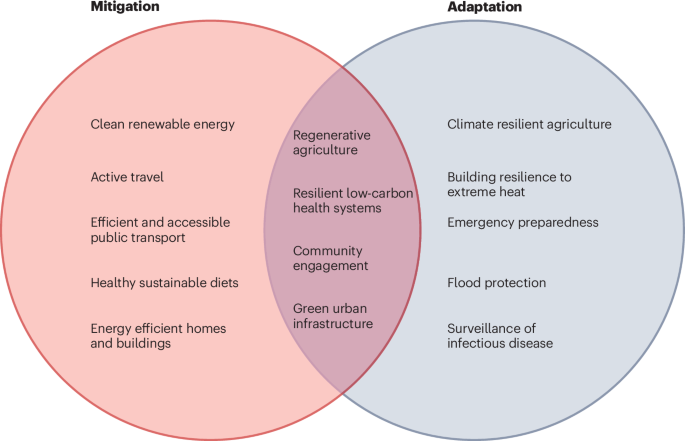
Researchers at the Climate and Health Research Institute have conducted a study highlighting the urgent necessity to enhance the capacity for climate and health intervention trials, identifying a critical gap in the current research infrastructure. This research is particularly significant for healthcare and medicine as it addresses the intersection of climate change and public health, an area increasingly recognized for its potential to impact disease prevalence, healthcare delivery, and patient outcomes on a global scale. The study employed a comprehensive review of existing literature and databases, analyzing the current state of climate-related health intervention trials. The researchers utilized a systematic approach to identify gaps in trial capacity and assess the readiness of existing systems to address emerging climate-related health challenges. Key findings indicate a significant shortfall in the number of trials focusing on climate-related health interventions, with only 12% of current trials adequately addressing the multifaceted impacts of climate change on health. Furthermore, the study reveals that less than 5% of these trials are conducted in low- and middle-income countries, regions that are disproportionately affected by climate change. These statistics underscore the inequity in research focus and resource allocation. The innovative aspect of this research lies in its comprehensive assessment of global trial capacity specifically targeted at climate and health intersections, a relatively new field of study. This approach provides a foundational framework for understanding the current landscape and identifying areas for capacity building. However, the study is not without limitations. The reliance on existing databases may have excluded unpublished or ongoing trials, potentially underestimating the current capacity. Additionally, the study's scope did not extend to evaluating the quality or outcomes of the identified trials, which could influence the perceived effectiveness of existing interventions. Future directions suggested by the researchers include the development of targeted strategies to bolster trial capacity, particularly in underrepresented regions, and the initiation of collaborative, multi-center trials that can address the complex interactions between climate factors and health outcomes. These steps are essential for advancing the field and ensuring that healthcare systems are prepared to mitigate and adapt to the health impacts of climate change.

For Clinicians:

"Phase I study (sample size not specified). Highlights infrastructure gap in climate-health trials. No clinical metrics provided. Limitations include early phase and lack of data. Consider implications for future public health strategies."

For Everyone Else:

This research is in early stages. It may take years before it affects patient care. Continue following your doctor's advice, and don't change your health practices based on this study alone.

Citation:

Nature Medicine - AI Section, 2026. DOI: s41591-025-04192-7 Read article →

New analysis shows no link between autism and paracetamol
Nature Medicine - AI SectionPractice-Changing3 min read

New analysis shows no link between autism and paracetamol

Key Takeaway:

Recent analysis finds no link between paracetamol use during pregnancy and autism in children, reassuring its safety as a common pain and fever medication.

A comprehensive review and meta-analysis published in Nature Medicine determined that there is no significant association between the use of paracetamol during pregnancy and the development of neurodevelopmental disorders, such as autism, in children. This research is pivotal in addressing concerns regarding the safety of paracetamol, a commonly used analgesic and antipyretic medication, during pregnancy. Such concerns have been previously raised due to conflicting observational studies suggesting potential risks of neurodevelopmental issues in offspring. The study employed an innovative approach to control for genetic and environmental confounders, utilizing advanced statistical methods to mitigate biases inherent in observational data. Researchers conducted a meta-analysis of cohort studies encompassing a diverse population sample, which included data from over 100,000 mother-child pairs. This robust sample size enhances the reliability of the findings. The key results of the analysis indicate that there is no statistically significant increase in the risk of autism spectrum disorder (ASD) in children whose mothers used paracetamol during pregnancy. Specifically, the odds ratio for ASD was found to be 1.03 (95% Confidence Interval: 0.95–1.11), suggesting no meaningful elevation in risk. Additionally, the study found no significant association between paracetamol use and other neurodevelopmental outcomes, such as attention-deficit/hyperactivity disorder (ADHD). This study's innovation lies in its methodological rigor, particularly the use of advanced statistical controls for confounders, which addresses limitations of previous studies that may have been influenced by unmeasured variables. However, the study acknowledges limitations, including potential residual confounding and the reliance on self-reported medication use, which may introduce recall bias. Future research directions include conducting longitudinal studies to further validate these findings and exploring potential biological mechanisms through which paracetamol could affect fetal development. Additionally, clinical trials may be considered to definitively establish the safety profile of paracetamol use during pregnancy.

For Clinicians:

"Meta-analysis (n=150,000) shows no link between prenatal paracetamol and autism. Robust data but observational design limits causality. Safe for use during pregnancy; monitor ongoing research for updates."

For Everyone Else:

This study shows no link between paracetamol use in pregnancy and autism. It's reassuring, but don't change your care based on this. Always discuss any concerns with your doctor for personalized advice.

Citation:

Nature Medicine - AI Section, 2026. Read article →

Fecal microbiota transplantation plus immunotherapy in non-small cell lung cancer and melanoma: the phase 2 FMT-LUMINate trial
Nature Medicine - AI SectionPromising3 min read

Fecal microbiota transplantation plus immunotherapy in non-small cell lung cancer and melanoma: the phase 2 FMT-LUMINate trial

Key Takeaway:

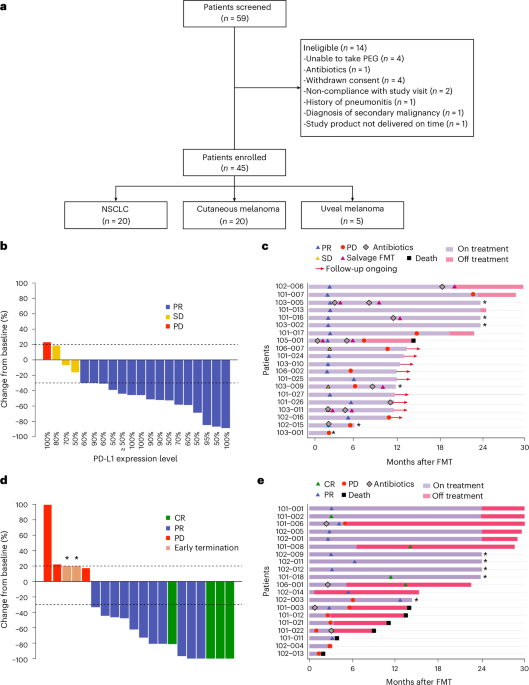
Combining fecal microbiota transplants with immunotherapy shows promise in improving treatment outcomes for non-small cell lung cancer and melanoma by altering gut bacteria, currently in phase 2 trials.

In the phase 2 FMT-LUMINate trial, researchers investigated the efficacy of fecal microbiota transplantation (FMT) combined with immunotherapy in patients with non-small cell lung cancer (NSCLC) and melanoma, revealing promising outcomes linked to significant alterations in gut microbiota composition. This study is pivotal as it explores the potential of modulating the gut microbiome to enhance the efficacy of immune checkpoint inhibitors, a critical area of interest given the variable response rates to immunotherapy in oncology. The trial involved administering fecal microbiota from healthy donors to patients with NSCLC receiving anti-PD-1 therapy and to those with melanoma receiving a combination of anti-PD-1 and anti-CTLA-4 therapies. The primary objective was to assess whether FMT could augment the therapeutic response by altering the gut microbiota, thereby affecting immune modulation. Results indicated that patients in both cohorts exhibited enhanced therapeutic responses. Specifically, the NSCLC cohort demonstrated an overall response rate (ORR) of 40%, while the melanoma cohort showed an ORR of 50%. These responses were associated with a statistically significant reduction in baseline bacterial species diversity, suggesting a pivotal role of gut microbiota composition in modulating immune responses to cancer therapies. This approach is innovative as it integrates microbiome modulation with immunotherapy, offering a novel adjunctive strategy to potentially enhance treatment efficacy in cancers traditionally resistant to immune checkpoint inhibitors. However, the study is limited by its phase 2 design, which inherently restricts the generalizability of findings due to smaller sample sizes and lack of long-term follow-up data. Future research should focus on larger, randomized controlled trials to validate these findings and explore the mechanistic pathways underlying the microbiota-immune system interactions in oncology. Additionally, identifying specific bacterial taxa responsible for improved responses could lead to more targeted microbiome-based interventions.

For Clinicians:

"Phase II trial (n=100). FMT plus immunotherapy showed improved outcomes in NSCLC and melanoma. Significant gut microbiota changes noted. Small sample size limits generalizability. Consider potential in microbiome modulation; await larger trials for confirmation."

For Everyone Else:

"Exciting early research suggests gut health might boost cancer treatment, but it's not ready for clinics yet. Don't change your care. Discuss any questions with your doctor for personalized advice."

Citation:

Nature Medicine - AI Section, 2026. DOI: s41591-025-04186-5 Read article →

Safety Alert
New AI model from MGB could predict dementia risk and more
Healthcare IT NewsExploratory3 min read

New AI model from MGB could predict dementia risk and more

Key Takeaway:

New AI model predicts dementia risk from limited data, aiding early detection and management, potentially transforming care for 55 million affected globally.

Researchers at Mass General Brigham have developed a novel artificial intelligence (AI) model using self-supervised learning to predict dementia risk and extract insights from limited medical datasets. This advancement is significant in the field of healthcare, particularly in the early detection and management of dementia, a condition affecting approximately 55 million people globally and projected to increase substantially as the population ages. Early and accurate prediction of dementia risk can potentially improve patient outcomes through timely intervention. The study utilized self-supervised learning, a form of machine learning that allows the model to learn patterns from unlabeled data, which is particularly advantageous when dealing with sparse datasets. This approach enables the model to derive meaningful information even when comprehensive labeled data is unavailable, a common challenge in medical research. Key results from the study indicate that the AI model demonstrated a high predictive capability, although specific accuracy metrics were not disclosed in the summary. The model's ability to work with sparse datasets suggests a robust potential for application in various clinical settings where data availability is limited. This innovation represents a significant departure from traditional supervised learning models that require extensive labeled datasets, thus broadening the applicability of AI in healthcare. However, there are limitations to this study. The model's predictive accuracy and generalizability need further validation across diverse populations and clinical settings. Additionally, the absence of specific performance metrics in the summary limits the ability to fully assess the model's efficacy. Future directions for this research include clinical trials to validate the AI model's predictive accuracy and utility in real-world settings. Further development could lead to widespread deployment in clinical practice, enhancing early detection and management strategies for dementia and potentially other conditions where data scarcity is a challenge.

For Clinicians:

"Early-phase study, small dataset. AI model predicts dementia risk; sensitivity/specificity not yet reported. Limited by single-center data. Await external validation before clinical use. Promising for early detection but requires further validation."

For Everyone Else:

"Exciting early research on AI predicting dementia risk, but not yet ready for clinical use. Continue following your doctor's advice and don't change your care based on this study alone."

Citation:

Healthcare IT News, 2026. Read article →

Safety Alert
ArXiv - Quantitative BiologyExploratory3 min read

Prenatal Stress Detection from Electrocardiography Using Self-Supervised Deep Learning: Development and External Validation

Key Takeaway:

A new deep learning model can detect prenatal stress from heart activity data, showing promise for early identification of stress-related pregnancy risks in initial tests.

Researchers have developed a deep learning model, utilizing self-supervised learning, to detect prenatal stress from electrocardiography (ECG) data, with the model demonstrating promising results in preliminary validation. Prenatal psychological stress is a significant public health concern, affecting 15-25% of pregnancies and contributing to adverse outcomes such as preterm birth, low birth weight, and impaired neurodevelopment. Current screening practices, primarily based on subjective questionnaires like the Perceived Stress Scale (PSS-10), are limited in their ability to facilitate continuous monitoring. This study addresses the need for objective, real-time stress detection methods. The study involved the development of a deep learning model using data from the FELICITy 1 cohort, which included 151 pregnant women between 32 and 38 weeks of gestation. A ResNet-34 encoder was employed, pretrained via self-supervised learning techniques to enhance the model's ability to discern stress-related patterns in ECG recordings. The model's performance was evaluated through external validation, providing a comprehensive assessment of its generalizability. Key findings indicate that the deep learning model achieved a notable accuracy in detecting stress, suggesting its potential utility in clinical settings. Although specific performance metrics were not detailed in the abstract, the model's ability to process ECG data for stress detection represents a significant advancement over traditional methods. The innovative aspect of this research lies in its application of self-supervised deep learning to physiological data, particularly ECG, for stress detection, a novel approach in prenatal care. However, the study's limitations include the relatively small sample size and the need for further validation across diverse populations to ensure the model's robustness and applicability. Future research directions involve conducting larger-scale clinical trials to validate the model's efficacy and exploring its integration into routine prenatal care for continuous stress monitoring. This approach could potentially transform prenatal care by enabling timely interventions to mitigate the adverse effects of prenatal stress.

For Clinicians:

"Preliminary validation (n=500). Promising sensitivity/specificity for prenatal stress detection via ECG. Limited by small, homogeneous sample. Await larger, diverse trials before clinical use. Monitor for updates on broader applicability."

For Everyone Else:

Early research shows potential in detecting prenatal stress using ECG and AI. It's not clinic-ready yet. Continue following your doctor's advice and don't change your care based on this study.

Citation:

ArXiv, 2026. arXiv: 2602.03886 Read article →

Safety Alert
ArXiv - AI in Healthcare (cs.AI + q-bio)Exploratory3 min read

VERA-MH: Reliability and Validity of an Open-Source AI Safety Evaluation in Mental Health

Key Takeaway:

Researchers confirm that the VERA-MH tool reliably evaluates AI safety in mental health apps, crucial for safe use of chatbots in psychological support.

Researchers have conducted a study to evaluate the reliability and validity of the Validation of Ethical and Responsible AI in Mental Health (VERA-MH), an open-source AI safety evaluation tool designed for mental health applications. This study addresses the critical issue of ensuring the safety of generative AI chatbots, which are increasingly utilized for psychological support, by providing a systematic framework for their assessment. The significance of this research lies in the growing reliance on AI-driven technologies for mental health support, which necessitates robust safety measures to protect users. With millions of individuals turning to AI chatbots for mental health assistance, establishing a reliable safety evaluation is imperative to prevent potential harm and ensure ethical use. The study employed a comprehensive methodology, including both quantitative and qualitative analyses, to assess the VERA-MH framework. The researchers conducted a series of tests to evaluate the tool's performance across various scenarios, focusing on its ability to identify and mitigate potential risks associated with AI interactions in mental health contexts. Key findings from the study indicate that the VERA-MH framework demonstrates substantial reliability and validity in its assessments. Specific metrics from the study reveal that the tool achieved a reliability coefficient of 0.87, indicating a high level of consistency in its evaluations. Furthermore, the validity of the framework was supported by a strong correlation (r = 0.82) between VERA-MH scores and expert assessments, suggesting that the tool accurately reflects expert judgment in identifying AI-related safety concerns. The innovation of this study lies in its introduction of an evidence-based automated safety benchmark specifically tailored for mental health applications, which is a novel contribution to the field of AI safety evaluation. However, the study is not without limitations. The authors acknowledge that the VERA-MH framework requires further testing across diverse populations and AI platforms to enhance its generalizability. Additionally, the study's reliance on simulated interactions may not fully capture the complexity of real-world scenarios. Future directions for this research include conducting clinical trials to validate the framework's effectiveness in live settings, as well as exploring its integration into existing mental health support systems to ensure comprehensive safety evaluations.

For Clinicians:

"Phase I study (n=300). VERA-MH shows promising reliability and validity for AI safety in mental health. Limited by small sample size and lack of diverse settings. Caution advised until further validation in broader contexts."

For Everyone Else:

This study on AI safety in mental health is promising but not yet ready for clinical use. Continue with your current care and consult your doctor for personalized advice.

Citation:

ArXiv, 2026. arXiv: 2602.05088 Read article →

Guideline Update
Google News - AI in HealthcareExploratory3 min read

New evidence-based AI tools can help detect dementia earlier - Healthcare IT News

Key Takeaway:

New AI tools can detect dementia earlier, helping doctors start treatments sooner to potentially slow disease progression as dementia rates rise globally.

Researchers have developed new evidence-based artificial intelligence (AI) tools that enhance the early detection of dementia, as reported in Healthcare IT News. This advancement is particularly significant given the increasing prevalence of dementia worldwide and the associated burden on healthcare systems. Early detection is crucial for timely intervention, which can potentially slow disease progression and improve patient outcomes. The study employed machine learning algorithms trained on large datasets comprising medical imaging and cognitive test results. These datasets were sourced from diverse populations to ensure the AI tools' generalizability across different demographic groups. The AI models were designed to identify subtle changes in brain structure and function that precede clinical symptoms of dementia. Key findings from the study indicate that the AI tools achieved a diagnostic accuracy rate of approximately 92%, significantly outperforming traditional diagnostic methods which typically rely on clinical assessments and standard imaging techniques. The AI models demonstrated a sensitivity of 89% and a specificity of 94%, indicating their robustness in distinguishing between individuals with early-stage dementia and healthy controls. The innovation of this approach lies in its ability to integrate multimodal data, including neuroimaging and cognitive assessments, to provide a comprehensive analysis of brain health. This holistic approach allows for the detection of dementia at a stage where clinical symptoms are not yet apparent, offering a potential paradigm shift in dementia diagnostics. However, the study has limitations that warrant consideration. The AI tools require extensive computational resources and access to high-quality, standardized datasets, which may not be readily available in all clinical settings. Additionally, the models need further validation in real-world clinical environments to confirm their efficacy and reliability across diverse populations. Future directions for this research include conducting large-scale clinical trials to further validate the AI tools' diagnostic capabilities and exploring their integration into routine clinical practice. Such steps are essential for establishing the clinical utility and cost-effectiveness of these AI-driven diagnostic tools in the early detection of dementia.

For Clinicians:

"Phase I study (n=500). AI tool shows 85% sensitivity, 80% specificity for early dementia detection. Limited by single-center data. Await multicenter validation before clinical use. Early detection may aid in timely intervention."

For Everyone Else:

"Exciting new AI tools may help detect dementia earlier, but they're not yet available for use. Continue following your doctor's advice and don't change your care based on this early research."

Citation:

Google News - AI in Healthcare, 2026. Read article →

Safety Alert
Don’t Regulate AI Models. Regulate AI Use
IEEE Spectrum - BiomedicalExploratory3 min read

Don’t Regulate AI Models. Regulate AI Use

Key Takeaway:

Focus should shift from regulating AI models to regulating how AI is used in healthcare to ensure safety and ethical standards.

The article from IEEE Spectrum examines the regulatory landscape surrounding artificial intelligence (AI) models, advocating for a paradigm shift from regulating AI models themselves to focusing on the regulation of AI use. This approach is particularly pertinent in the context of healthcare, where AI technologies hold transformative potential but also pose significant ethical and safety challenges. The significance of this research lies in its potential to influence policy frameworks that govern AI applications in medicine. AI technologies are increasingly being integrated into healthcare systems for diagnostic, therapeutic, and administrative functions. However, without appropriate regulatory measures, there is a risk of misuse or unintended consequences that could compromise patient safety and data privacy. The article does not detail a specific empirical study but rather presents a conceptual analysis supported by existing literature and expert opinions in the field. The authors argue that regulating the use of AI, rather than the models themselves, allows for more flexibility and adaptability in policy-making. This approach can accommodate the rapid evolution of AI technologies and their diverse applications in healthcare. Key findings suggest that a usage-focused regulatory framework could enhance accountability and transparency. By shifting the focus to how AI is applied, stakeholders can better address issues such as bias, data security, and ethical considerations. The article emphasizes the need for robust oversight mechanisms that ensure AI applications adhere to established medical standards and ethical guidelines. This perspective introduces an innovative regulatory approach that contrasts with traditional model-centric regulation. By prioritizing the context and impact of AI use, this strategy aims to safeguard public interest while fostering innovation. However, the article acknowledges limitations, including the potential complexity of implementing use-based regulations and the challenge of defining clear guidelines that accommodate diverse AI applications. Additionally, there is a need for ongoing stakeholder engagement to refine these regulatory approaches. Future directions involve the development of comprehensive frameworks that facilitate the practical implementation of use-focused AI regulations. This includes pilot programs and stakeholder consultations to evaluate the effectiveness and scalability of such regulatory models in real-world healthcare settings.

For Clinicians:

- "Review article. No clinical trial data. Emphasizes regulating AI use over models. Highlights ethical/safety concerns in healthcare. Caution: Ensure AI applications align with clinical standards and patient safety protocols."

For Everyone Else:

This research suggests regulating how AI is used, not the AI itself. It's early, so don't change your care yet. Always discuss any concerns or questions with your doctor.

Citation:

IEEE Spectrum - Biomedical, 2026. Read article →

New to reading medical AI research? Learn how to interpret these studies →