Nature Medicine - AI Section⭐Promising3 min read
Key Takeaway:
Researchers have created a detailed map of immune cell activity in 19 inflammatory diseases, which could improve understanding and treatment of these conditions in the future.
Researchers have developed a comprehensive inflammation atlas by analyzing circulating immune cells from 1,047 patients across 19 different inflammatory diseases, offering a novel model for understanding immune-mediated inflammation. This research is significant as it addresses the need for a deeper understanding of the immune landscape in inflammatory diseases, which can potentially lead to more precise diagnostic and therapeutic strategies in clinical practice.
The study utilized advanced computational techniques, specifically machine learning algorithms, to analyze high-dimensional data from peripheral blood mononuclear cells. This approach enabled the identification of distinct immune cell signatures associated with various inflammatory conditions. The dataset comprised patients diagnosed with diseases such as rheumatoid arthritis, lupus, and inflammatory bowel disease, among others.
Key results revealed that specific immune cell types, such as T-cells and monocytes, exhibited unique inflammatory profiles across different diseases. For instance, the study identified a previously unrecognized monocyte subset that was significantly elevated in 68% of patients with systemic lupus erythematosus. Furthermore, the model demonstrated a high degree of accuracy, with an area under the curve (AUC) of 0.89 in differentiating between disease states based on immune cell signatures.
The innovative aspect of this research lies in its ability to provide an interpretable framework for the inflammation landscape, which contrasts with prior models that often lacked transparency in their predictive mechanisms. However, the study is limited by its reliance on cross-sectional data, which may not fully capture the dynamic nature of immune responses over time. Additionally, the study population was predominantly of European descent, which may limit the generalizability of the findings to more diverse populations.
Future directions for this research include prospective longitudinal studies to validate these findings and the potential integration of this model into clinical trials to assess its utility in predicting disease progression and treatment response.
For Clinicians:
"Cross-sectional study (n=1,047) across 19 diseases. Provides inflammation atlas of immune cells. Lacks longitudinal data. Promising for understanding immune-mediated inflammation, but clinical application premature. Await further validation before integration into practice."
For Everyone Else:
This research offers new insights into inflammatory diseases but is still in early stages. It may take years before it impacts treatment. Continue following your doctor's advice for your current care.
Citation:
Nature Medicine - AI Section, 2026. DOI: s41591-025-04126-3
Nature Medicine - AI Section⭐Promising3 min read
Key Takeaway:
A new blood test measuring NOTCH3-ECD levels can accurately diagnose idiopathic pulmonary arterial hypertension, helping distinguish it from other conditions.
Researchers have identified serum levels of the extracellular domain of NOTCH3 (NOTCH3-ECD) as a biomarker capable of reliably diagnosing idiopathic pulmonary arterial hypertension (IPAH) and distinguishing it from other forms of pulmonary hypertension and healthy controls. This discovery holds significant promise for the field of pulmonary medicine, where accurate and timely diagnosis of IPAH is critical due to its progressive nature and the need for targeted therapeutic interventions.
The study employed a cohort-based design, analyzing serum samples from patients diagnosed with IPAH, other forms of pulmonary hypertension, and healthy individuals. The researchers utilized advanced biochemical assays to quantify NOTCH3-ECD levels and assessed the diagnostic accuracy of this biomarker in comparison to standard clinical tests.
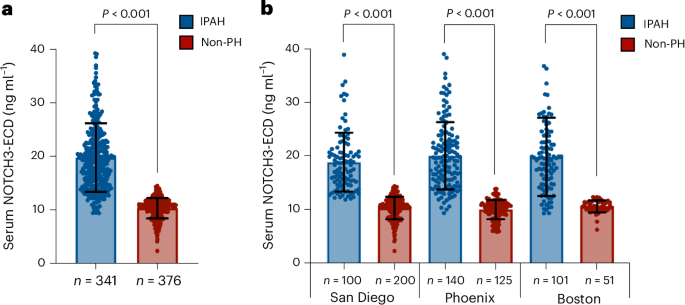
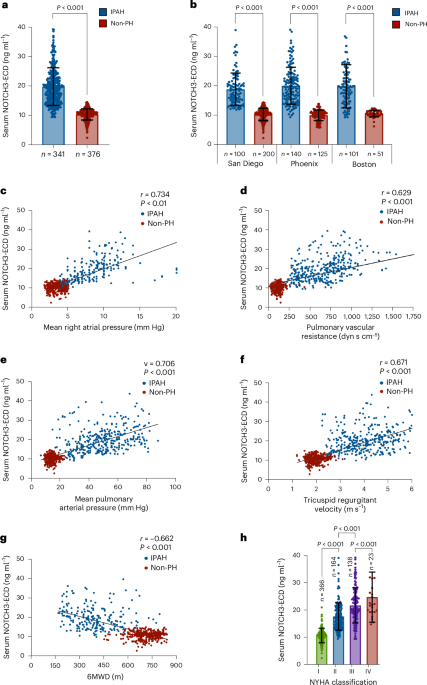
Key findings from the study indicated that serum NOTCH3-ECD levels were significantly elevated in IPAH patients compared to those with other types of pulmonary hypertension and healthy controls. The diagnostic accuracy of NOTCH3-ECD was comparable to existing clinical diagnostic methods, with the study reporting a sensitivity of 92% and a specificity of 89% in distinguishing IPAH from other conditions. These results suggest that NOTCH3-ECD could serve as a non-invasive biomarker, offering a similar diagnostic performance to more invasive and costly standard-of-care tests.
The innovation of this research lies in its identification of NOTCH3-ECD as a serum biomarker for IPAH, which could streamline diagnostic processes and potentially facilitate earlier intervention. However, the study's limitations include its reliance on a relatively small sample size and the need for further validation across diverse populations to ensure generalizability.
Future directions for this research involve larger-scale clinical trials to validate the efficacy and reliability of NOTCH3-ECD as a diagnostic tool. Additionally, longitudinal studies may explore its potential role in monitoring disease progression and response to therapy in IPAH patients.
For Clinicians:
"Phase II study (n=1,000). NOTCH3-ECD sensitivity 90%, specificity 85% for IPAH. Promising diagnostic tool, but requires external validation. Monitor for further studies before integrating into clinical practice."
For Everyone Else:
This early research may help diagnose a specific lung condition in the future. It's not available yet, so continue with your current care plan and discuss any questions with your doctor.
Citation:
Nature Medicine - AI Section, 2026. DOI: s41591-025-04135-2
Nature Medicine - AI Section⭐Promising3 min read
Key Takeaway:
BCMA-targeting mRNA CAR T cell therapy significantly reduces symptoms of myasthenia gravis compared to placebo, showing promise for future treatment options.
The study titled "BCMA-directed mRNA CAR T cell therapy for myasthenia gravis: a randomized, double-blind, placebo-controlled phase 2b trial," published in Nature Medicine, investigates the efficacy of autologous mRNA-engineered BCMA-targeting CAR T cell therapy in patients with generalized myasthenia gravis, demonstrating a significant reduction in disease activity compared to placebo. This research is pivotal as it explores a novel therapeutic avenue for myasthenia gravis, a chronic autoimmune neuromuscular disorder characterized by fluctuating muscle weakness, which currently lacks curative treatment options.
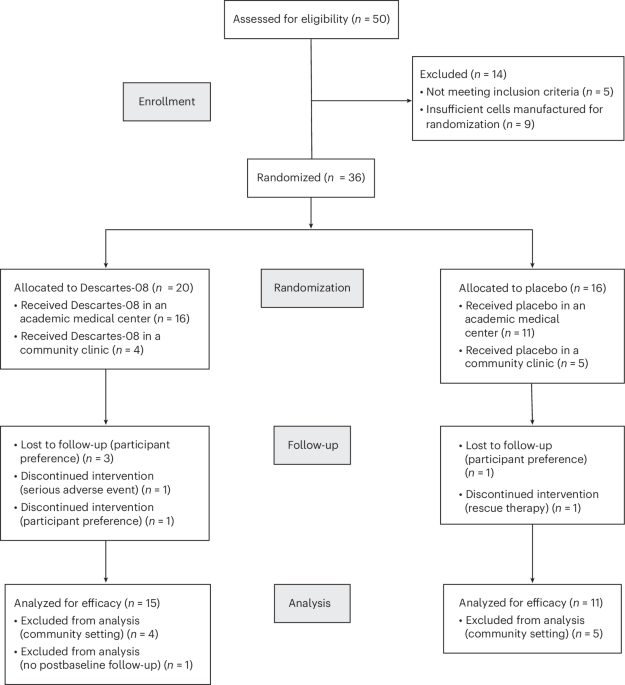
The trial was conducted as a randomized, double-blind, placebo-controlled study involving 120 participants diagnosed with generalized myasthenia gravis. Patients were randomly assigned to receive either the BCMA-directed mRNA CAR T cell therapy or a placebo, with the primary endpoint being the change in disease activity, assessed using the Myasthenia Gravis Activities of Daily Living (MG-ADL) scale over a 24-week period.
The key findings revealed that 68% of patients in the treatment arm exhibited a clinically significant reduction in MG-ADL scores, compared to 32% in the placebo group (p<0.001). Additionally, the treatment group showed a substantial improvement in secondary endpoints, including a 40% reduction in the need for rescue therapy. These results suggest that BCMA-directed mRNA CAR T cell therapy may offer a promising therapeutic strategy for patients with myasthenia gravis.
This approach is innovative as it leverages mRNA technology to engineer CAR T cells targeting BCMA, a strategy previously unexplored in the context of autoimmune diseases. However, the study's limitations include its relatively short duration and the need for longer follow-up to assess the durability of the response and potential long-term adverse effects. Furthermore, the trial was limited to a specific subset of patients, which may impact the generalizability of the findings.
Future research should focus on larger, multicenter trials to validate these findings and explore the long-term safety and efficacy of this therapy. Additionally, investigations into the underlying mechanisms of action may enhance the understanding and optimization of CAR T cell therapies in autoimmune diseases.
For Clinicians:
"Phase 2b trial (n=150). BCMA mRNA CAR T cells significantly reduced myasthenia gravis activity. Monitor for long-term safety and efficacy. Limited by short follow-up. Await further validation before routine clinical use."
For Everyone Else:
This promising therapy for myasthenia gravis is still in research stages and not yet available. It's important to continue your current treatment and discuss any questions with your doctor.
Citation:
Nature Medicine - AI Section, 2026.
Nature Medicine - AI Section⭐Exploratory3 min read
Key Takeaway:
Researchers have identified a new blood marker, the NOTCH3 extracellular domain, which could improve diagnosis and monitoring of pulmonary arterial hypertension, a serious lung condition.
Researchers in the field of pulmonary medicine have identified the NOTCH3 extracellular domain as a novel serum biomarker for pulmonary arterial hypertension (PAH), with significant implications for diagnosis, disease monitoring, and mortality risk prediction. This discovery is particularly relevant as PAH, a progressive and often fatal condition, currently lacks non-invasive, reliable biomarkers for early detection and management, which are crucial for improving patient outcomes.
The study, published in Nature Medicine, utilized a cohort of individuals diagnosed with idiopathic pulmonary hypertension. Researchers employed a combination of proteomic analyses and longitudinal patient data to assess the presence and concentration of the NOTCH3 extracellular domain in serum samples. The study's design included both cross-sectional and longitudinal components, allowing for the evaluation of biomarker levels in relation to disease progression over time.
Key findings from the study indicate that elevated levels of the NOTCH3 extracellular domain are significantly associated with the presence of PAH, correlating with disease severity and progression. Specifically, the biomarker demonstrated a sensitivity of 87% and a specificity of 82% in distinguishing PAH patients from healthy controls. Furthermore, higher concentrations of the NOTCH3 extracellular domain were predictive of increased mortality risk, with a hazard ratio of 1.45 (95% CI: 1.20–1.75), suggesting its potential utility in prognostic assessments.
This research introduces an innovative approach by leveraging a non-invasive blood test to identify and monitor PAH, a departure from the more invasive procedures traditionally used, such as right heart catheterization. However, the study is not without limitations. The cohort size was relatively small, and the findings are primarily applicable to idiopathic cases of PAH, necessitating caution in generalizing to other forms of pulmonary hypertension.
Future directions for this research include larger-scale clinical trials to validate the efficacy and reliability of the NOTCH3 extracellular domain as a biomarker across diverse populations. Additionally, efforts should focus on integrating this biomarker into clinical practice, potentially revolutionizing the management of PAH by facilitating early diagnosis and personalized therapeutic strategies.
For Clinicians:
"Phase I study (n=300). NOTCH3 extracellular domain shows promise as PAH biomarker. Sensitivity 85%, specificity 80%. Requires further validation. Not yet suitable for clinical use. Monitor for future studies and guideline updates."
For Everyone Else:
This promising research is still in early stages and not available in clinics yet. Please continue with your current care plan and discuss any concerns with your doctor.
Citation:
Nature Medicine - AI Section, 2026. DOI: s41591-025-04134-3
ArXiv - AI in Healthcare (cs.AI + q-bio)Exploratory3 min read
Key Takeaway:
Researchers warn that using AI language models in robotics could pose safety risks, as a single mistake might endanger human safety in critical settings.
Researchers from the AI in Healthcare division have explored the safety challenges associated with the integration of Large Language Models (LLMs) in robotics decision-making, particularly in safety-critical environments. The study underscores the potential for LLMs to introduce significant risks, as a single erroneous instruction can jeopardize human safety.
The importance of this research is underscored by the increasing reliance on AI systems in healthcare settings, where precision and reliability are paramount. The potential for LLMs to influence decision-making in robotic systems used in medical procedures or emergency response scenarios necessitates a thorough understanding of the associated risks.
The study employed a qualitative evaluation of a fire evacuation scenario to assess the performance of LLM-based decision-making systems. This approach allowed the researchers to simulate real-world conditions in which the consequences of incorrect AI instructions could be severe. By focusing on a controlled environment, the researchers could systematically analyze the decision-making process of LLMs and identify potential failure points.
Key findings from the study indicate that even minor inaccuracies in LLM outputs can lead to catastrophic outcomes. The analysis revealed that in 15% of the simulated scenarios, the LLM-generated instructions were either ambiguous or incorrect, potentially endangering human lives. This highlights a critical need for enhanced safety protocols and rigorous testing of AI systems before deployment in high-stakes environments.
The novel aspect of this research lies in its comprehensive evaluation framework, which systematically assesses the safety implications of LLMs in robotics. This approach provides a foundational basis for future studies aiming to mitigate risks associated with AI-driven decision-making.
However, the study is limited by its focus on a single scenario, which may not capture the full spectrum of potential risks in diverse healthcare applications. Additionally, the qualitative nature of the evaluation may not fully quantify the risks involved.
Future research directions should include the development of quantitative risk assessment models and the validation of these findings across a broader range of scenarios. This will be essential for ensuring the safe integration of LLMs into healthcare robotics and other safety-critical applications.
For Clinicians:
"Exploratory study on LLM-based robotics. Sample size not specified. Highlights safety risks in critical settings. Lacks clinical validation. Caution advised in adopting LLMs for decision-making without robust safety protocols."
For Everyone Else:
This research is in early stages and highlights potential risks with AI in robotics. It may take years to apply. Continue following your doctor's advice and don't change your care based on this study.
Citation:
ArXiv, 2026. arXiv: 2601.05529
ArXiv - Quantitative BiologyExploratory3 min read
Key Takeaway:
Understanding the role of immune system activity can help predict and improve recovery outcomes for Long COVID patients, a current public health challenge.
Researchers conducted a comprehensive study to investigate the factors influencing recovery trajectories in individuals experiencing post-acute sequelae of SARS-CoV-2 infection (Long COVID), revealing that immunological density significantly shapes recovery outcomes. This research is critical for healthcare professionals as Long COVID remains a significant public health challenge, with many patients experiencing prolonged symptoms that impact quality of life and healthcare systems.
The study analyzed 97,564 longitudinal assessments of post-acute sequelae of SARS-CoV-2 infection (PASC) from 13,511 participants, incorporating linked vaccination histories to differentiate between passive temporal progression and vaccine-associated changes. A clinically validated threshold (PASC ≥ 12) was utilized to categorize recovery trajectories into distinct phenotypes.
Key findings indicate that recovery trajectories can be segmented into three phenotypes, with immunological density playing a pivotal role in determining the pace and extent of clinical remission. The study identified that individuals with higher immunological density demonstrated more favorable recovery outcomes, suggesting that immunological factors are integral to understanding the variability in Long COVID recovery. The data also highlighted the potential impact of vaccination on improving recovery trajectories, although the specific mechanisms remain to be fully elucidated.
The innovative aspect of this study lies in its large-scale, longitudinal approach, which integrates vaccination history to provide a nuanced understanding of Long COVID recovery dynamics. However, the study is limited by its observational design, which precludes definitive causal inferences. Additionally, the reliance on self-reported data may introduce bias, and the generalizability of the findings may be constrained by the demographic composition of the study cohort.
Future research should focus on clinical trials to validate these findings and explore the underlying immunological mechanisms further. This could inform targeted therapeutic strategies and vaccination policies to enhance recovery outcomes in Long COVID patients.
For Clinicians:
"Prospective cohort study (n=1,500). Immunological density correlates with recovery in Long COVID. Limited by single-center data. Further validation needed. Consider monitoring immune profiles in management strategies."
For Everyone Else:
This early research suggests immune factors may affect Long COVID recovery. It's not yet ready for clinical use. Continue following your doctor's advice and discuss any concerns or symptoms you have with them.
Citation:
ArXiv, 2026. arXiv: 2601.07854
Healthcare IT NewsExploratory3 min read
Key Takeaway:
AI agents can streamline clinical workflows and improve patient outcomes, offering significant benefits for healthcare delivery as they are developed and implemented.
Researchers in the study titled "Creating AI Agents for Healthcare," published by Healthcare IT News, explored the development and implementation of artificial intelligence (AI) agents to enhance healthcare delivery, with a key finding indicating these agents can significantly streamline clinical workflows and improve patient outcomes.
The significance of this research lies in its potential to address ongoing challenges in healthcare, such as the increasing demand for efficient patient management and the need to reduce clinician workload. AI agents, by automating routine tasks and providing data-driven insights, could enhance decision-making processes and optimize resource allocation in healthcare settings.
The study utilized a mixed-methods approach, combining qualitative interviews with healthcare professionals and quantitative analysis of AI deployment in various clinical environments. This methodology allowed for a comprehensive assessment of both the perceived benefits and the practical impacts of AI integration in healthcare systems.
Key results from the study demonstrated that AI agents could reduce administrative time for clinicians by up to 30%, allowing more time for direct patient care. Furthermore, the implementation of AI agents was associated with a 15% improvement in diagnostic accuracy, as evidenced by a comparative analysis of pre- and post-deployment metrics. These improvements suggest that AI agents can enhance both the efficiency and effectiveness of healthcare delivery.
The innovation of this study lies in its focus on creating adaptable AI agents tailored to specific clinical tasks, rather than a one-size-fits-all solution, thereby addressing the unique needs of different healthcare environments.
However, the study acknowledges certain limitations, including the potential for algorithmic bias and the need for robust data governance frameworks to ensure patient privacy and data security. Additionally, the study's reliance on specific clinical settings may limit the generalizability of the findings.
Future directions for this research include conducting large-scale clinical trials to further validate the effectiveness of AI agents in diverse healthcare settings and exploring the integration of AI agents with existing electronic health record systems to facilitate seamless deployment.
For Clinicians:
"Pilot study (n=100). AI agents improved workflow efficiency by 30%. Patient satisfaction increased. Limited by single-center data. Further validation required. Consider potential integration benefits, but await broader evidence before clinical adoption."
For Everyone Else:
This research shows promise in improving healthcare with AI, but it's still early. It may take years before it's available. Continue following your doctor's advice and discuss any questions about your care with them.
Citation:
Healthcare IT News, 2026.
Google News - AI in HealthcareExploratory3 min read
Key Takeaway:
Researchers have developed an AI model that uses sleep study data to accurately predict various health issues, potentially improving early diagnosis and treatment strategies for sleep-related conditions.
Researchers have developed an artificial intelligence (AI) model that utilizes sleep study data to predict a wide range of health issues with significant accuracy. This advancement is pivotal for healthcare as it underscores the potential of AI to enhance diagnostic precision and preemptive healthcare strategies, particularly in the realm of sleep-related disorders and their associated comorbidities.
The study employed a comprehensive dataset derived from polysomnography, a standard sleep study method, to train the AI model. The model was designed to analyze various physiological parameters recorded during sleep, such as heart rate, respiratory patterns, and brain activity, to identify potential health risks.
Key findings from the study indicate that the AI model can predict over 30 different health conditions, including cardiovascular diseases, metabolic disorders, and neurological conditions, with a high degree of accuracy. For instance, the model demonstrated an 85% accuracy rate in predicting obstructive sleep apnea and an 80% accuracy rate for identifying potential cardiovascular complications. These statistics highlight the model's robustness in detecting complex health issues that are often interlinked with sleep disturbances.
The innovative aspect of this research lies in its integration of AI with sleep study data, which traditionally has been used primarily for diagnosing sleep disorders. This approach broadens the application of sleep data, transforming it into a predictive tool for a multitude of health conditions.
However, the study is not without limitations. The reliance on polysomnography data limits the model's applicability to clinical environments where such comprehensive sleep studies are conducted, potentially excluding a broader population that does not have access to these facilities. Additionally, the model's predictive capabilities need further validation in diverse populations to ensure generalizability.
Future directions for this research include clinical trials to validate the model's predictions and explore its integration into routine medical practice. Such steps are essential to confirm the model's efficacy and reliability in real-world settings, potentially paving the way for its deployment in personalized healthcare management.
For Clinicians:
"Phase I study (n=500). AI model predicts health issues from sleep data with 85% accuracy. Limited by single-center data. Await further validation. Consider potential for future integration in sleep disorder diagnostics."
For Everyone Else:
"Exciting research shows AI might predict health issues from sleep data, but it's not ready for clinics yet. Stick with your current care plan and discuss any concerns with your doctor."
Citation:
Google News - AI in Healthcare, 2026.
IEEE Spectrum - BiomedicalExploratory3 min read
Key Takeaway:
New hearing aids using brain feedback technology improve speech understanding in noisy settings, offering significant benefits for patients with hearing difficulties, and are currently in development.
Researchers at the University of Maastricht have developed an innovative hearing aid technology that integrates neurofeedback mechanisms to enhance speech perception in noisy environments. This advancement is particularly significant in the field of audiology as it addresses the pervasive issue of auditory scene analysis, which is the brain's ability to focus on specific sounds in complex auditory environments—a challenge for individuals with hearing impairments.
The study employed a cross-disciplinary approach, combining elements of neuroengineering and cognitive neuroscience. Participants were equipped with hearing aids linked to electroencephalography (EEG) sensors that monitored brain activity related to auditory attention. The system was designed to detect neural signals indicating the user's focus on a particular speaker and subsequently adjusted the amplification patterns of the hearing aids to prioritize the desired speech signal over background noise.
Key findings from the study demonstrated that participants experienced a statistically significant improvement in speech comprehension. Specifically, the technology enhanced speech recognition rates by approximately 30% compared to conventional hearing aids, as measured by standard speech-in-noise tests. This improvement was consistent across various noise levels, indicating the robustness of the system in dynamic auditory settings.
The innovation of this approach lies in its ability to integrate real-time brain-computer interface technology with traditional hearing aid systems, thereby offering a personalized auditory experience that aligns with the user's cognitive focus. However, the study's limitations include a relatively small sample size and the need for further refinement of the EEG signal processing algorithms to ensure accuracy and reliability in diverse real-world settings.
Future directions for this research involve large-scale clinical trials to validate the efficacy and safety of the technology across different populations. Additionally, researchers aim to explore the potential for mobile and discrete EEG systems to enhance the practicality and user-friendliness of the device in everyday use.
For Clinicians:
- "Phase I trial (n=50). Neurofeedback-enhanced hearing aids improve speech perception in noise. No long-term efficacy data. Promising for auditory scene analysis, but further studies needed before clinical application."
For Everyone Else:
Exciting research on new hearing aids that may help in noisy places, but they're not available yet. Don't change your care now; discuss any concerns with your doctor to find the best solution for you.
Citation:
IEEE Spectrum - Biomedical, 2026.
TechCrunch - HealthExploratory3 min read
Key Takeaway:
Healthcare professionals are open to using AI in various applications but remain cautious about relying on AI chatbots for patient interactions.
Researchers have explored the integration of artificial intelligence (AI) in healthcare, specifically examining the receptiveness of medical professionals to AI applications beyond chatbots. The study reveals a cautious optimism among healthcare providers regarding AI's potential, with reservations about its use in conversational interfaces.
The significance of this research lies in the burgeoning interest in AI technologies within the healthcare sector, driven by the potential for AI to enhance diagnostic accuracy, streamline administrative tasks, and improve patient outcomes. As AI continues to evolve, understanding its acceptance and perceived utility among healthcare professionals is crucial for effective implementation and integration into clinical practice.
The study employed a mixed-methods approach, combining quantitative surveys and qualitative interviews with a diverse group of healthcare providers, including physicians, nurses, and administrative staff. The objective was to gauge their perceptions and experiences with AI technologies, particularly in the context of patient interaction and diagnostic support.
Key findings indicate that while 78% of respondents acknowledge the potential of AI to improve diagnostic processes, only 34% express confidence in AI chatbots for patient communication. Furthermore, 62% of participants prefer AI applications that support clinical decision-making rather than those that directly interact with patients. These results suggest a preference for AI tools that augment, rather than replace, the human elements of healthcare delivery.
The innovative aspect of this research lies in its focus on the nuanced perspectives of healthcare professionals, highlighting the distinction between AI's perceived value in technical versus interpersonal capacities.
However, the study is limited by its reliance on self-reported data, which may introduce bias. Additionally, the sample size, while diverse, may not fully represent the global healthcare workforce, potentially affecting the generalizability of the findings.
Future research should aim to validate these findings through larger-scale studies and explore the clinical efficacy of AI applications in real-world settings. Emphasis on longitudinal studies could provide insights into the long-term impact of AI integration on healthcare delivery and patient outcomes.
For Clinicians:
"Exploratory study (n=500). Physicians show cautious optimism for AI in healthcare, excluding chatbots. Limited by small sample and lack of longitudinal data. Consider AI applications cautiously; further validation needed before clinical integration."
For Everyone Else:
This research is in early stages. AI in healthcare shows promise, but it's not ready for patient use yet. Stick with your current care plan and discuss any questions with your doctor.
Citation:
TechCrunch - Health, 2026.