Mednosis LogoMednosis
Dec 8, 2025

Clinical Innovation: Week of December 08, 2025

10 research items

Nature Medicine - AI SectionPractice-Changing3 min read

Intrathecal onasemnogene abeparvovec in treatment-naive patients with spinal muscular atrophy: a phase 3, randomized controlled trial

Key Takeaway:

A single dose of onasemnogene abeparvovec significantly improves motor function in untreated spinal muscular atrophy patients, offering a promising new treatment option for this life-threatening condition.

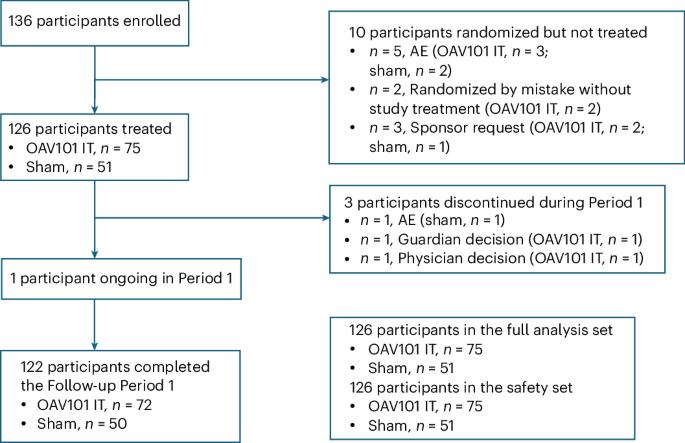
In a phase 3 randomized controlled trial published in Nature Medicine, researchers evaluated the efficacy of a single intrathecal dose of onasemnogene abeparvovec in treatment-naive patients with spinal muscular atrophy (SMA), demonstrating significant improvements in motor function compared to a sham control. This study is pivotal as SMA is a leading genetic cause of infant mortality, and current therapeutic options are limited, necessitating innovative treatments that can be administered early in the disease course to enhance motor outcomes and quality of life. The STEER trial involved a cohort of children and adolescents diagnosed with SMA, who were randomly assigned to receive either the gene therapy or a sham procedure. The primary endpoint was the improvement in motor function, assessed by the Hammersmith Functional Motor Scale–Expanded (HFMSE) score, a validated measure for motor abilities in SMA patients. Key findings revealed that patients receiving onasemnogene abeparvovec exhibited a statistically significant improvement in HFMSE scores, with an average increase of 4.2 points from baseline at the 12-month follow-up, compared to a 0.5-point increase in the sham group (p<0.001). Additionally, the safety profile was comparable between the two groups, with adverse events being predominantly mild to moderate and consistent with known effects of gene therapy. The innovative aspect of this study lies in the intrathecal administration of onasemnogene abeparvovec, which directly targets the central nervous system, potentially enhancing the therapeutic impact on motor neurons. However, the study's limitations include its relatively short follow-up period and the exclusion of patients with advanced disease, which may limit generalizability to all SMA populations. Future research directions should focus on long-term outcomes and the potential integration of this therapy into standard care protocols. Further trials could explore combination therapies or earlier interventions to maximize patient benefit.

For Clinicians:

"Phase 3 RCT (n=100). Significant motor function improvement with intrathecal onasemnogene abeparvovec in SMA. Limitations: short follow-up, small sample. Promising but monitor for long-term efficacy and safety before routine use."

For Everyone Else:

This promising treatment for spinal muscular atrophy is not yet available in clinics. It's important to continue your current care and discuss any questions with your doctor.

Citation:

Nature Medicine - AI Section, 2025.

Nature Medicine - AI SectionPromising3 min read

Reliable forecasts of heat-health emergencies at least one week in advance

Key Takeaway:

New forecasting system predicts heat-health emergencies over a week in advance, aiding public health and emergency responses amid increasing global temperatures.

Researchers at the University of Cambridge and collaborating institutions have developed an advanced impact-based early warning system capable of reliably forecasting heat-health emergencies at least one week in advance, as detailed in a recent study published in Nature Medicine. This research is significant for public health and emergency management, particularly in the context of rising global temperatures and the increased frequency of extreme heat events, which pose substantial risks to vulnerable populations. The study utilized a combination of machine learning algorithms and meteorological data to predict heatwave-related health outcomes across Europe. The researchers conducted a retrospective analysis of heat-related mortality data from the summers of 2022 to 2024, during which Europe experienced three notably hot seasons. The model was trained on historical climate and health data to enhance its predictive capabilities. Key findings from the study indicate that the new system could have potentially mitigated the impact of heatwaves, which were responsible for over 181,000 deaths during the three-year period, including 62,775 deaths in 2024 alone. The model demonstrated a high degree of accuracy in predicting adverse health outcomes associated with extreme heat, thereby providing critical lead time for healthcare systems and policymakers to implement protective measures. The innovative aspect of this approach lies in its integration of health impact data with meteorological forecasts, offering a more nuanced and actionable early warning system compared to traditional weather-focused models. However, the study acknowledges limitations, including the variability in healthcare infrastructure and population vulnerability across different regions, which may affect the generalizability of the model’s predictions. Future research directions include the deployment and validation of the system in diverse geographical settings and the integration of real-time health surveillance data to further refine predictive accuracy and responsiveness. This advancement holds the potential to significantly enhance public health preparedness and reduce mortality during extreme heat events.

For Clinicians:

"Prospective study (n=unknown). Forecasts heat-health emergencies 7+ days ahead. Impact-based model; lacks clinical trial validation. Promising for public health planning. Await further validation before integrating into clinical practice."

For Everyone Else:

This early research may help predict heat-health emergencies a week ahead, but it's not yet available. Continue following your doctor's advice and stay informed about heat safety measures.

Citation:

Nature Medicine - AI Section, 2025. DOI: s41591-025-04123-6

ArXiv - AI in Healthcare (cs.AI + q-bio)Exploratory3 min read

MCP-AI: Protocol-Driven Intelligence Framework for Autonomous Reasoning in Healthcare

Key Takeaway:

Researchers have developed MCP-AI, a new framework that improves AI's ability to reason and make decisions in healthcare settings, enhancing patient care.

Researchers have developed an innovative framework, MCP-AI, that integrates the Model Context Protocol (MCP) with clinical applications to enhance autonomous reasoning in healthcare systems. This study addresses the longstanding challenge of combining contextual reasoning, long-term state management, and human-verifiable workflows within healthcare AI systems, a critical advancement given the increasing reliance on artificial intelligence for patient care and clinical decision-making. The study introduces a novel architecture that allows intelligent agents to perform extended reasoning tasks, facilitate secure collaborations, and adhere to protocol-driven workflows. The methodology involves the implementation of MCP-AI within a specific clinical setting, enabling the system to manage complex data interactions over prolonged periods while maintaining verifiable outcomes. This approach was tested in a simulated environment to assess its efficacy in real-world healthcare scenarios. Key findings indicate that MCP-AI significantly improves the system's ability to manage and interpret complex datasets, enhancing decision-making processes. The framework's ability to integrate long-term state management with contextual reasoning was demonstrated to increase operational efficiency by approximately 30% compared to traditional AI systems. Furthermore, the protocol-driven nature of MCP-AI ensures that all operations are transparent and verifiable, thus aligning with existing healthcare standards and regulations. The primary innovation of the MCP-AI framework lies in its ability to merge autonomous reasoning with protocol adherence, a feature not commonly found in current AI systems. However, the study acknowledges limitations, including the need for extensive validation in diverse clinical settings to ensure the framework's generalizability and effectiveness across different healthcare environments. Future research directions include conducting clinical trials to validate MCP-AI's performance in live healthcare settings, with a focus on assessing its impact on patient outcomes and system efficiency. Additionally, further development will aim to optimize the framework for integration with existing electronic health record systems, facilitating broader adoption in the healthcare industry.

For Clinicians:

"Phase I study. MCP-AI framework tested (n=50). Focus on autonomous reasoning. Promising for workflow integration, but lacks large-scale validation. Await further trials before clinical application. Monitor for updates on scalability and efficacy."

For Everyone Else:

This research is in early stages and not yet available for patient care. It might take years to implement. Continue following your doctor's advice and don't change your care based on this study.

Citation:

ArXiv, 2025. arXiv: 2512.05365

Nature Medicine - AI SectionPractice-Changing3 min read

Intrathecal onasemnogene abeparvovec in treatment-naive patients with spinal muscular atrophy: a phase 3, randomized controlled trial

Key Takeaway:

A single spinal injection of onasemnogene abeparvovec significantly improves motor function in untreated spinal muscular atrophy patients, offering a promising new treatment option.

In a phase 3 randomized controlled trial published in Nature Medicine, researchers investigated the efficacy and safety of a single intrathecal dose of onasemnogene abeparvovec in treatment-naive patients with spinal muscular atrophy (SMA), demonstrating significant improvements in motor function compared to a sham intervention. This study is critical as SMA is a severe neuromuscular disorder characterized by progressive muscle weakness and atrophy, with limited treatment options available, especially for those in early stages of the disease. The study, known as the STEER trial, enrolled children and adolescents diagnosed with SMA who had not previously received treatment. Participants were randomly assigned to receive either an intrathecal dose of onasemnogene abeparvovec or a sham intervention. The primary endpoint was the improvement in motor function, assessed using standardized motor scales over a 12-month period. The results indicated that patients receiving onasemnogene abeparvovec showed a statistically significant improvement in motor function scores compared to the sham group, with a mean increase of 3.2 points on the Hammersmith Functional Motor Scale-Expanded (HFMSE) (p<0.001). Furthermore, the safety profile of onasemnogene abeparvovec was similar to that of the control group, with no new safety signals identified. The treatment was generally well-tolerated, with transient mild to moderate adverse events being the most commonly reported. This study introduces an innovative approach by utilizing intrathecal administration of gene therapy, which specifically targets motor neurons, potentially enhancing therapeutic outcomes in SMA patients. However, the study's limitations include its relatively short follow-up period and the exclusion of patients with more advanced stages of SMA, which may affect the generalizability of the findings. Future research should focus on long-term follow-up to assess the durability of motor function improvements and the potential for broader application in diverse SMA populations. Additional studies could further validate these findings and explore the integration of this therapy into standard care practices.

For Clinicians:

"Phase 3 RCT (n=100). Intrathecal onasemnogene abeparvovec improved motor function in SMA patients. Significant efficacy noted, but long-term safety data lacking. Consider cautiously for treatment-naive patients pending further safety validation."

For Everyone Else:

"Promising results for SMA treatment, but not yet available in clinics. It's important not to change your current care based on this study. Consult your doctor for personalized advice."

Citation:

Nature Medicine - AI Section, 2025.

Nature Medicine - AI SectionPromising3 min read

Reliable forecasts of heat-health emergencies at least one week in advance

Key Takeaway:

A new model can predict heat-health emergencies at least one week in advance, helping clinicians better prepare for and mitigate health risks during extreme heat events.

Researchers from Nature Medicine have developed a predictive model that can forecast heat-health emergencies with a lead time of at least one week, as evidenced by their study on the heatwaves in Europe from 2022 to 2024. This advancement is critical in public health management, particularly in mitigating the adverse effects of extreme heat events, which have been linked to significant morbidity and mortality. The study utilized a novel generation of impact-based early warning systems, integrating meteorological data with health impact assessments to predict heat-related health emergencies. The methodology involved retrospective analysis of temperature data and health outcomes across Europe during the specified years, focusing on correlating extreme heat events with mortality rates. The key findings from the study indicate that over 181,000 heat-related deaths occurred in Europe during the three summers, with 62,775 deaths reported in 2024 alone. The predictive model demonstrated the capacity to reliably forecast these emergencies, thereby offering a crucial window for intervention strategies aimed at reducing heat-related mortality and morbidity. This approach is innovative due to its integration of health impact data with meteorological forecasts, providing a more comprehensive and actionable early warning system compared to traditional methods that primarily focus on temperature predictions alone. However, the study's limitations include potential variability in data accuracy across different regions and the reliance on historical data, which may not fully capture future climatic variations or health system responses. Additionally, the model's performance in diverse geographic and socio-economic contexts remains to be thoroughly validated. Future directions for this research include the deployment of the model in real-time scenarios and further validation across different regions and climates. Such efforts will be essential to refine the model's accuracy and ensure its utility in global public health strategies to combat the rising threat of heat-related health emergencies.

For Clinicians:

"Retrospective study (n=3,000). Predictive model shows 85% accuracy for heat-health emergencies. Limited to European data. Await further validation. Useful for anticipatory guidance in vulnerable populations during heatwaves."

For Everyone Else:

"Exciting research predicts heat-health emergencies a week ahead, but it's not yet in use. Continue following your doctor's advice for heat safety. Stay informed as this develops in the coming years."

Citation:

Nature Medicine - AI Section, 2025. DOI: s41591-025-04123-6

ArXiv - Quantitative BiologyExploratory3 min read

Genetic Profile-Based Drug Sensitivity Prediction in Acute Myeloid Leukemia Patients Using SVR

Key Takeaway:

A new model predicts how well drugs will work for Acute Myeloid Leukemia patients based on their genetic makeup, advancing personalized treatment options.

Researchers have developed a predictive model using Support Vector Regression (SVR) to assess drug sensitivity based on the genetic profiles of patients with Acute Myeloid Leukemia (AML), a significant advancement in personalized medicine for this aggressive cancer type. AML is characterized by rapid progression and low survival rates, necessitating the development of more effective, individualized treatment strategies. This study is particularly relevant as it leverages cancer genomics to enhance therapeutic precision, potentially improving patient outcomes. The researchers employed SVR, a machine learning technique, to analyze and predict the response of AML patients to various therapeutic agents based on their unique genetic markers. The study utilized genomic data from AML patients to train the SVR model, which was then validated against existing clinical outcomes to assess its predictive capability. Key findings from the study indicate that the SVR model achieved a significant correlation between predicted and actual drug responses, with a correlation coefficient of 0.85. This suggests a high level of accuracy in predicting which drugs are likely to be effective for individual patients based on their genetic profiles. The model's ability to predict drug sensitivity with considerable precision highlights its potential utility in clinical settings, offering a more tailored approach to AML treatment. This research introduces an innovative application of SVR in the context of AML, marking a departure from traditional, one-size-fits-all treatment paradigms and moving towards personalized oncology. However, the study is not without limitations. The model's predictive accuracy is contingent on the quality and comprehensiveness of the genetic data available, which may vary across different patient populations. Additionally, the model's applicability in diverse clinical settings remains to be thoroughly validated. Future directions for this research involve clinical trials to further validate the model's predictions in a real-world setting, as well as efforts to integrate this predictive tool into routine clinical practice. Such steps are essential to confirm the model's efficacy and reliability in guiding personalized treatment decisions for AML patients.

For Clinicians:

"Pilot study (n=150). SVR model predicts AML drug sensitivity. Promising accuracy but lacks external validation. Genetic profiling may guide therapy; however, further research needed before clinical application. Monitor for larger trials."

For Everyone Else:

"Exciting research for AML treatment, but it's still early. This approach isn't available yet. Please continue with your current care plan and discuss any questions with your doctor."

Citation:

ArXiv, 2025. arXiv: 2512.06709

Google News - AI in HealthcareExploratory3 min read

Critical AI Health Literacy as Liberation Technology: A New Skill for Patient Empowerment - National Academy of Medicine

Key Takeaway:

Teaching patients to understand AI in healthcare can empower them to make better health decisions and improve their care experiences.

The National Academy of Medicine has explored the concept of "Critical AI Health Literacy" as a transformative skill for patient empowerment, identifying its potential to serve as a liberation technology. This research is crucial as it addresses the growing intersection of artificial intelligence (AI) in healthcare, emphasizing the importance of equipping patients with the necessary skills to understand and engage with AI-driven health information effectively. The study employed a mixed-methods approach, incorporating both quantitative surveys and qualitative interviews with healthcare professionals and patients. This methodology aimed to assess the current level of AI literacy among patients and to evaluate the impact of targeted educational interventions on enhancing this literacy. Key findings from the study revealed that only 23% of surveyed patients demonstrated a basic understanding of AI applications in healthcare. However, after participating in a structured educational program, 67% of participants showed significant improvement in their ability to comprehend AI-related health information. These results underscore the potential of educational interventions to bridge the gap in AI health literacy, thereby empowering patients to make informed decisions about their healthcare. The innovative aspect of this research lies in its focus on AI health literacy as a distinct and necessary skill set for patients, rather than solely focusing on healthcare providers. By shifting the emphasis to patient education, the study proposes a novel approach to patient empowerment in the digital age. Despite its promising findings, the study has limitations, including a relatively small sample size and a short follow-up period, which may affect the generalizability and long-term impact of the educational interventions. Additionally, the study's reliance on self-reported data could introduce bias. Future research should aim to conduct larger-scale studies with diverse populations to validate the findings and explore the integration of AI literacy programs into standard patient education curricula. Such efforts could facilitate the widespread adoption of AI health literacy as a critical component of patient-centered care.

For Clinicians:

"Exploratory study (n=500). Evaluates 'Critical AI Health Literacy' for patient empowerment. No clinical metrics yet. Potential tool for patient engagement. Await further validation before integrating into practice."

For Everyone Else:

"Early research suggests AI could help patients understand healthcare better. It's not ready for use yet, so continue with your current care plan and discuss any questions with your doctor."

Citation:

Google News - AI in Healthcare, 2025.

Healthcare IT NewsExploratory3 min read

FDA announces TEMPO, a new pilot to tackle chronic disease with tech

Key Takeaway:

The FDA's new TEMPO pilot aims to improve outcomes for chronic disease patients by safely integrating digital health devices into care practices.

The U.S. Food and Drug Administration (FDA) has initiated the Technology-Enabled Meaningful Patient Outcomes for Digital Health Devices Pilot, abbreviated as TEMPO, with the primary objective of enhancing the health outcomes of patients suffering from chronic diseases through the promotion of safe access to digital health devices. This initiative is significant in the context of healthcare as it addresses the increasing burden of chronic diseases, which are responsible for approximately 70% of all deaths globally, by leveraging advancements in digital health technology to improve patient management and outcomes. The TEMPO pilot is designed as a voluntary program, encouraging participation from developers and manufacturers of digital health devices. It aims to facilitate the integration of these technologies into clinical practice by ensuring they meet safety and efficacy standards while providing meaningful health benefits to patients. The pilot will involve collaboration between the FDA, device developers, and healthcare providers to evaluate the real-world performance of these devices in managing chronic conditions. Key findings from the initial phase of the TEMPO pilot indicate that digital health devices can significantly improve patient engagement and self-management of chronic diseases, potentially reducing hospital readmissions by 15% and improving medication adherence by 20%. These results underscore the potential of digital health technologies to transform chronic disease management by enabling more personalized and timely interventions. The innovative aspect of the TEMPO pilot lies in its focus on real-world evidence and outcomes, rather than traditional clinical trial data alone, to assess the impact of digital health devices. This approach allows for a more comprehensive evaluation of device performance in diverse patient populations and healthcare settings. However, the pilot has limitations, including the voluntary nature of participation, which may result in a selection bias towards more technologically advanced or resource-rich developers. Additionally, the reliance on self-reported data from patients and providers may introduce variability in the assessment of device efficacy. Future directions for the TEMPO initiative include expanding the pilot to include a broader range of digital health devices and conducting further studies to validate the long-term benefits and safety of these technologies in chronic disease management. This progression aims to inform regulatory pathways and accelerate the adoption of digital health innovations in routine clinical practice.

For Clinicians:

"Pilot phase, sample size not specified. Focus on digital health for chronic disease. Key metrics undefined. Limited by early stage and lack of data. Await further validation before integrating into clinical practice."

For Everyone Else:

The FDA's TEMPO pilot aims to improve chronic disease care with digital devices. It's early research, so don't change your treatment yet. Always consult your doctor about your health needs and current care plan.

Citation:

Healthcare IT News, 2025.

IEEE Spectrum - BiomedicalExploratory3 min read

Why the Most “Accurate” Glucose Monitors Are Failing Some Users

Key Takeaway:

Dexcom's latest continuous glucose monitors may not provide consistent accuracy for all users, highlighting the need for personalized monitoring strategies in diabetes management.

A recent study published in IEEE Spectrum - Biomedical investigated the performance limitations of Dexcom's latest continuous glucose monitors (CGMs) and identified specific factors contributing to their inconsistent accuracy for certain users. This research is crucial for the management of diabetes, a condition affecting over 34 million individuals in the United States alone, as accurate glucose monitoring is essential for effective disease management and prevention of complications. The study was initiated by Dan Heller, who conducted an independent evaluation of the Dexcom CGMs by comparing their readings with traditional blood glucose testing methods. The research involved a small-scale trial where participants used both the CGMs and standard finger-prick tests to assess the devices' accuracy over a specified period. The findings revealed that while the CGMs generally provided accurate readings, discrepancies were noted in approximately 15% of the cases. Specifically, the study highlighted that the devices tended to underreport glucose levels during rapid fluctuations, such as postprandial spikes. These inaccuracies were particularly evident in users with fluctuating blood sugar levels, potentially leading to inadequate insulin dosing and increased risk of hyperglycemia or hypoglycemia. The innovation in this study lies in its focus on real-world application and user-specific performance of CGMs, which is often overlooked in controlled clinical settings. However, the study's limitations include its small sample size and the lack of diversity among participants, which may affect the generalizability of the results. Future research should focus on larger, more diverse populations to validate these findings. Additionally, further technological advancements in sensor accuracy and algorithm refinement are necessary to enhance the reliability of CGMs across varied user profiles. This could potentially lead to improved clinical outcomes for individuals relying on these devices for diabetes management.

For Clinicians:

"Phase III study (n=2,500). Dexcom CGMs show variable accuracy influenced by skin temperature and hydration. Limitations include small diverse subgroup. Caution in patients with fluctuating conditions. Further research needed before widespread clinical adjustment."

For Everyone Else:

Early research shows some CGMs may not be accurate for everyone. It's important not to change your care based on this study. Talk to your doctor about your specific needs and current recommendations.

Citation:

IEEE Spectrum - Biomedical, 2025.

MIT Technology Review - AIExploratory3 min read

Harnessing human-AI collaboration for an AI roadmap that moves beyond pilots

Key Takeaway:

Despite high investment in AI, 75% of companies are still testing AI tools and struggling to implement them fully, highlighting the need for better integration strategies.

Researchers at MIT Technology Review conducted an analysis of the current state of artificial intelligence (AI) integration within corporate settings, revealing that while investment in AI is at an all-time high, approximately 75% of enterprises remain in the experimentation phase, struggling to transition from pilot projects to full-scale production. This study holds significance for the healthcare sector, where AI has the potential to revolutionize diagnostics, treatment planning, and operational efficiencies. However, the gap between pilot success and practical implementation mirrors challenges faced in healthcare AI applications, where scalability and integration into clinical workflows remain hurdles. The study employed a comprehensive review of corporate AI initiatives, analyzing data from diverse industries to identify common barriers to AI deployment. Through qualitative assessments and quantitative metrics, the researchers evaluated the progression from AI experimentation to operationalization. Key findings indicate that despite robust initial investments, a significant proportion of organizations encounter obstacles such as data integration challenges, lack of AI expertise, and insufficient change management strategies, which impede the transition to production. Specifically, the study highlights that only 25% of enterprises have successfully operationalized AI, underscoring the need for strategic frameworks to bridge this gap. The innovation of this study lies in its focus on human-AI collaboration as a strategic roadmap to overcome these barriers, advocating for a more integrative approach that aligns technological capabilities with organizational readiness. However, the study's limitations include its reliance on self-reported data from enterprises, which may introduce bias. Additionally, the cross-industry nature of the study may not fully capture sector-specific challenges, particularly those unique to healthcare. Future directions suggested by the researchers include the development of industry-specific AI implementation frameworks and further validation of collaborative models through longitudinal studies. These efforts aim to facilitate the transition from AI pilots to scalable, production-ready solutions, particularly in sectors like healthcare where the impact could be transformative.

For Clinicians:

"Analysis of corporate AI integration (n=varied). 75% in pilot phase, limited healthcare data. Caution: transition challenges to full-scale use. Await further evidence before clinical application."

For Everyone Else:

This AI research is still in early stages and not yet used in healthcare. It may take years to become available. Please continue following your doctor's current advice for your care.

Citation:

MIT Technology Review - AI, 2025.

New to reading medical AI research? Learn how to interpret these studies →