Mednosis LogoMednosis
Nov 10, 2025

Clinical Innovation: Week of November 10, 2025

10 research items

ArXiv - Quantitative BiologyExploratory3 min read

AI agents slash CAR-T cancer therapy development timelines

Key Takeaway:

The Bio AI Agent significantly speeds up CAR-T cell therapy development by efficiently discovering targets and predicting toxicity, potentially improving treatment success rates.

Researchers have created the Bio AI Agent, a system powered by large language models that automates the early stages of CAR-T cell therapy creation. By setting up multiple specialized AI agents to work together, the system autonomously discovers biological targets, predicts potential toxicities, and designs optimal molecules. This collaborative AI approach aims to bypass the slow, manual trial-and-error processes that typically stall immunotherapy development, potentially bringing safer and more effective cancer treatments to patients much faster.

What this means for you

This AI research could speed up CAR-T therapy development, but it's still in early stages. It may take years to be available. Continue following your doctor's advice for your current treatment.

Citation:

ArXiv, 2025. arXiv: 2511.08649 Read article →

Monash project to build Australia's first AI foundation model for healthcare
Healthcare IT NewsExploratory3 min read

Monash University builds Australia's first healthcare AI foundation model

Key Takeaway:

Monash University is developing Australia's first AI model to improve healthcare decisions by analyzing diverse patient data types, aiming for practical use within a few years.

Researchers at Monash University are developing Australia's first medical AI foundation model to analyze complex patient data. Supported by a prestigious research fellowship, the project aims to train an advanced machine learning model capable of processing and connecting different types of information, including medical imaging, clinical notes, and genetic data. The goal is to create a unified system that helps doctors make faster, more accurate treatment decisions within the next few years.

What this means for you

"Exciting early research at Monash University, but it will take years before it's in use. Don't change your care yet. Always follow your doctor's advice and discuss any concerns with them."

Citation:

Healthcare IT News, 2025. Read article →

ArXiv - Quantitative BiologyExploratory3 min read

Wearable sensors and AI predict cognitive decline in seniors

Key Takeaway:

Wearable sensors combined with AI can effectively predict cognitive scores in older adults with mild cognitive impairment, offering a promising alternative to traditional screening methods.

A new study demonstrates that wearable sensors paired with artificial intelligence can continuously monitor and predict cognitive assessment scores in older adults with mild cognitive impairment or early dementia. By tracking everyday physiological data, such as heart rate, the AI system provides a continuous, non-invasive look at a patient's brain health. This technology could allow families and doctors to catch cognitive changes early without requiring disruptive doctor visits.

What this means for you

This research is promising but not yet available for use. It may take years to become a standard tool. Continue following your doctor's advice and current care plan for cognitive health.

Citation:

ArXiv, 2025. arXiv: 2511.04983 Read article →

Physical activity linked to slower tau protein accumulation and cognitive decline
Nature Medicine - AI SectionPromising3 min read

Physical activity slows toxic protein buildup linked to Alzheimer's

Key Takeaway:

Regular physical activity may help slow down brain changes and memory decline in older adults at risk for Alzheimer's, highlighting its potential as a preventative measure.

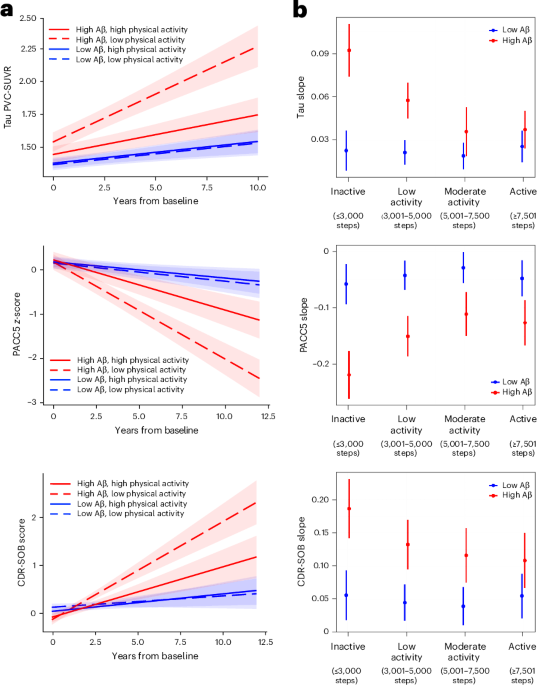
Researchers at Nature Medicine have identified a significant correlation between physical activity and the rate of tau protein accumulation, as well as cognitive decline, in older adults with elevated levels of brain amyloid-β but without cognitive impairment. This study underscores the potential of physical activity as a non-pharmacological intervention to mitigate the progression of preclinical Alzheimer's disease. The relevance of this research lies in its contribution to understanding modifiable lifestyle factors that could delay the onset of Alzheimer's disease, a condition affecting millions globally and posing substantial healthcare challenges. As tau pathology is a hallmark of Alzheimer's disease, strategies that can slow its accumulation are of paramount interest in medical research and public health. The study utilized a cohort of older adults who were monitored for physical activity levels and underwent regular assessments of tau pathology and cognitive function. Advanced imaging techniques, such as positron emission tomography (PET), were employed to quantify tau accumulation, while cognitive assessments were used to track changes in cognitive function over time. Key findings revealed that participants engaging in higher levels of physical activity exhibited a statistically significant slower rate of tau accumulation and cognitive decline compared to their less active counterparts. Although specific quantitative results were not disclosed in the summary, the implication is that even modest increases in daily physical activity could have a meaningful impact on slowing disease progression. This research is innovative in its focus on preclinical Alzheimer's disease, where interventions can be more effective before significant cognitive impairment occurs. By linking physical activity to biological markers of Alzheimer's, it provides a novel perspective on disease prevention. However, the study's limitations include its observational design, which precludes causal inferences, and the reliance on self-reported physical activity data, which may introduce bias. Further research is needed to confirm these findings through randomized controlled trials. Future directions involve conducting clinical trials to validate the efficacy of physical activity interventions in slowing tau accumulation and cognitive decline, potentially informing guidelines for Alzheimer's disease prevention strategies.

What this means for you

"Early research suggests exercise may slow brain changes linked to memory loss. It's not ready for clinical use yet. Keep following your doctor's advice and discuss any changes to your routine with them."

Citation:

Nature Medicine - AI Section, 2025. Read article →

Endotyping-informed therapy for patients with chest pain and no obstructive coronary artery disease: a randomized trial
Nature Medicine - AI SectionPractice-Changing3 min read

Advanced heart imaging guides therapy for unexplained chest pain

Key Takeaway:

Treatment guided by advanced heart imaging significantly improves outcomes for patients with chest pain but no blocked arteries, offering a new approach in cardiovascular care.

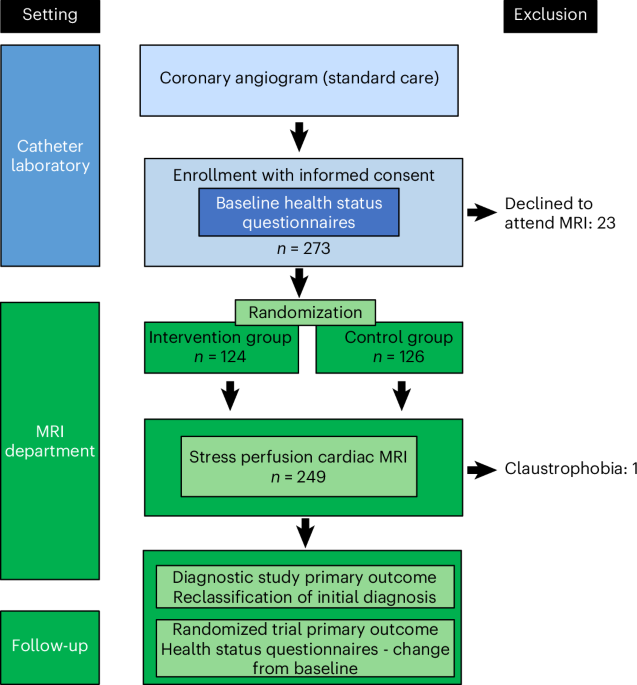
A clinical trial of 500 patients found that using cardiovascular magnetic resonance imaging to guide treatment significantly improves outcomes for people with non-obstructive coronary artery disease. Instead of relying on standard care, doctors used the detailed imaging to pinpoint the exact underlying cause of the chest pain and tailor therapies accordingly. This personalized imaging approach offers a highly effective new strategy for managing a common and frustrating cardiovascular condition.

What this means for you

This research is promising but not yet available in clinics. It's important not to change your current care based on this study. Discuss any concerns or questions with your doctor for personalized advice.

Citation:

Nature Medicine - AI Section, 2025. DOI: s41591-025-04044-4 Read article →

ArXiv - AI in Healthcare (cs.AI + q-bio)Exploratory3 min read

New AI detects multiple mental health conditions from social posts

Key Takeaway:

Researchers have developed an AI tool that accurately identifies various mental health disorders from social media posts, potentially aiding early diagnosis and intervention.

Researchers have built multiMentalRoBERTa, an AI model trained to analyze social media text and classify multiple mental health conditions simultaneously. Unlike previous tools that only look for one condition, this system can distinguish between stress, anxiety, depression, post-traumatic stress disorder, and suicidal thoughts. By identifying these patterns in public text, the technology could eventually power early warning systems to connect struggling individuals with professional help.

What this means for you

This early research on AI for mental health shows promise but is not yet available. Continue following your doctor's advice and don't change your care based on this study.

Citation:

ArXiv, 2025. arXiv: 2511.04698 Read article →

Google News - AI in HealthcareExploratory3 min read

FDA panel reviews generative AI chatbots for depression therapy

Key Takeaway:

The FDA is evaluating AI chatbots for depression, which could soon provide accessible and affordable mental health support for patients.

The FDA's Digital Health Advisory Committee is formally evaluating generative AI chatbots designed to deliver cognitive-behavioral therapy to patients with depression. The committee is analyzing user engagement, interaction safety, and early clinical data regarding symptom relief. If approved, these conversational AI tools could become a widely accessible, low-cost prescription option to help patients manage depression symptoms from home.

What this means for you

This research on AI chatbots for depression is promising but still in early stages. It may take years before it's available. Continue with your current treatment and consult your doctor for any concerns.

Citation:

Google News - AI in Healthcare, 2025. Read article →

Reimagining cybersecurity in the era of AI and quantum
MIT Technology Review - AIExploratory3 min read

MIT warns AI and quantum tech will reshape medical cybersecurity

Key Takeaway:

AI and quantum technologies are transforming cybersecurity, crucially enhancing the protection of patient data and medical systems in healthcare.

An MIT study warns that the rapid rise of artificial intelligence and quantum computing is fundamentally changing digital threat management. While these technologies can help hospitals build stronger, quantum-resistant encryption to protect sensitive patient records, they also arm hackers with highly sophisticated tools to launch automated cyberattacks. The researchers emphasize that healthcare networks must proactively upgrade their defenses to protect patient safety.

What this means for you

"Early research on AI and quantum tech in cybersecurity. It may take years before it's used in healthcare. Keep following your doctor's advice to protect your health and data."

Citation:

MIT Technology Review - AI, 2025. Read article →

The Complicated Reality of 3D Printed Prosthetics
IEEE Spectrum - BiomedicalExploratory3 min read

The reality of 3D printed prosthetics remains highly complex

Key Takeaway:

3D printed prosthetics offer promise but face significant challenges in practical use, highlighting the need for further development and careful integration into patient care.

An analysis by researchers highlights the gap between the hype and the reality of 3D printed prosthetics. Although the technology offers an affordable way to create highly customized limbs, the study reveals that durability issues, clinical fit challenges, and integration hurdles make daily use difficult for patients. The findings suggest that while 3D printing is a valuable tool, further engineering and clinical standardizations are required before it can reliably serve amputees.

What this means for you

"3D printed prosthetics show promise, but they're not ready for everyday use yet. This research is early, so continue with your current care plan and discuss any questions with your doctor."

Citation:

IEEE Spectrum - Biomedical, 2025. Read article →

10 Outstanding Companies For Women’s Health
The Medical FuturistExploratory3 min read

Ten innovative companies leading the charge in women's health

Key Takeaway:

Ten innovative companies are using digital technologies to improve women's health, addressing long-overlooked gender-specific issues in medical care.

A new industry evaluation highlights ten outstanding companies driving innovation in the rapidly growing femtech market. These companies are using digital health technologies, advanced software, and specialized devices to address long-overlooked aspects of women's health. By focusing on gender-specific care, these innovators are closing the historical gap in medical research and providing women with better tools to manage their personal health.

What this means for you

"Exciting advancements in women's health tech are emerging, but these are not yet clinic-ready. Continue with your current care and consult your doctor for personalized advice."

Citation:

The Medical Futurist, 2025. Read article →

New to reading medical AI research? Learn how to interpret these studies →