Mednosis LogoMednosis
Aug 24, 2026

Clinical Innovation: Week of August 24, 2026

7 research items

Clinical Innovation: Week of August 24, 2026
Google News - AI in HealthcareExploratory3 min read

Hospitals Race to Build AI as Legal Battles Emerge

Key Takeaway:

Healthcare systems face intense competitive pressure to deploy artificial intelligence, creating legal and administrative disputes over proprietary hospital algorithms that could delay clinical rollouts.

Hospitals are racing to create and use artificial intelligence to help treat patients and run operations more smoothly. Because being first to market offers a huge competitive edge, major health systems like Mayo Clinic are under intense pressure to move fast. However, this rush is now sparking legal disputes and internal tensions over how these advanced tools are developed and owned. While these high-tech tools promise to help doctors in the future, these early administrative battles show that hospitals must solve complex legal and ownership issues before new systems can be widely and safely used for daily patient care.

What this means for you

Hospitals are competing to build artificial intelligence tools, but internal legal disputes highlight growing pains. This early news report will not immediately change routine patient medical care.

Citation:

Google News - AI in Healthcare, 2026. Read article →

Guideline Update
ArXiv - Quantitative BiologyPromising3 min read

AI Digital Twin Helps Choose the Best Breathing Support in the ICU

Key Takeaway:

An AI digital twin can personalize breathing support decisions for critically ill patients, potentially increasing ventilator-free days by identifying who benefits most from non-invasive treatment.

When patients in the intensive care unit experience severe lung failure, doctors must quickly choose between gentler non-invasive masks or invasive mechanical breathing tubes. Because every patient responds differently, choosing the best option is challenging. Researchers developed an AI digital twin system called DINIRS to predict which approach works best for each individual based on their first day in the ICU. In tests across thousands of patient records, the AI helped identify patients who could safely avoid breathing tubes, saving an average of about two days of breathing support per patient. This promising tool could eventually help doctors tailor treatments to individual needs, though it still needs testing in active hospital trials.

What this means for you

Researchers created an AI tool to help doctors decide whether patients with severe breathing issues need breathing tubes or gentler mask support. It is still experimental and requires further testing before hospital use.

Citation:

ArXiv, 2026. arXiv: 2608.26915 Read article →

Guideline Update
ArXiv - AI in Healthcare (cs.AI + q-bio)Exploratory2 min read

Can Math Describe How AI Might Experience the World?

Key Takeaway:

This theoretical study models artificial consciousness mathematically using agent-environment interfaces, offering an exploratory conceptual framework rather than an immediate clinical tool.

Scientists are exploring how to mathematically describe subjective experience, or artificial consciousness, in computational systems. Rather than viewing an artificial intelligence as a passive computer that simply processes data, this study proposes that consciousness arises through an agent's active, continuous interaction with the world around it. Using advanced mathematics called category theory alongside learning networks, the researchers created a model where an AI's internal state depends on its past actions, sensory inputs, and current choices. While this is entirely a theoretical concept and does not offer any immediate medical tools, it provides a foundational step toward understanding how future machines might integrate information and experience their environments.

What this means for you

This is early, purely mathematical research exploring how future artificial intelligence might experience interactions with its environment. It does not affect current medical care or treatments in any way.

Citation:

ArXiv, 2026. arXiv: 2608.20420 Read article →

Safety Alert
The Future of Emergency Medicine: 6 Technologies That Make Patients The Point-of-Care
The Medical FuturistExploratory2 min read

How New Tech Brings Emergency Care Directly to You

Key Takeaway:

Emerging point-of-care emergency technologies aim to bring rapid, life-saving interventions directly to patients during critical incidents, minimizing delays before hospital arrival over the coming years.

During medical emergencies like car accidents, fires, and natural disasters, every second without treatment can impact survival. Traditional emergency care often starts only after paramedics arrive or once a patient reaches the hospital. This review explores six emerging technologies designed to turn the patient into the immediate point of care. By bringing treatment and diagnostic tools straight to the scene of an injury, these innovations aim to cut down dangerous delays. While these concepts are still developing and need further testing, they highlight an exciting shift toward faster, life-saving support when urgent care is needed most.

What this means for you

New technologies are being explored to treat severe injuries and emergencies instantly where they happen. These tools are still evolving, so standard emergency response protocols remain the current rule.

Citation:

The Medical Futurist, 2026. Read article →

ArXiv - Quantitative BiologyExploratory3 min read

How Selfish Molecules Teamed Up to Create Early Life

Key Takeaway:

Mathematical modeling shows early life emerged when selfish genetic elements formed cooperative partnerships inside dividing primitive cell compartments, explaining fundamental biological organization.

Scientists used mathematical modeling to study one of biology's greatest mysteries: how the first living cells formed. They created a model where primitive cell bubbles, which had simple chemical reactions but no genes, were invaded by self-copying genetic material. Initially, these genetic elements were selfish and focused only on multiplying. Over time, the cell bubbles and genetic material evolved to cooperate, creating a single living unit. The study found that for these genetic cells to survive and outcompete empty bubbles, genetic copying had to match cell division, and random, uneven cell splitting was actually better early on than neat, even division. This basic research helps explain how early chemical mixtures transformed into modern cells.

What this means for you

This theoretical study explains how the earliest forms of life might have evolved basic cells billions of years ago. It is basic science and does not affect medical care.

Citation:

ArXiv, 2026. arXiv: 2608.22348 Read article →

Putting epigenetic aging clocks on trial
Nature Medicine - AI SectionExploratory3 min read

Can DNA Tests Truly Measure How Fast You Are Aging?

Key Takeaway:

DNA methylation aging clocks were systematically evaluated to determine if they reliably reflect real clinical anti-aging benefits, providing a crucial step toward validating biological age tests over the next several years.

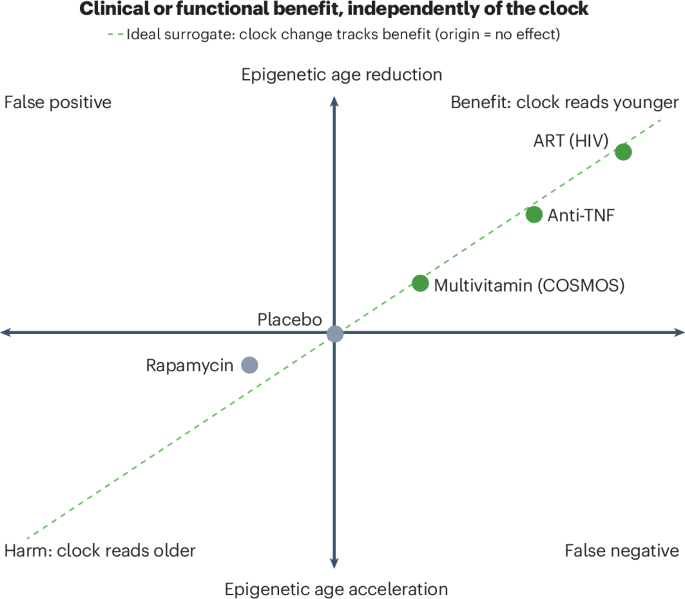
Scientists have developed biological clocks that read chemical tags on your DNA to estimate how fast your body is aging. However, until now, no one had systematically checked if these clocks actually work as dependable medical tools. This study evaluated whether DNA methylation clocks change when a person genuinely benefits from a treatment and stay steady when a treatment does not work. The researchers found that while these tools show promise, they need careful testing before they can be trusted. For everyday people, this means commercial biological age tests are still experimental and should not be used to guide personal medical decisions.

Citation:

Nature Medicine - AI Section, 2026. DOI: s41591-026-04524-1 Read article →

Guideline Update
Oscar Winner Brings Monsters to Life With His Simulation Software
IEEE Spectrum - BiomedicalExploratory2 min read

Oscar-Winning Software Brings Realistic Muscles and Anatomy to Life

Key Takeaway:

Advanced physics-based biomechanical modeling accurately simulates muscle, fat, and skin interactions by numerically solving equations of nonlinear elasticity for realistic soft-tissue movement.

Computer scientist Jernej Barbič developed a breakthrough software tool called Ziva VFX that makes digital humans and creatures move with stunning realism. Instead of just animating the outside skin of a character, the software builds an entire internal anatomy with digital bones, muscles, and fat layers. It uses complex physics and math equations to calculate how these body parts squeeze, stretch, slide, and react during motion. While this technology has already been used in over 60 blockbuster movies and won a technical Academy Award, the underlying math accurately mimics the real-world physical behavior of living tissues.

What this means for you

A computer scientist created award-winning software that makes digital creatures move realistically by copying real muscles and fat. This technology is currently used in movies rather than medical treatments.

Citation:

IEEE Spectrum - Biomedical, 2026. Read article →

New to reading medical AI research? Learn how to interpret these studies →