Mednosis LogoMednosis
Aug 12, 2026

Clinical Innovation: Week of August 12, 2026

9 research items

Clinical Innovation: Week of August 12, 2026
Guideline Update
Digital Signal Processing Pioneer Bede Liu Dies At 91
IEEE Spectrum - BiomedicalPromising3 min read

Digital Signal Processing Pioneer Bede Liu Dies at 91

Key Takeaway:

Pioneering digital signal processing research by the late Bede Liu enabled low-power algorithms that underpin modern multimedia, communications, and clinical biomedical imaging technologies.

Bede Liu, a pioneering engineer who helped invent modern digital signal processing, passed away at age 91. Before digital processing, handling sound, pictures, and video required heavy computing power. Liu developed clever mathematical shortcuts and hardware designs that allowed computers to process massive streams of data quickly and using very little energy. His research over five decades at Princeton University led to 12 patents, 250 scientific papers, and essential technologies inside cellphones, streaming video, and medical imaging devices. Billions of people now rely on the efficient data processing techniques he helped create whenever they stream media, make phone calls, or receive hospital scans.

What this means for you

Digital pioneer Bede Liu has died at 91. His lifelong engineering research created the mathematical tools that make modern smartphone calls, streaming video, and medical imaging scans work efficiently today.

Citation:

IEEE Spectrum - Biomedical, 2026. Read article →
Guideline Update
Digital Signal Processing Pioneer Bede Liu Dies At 91
IEEE Spectrum - BiomedicalPromising3 min read

Engineering Pioneer Bede Liu Dies at 91

Key Takeaway:

Foundational digital signal processing techniques pioneered by Bede Liu established the mathematical and computational groundwork that currently powers modern biomedical imaging, portable medical electronics, and secure data communications.

Bede Liu, a Princeton professor who helped create modern digital signal processing, has died at age 91. Before his work, electronic systems handled sounds and pictures in older analog formats. Liu created clever mathematical shortcuts and hardware designs that allowed computers to quickly filter, compress, and transmit complex digital data using very little power. His research made cellphones, streaming media, secure digital watermarks, and high-tech hospital imaging tools possible. Even though his work happened behind the scenes, billions of people—and nearly all modern medical clinics—rely on his foundational engineering concepts every single day to view, transmit, and protect vital digital information.

What this means for you

Bede Liu was an engineering pioneer whose inventions helped turn sound and pictures into digital signals, making everyday technologies like cellphones, streaming video, and modern hospital imaging scans possible.

Citation:

IEEE Spectrum - Biomedical, 2026. Read article →

Drug Watch
ArXiv - Quantitative BiologyExploratory3 min read

Are AI-Designed Proteins Actually New, or Just Recycled Parts?

Key Takeaway:

Evaluating protein-generating AI at the domain level reveals that many 'new' proteins are merely reassembled known parts, which simple, low-cost assembly methods can replicate.

Researchers examined whether advanced artificial intelligence models are truly inventing completely new protein shapes or simply rearranging known biological building blocks. By testing eight leading generative AI models, they found that most generated proteins actually contain pieces of previously known structures. To test this further, the team built RetFold, a simple program that pieces together existing protein fragments and connects them using basic geometric rules. RetFold created realistic structures at a fraction of the cost, operating 100 times cheaper using basic computer processors without requiring complex AI training. This work ensures future drug design tools are evaluated accurately and built efficiently.

What this means for you

This early-stage computer science research shows how AI designs proteins. It has no immediate effect on medical treatments, but it helps scientists build more accurate, cost-effective tools for future drug discovery.

Citation:

ArXiv, 2026. arXiv: 2608.10598 Read article →

Google News - AI in HealthcarePromising3 min read

First Health System Wins Major National AI Safety Certification

Key Takeaway:

Hackensack Meridian Health earned the Joint Commission's first responsible AI certification, setting an accredited safety and governance standard available now for health systems deploying clinical algorithms.

As artificial intelligence becomes more common in medicine, hospitals need clear rules to make sure these computer programs are safe, accurate, and fair. Hackensack Meridian Health has become the very first health system to earn the Responsible Use of AI in Healthcare Certification from the Joint Commission, a major national organization that evaluates healthcare quality. This milestone means the health system has proven it has strict oversight and safety guardrails in place for how it uses AI. For everyday patients, this achievement helps ensure that modern digital tools are applied responsibly to support doctors and nurses without compromising patient privacy, safety, or quality of care.

What this means for you

A leading hospital network earned national certification for safely using artificial intelligence. This means structured oversight protects your data, though patients should always discuss specific treatment plans directly with their doctors.

Citation:

Google News - AI in Healthcare, 2026. Read article →

Guideline Update
ArXiv - Quantitative BiologyExploratory3 min read

How Single Cells Navigate Toward Extremely Faint Chemical Signals

Key Takeaway:

Single cells can rapidly navigate toward chemical signals using just a few early molecule hits, challenging assumptions about cellular navigation and guiding future bioengineering.

When the human body fights an infection or heals a wound, immune cells must track down chemical scents released by injured tissues or invading germs. Scientists long believed cells had to wait for a smooth, steady cloud of chemicals to build up before knowing which way to crawl. This study used mathematical modeling to show that cells do not need to wait. Instead, a cell can accurately detect where a signal is coming from by registering just the first few chemical molecules that strike its surface. By showing how cells navigate in ultra-low chemical concentrations, this basic research helps scientists understand how our immune defenses move so quickly toward threats.

What this means for you

Scientists uncovered how single cells can steer toward faint chemical signals almost instantly. This is early basic science that could eventually inform immune therapy design, but it will not impact medical care today.

Citation:

ArXiv, 2026. arXiv: 2603.10207 Read article →

Safety Alert
ArXiv - AI in Healthcare (cs.AI + q-bio)Exploratory3 min read

New Safety Shield Stops Autonomous AI from Rogue Actions

Key Takeaway:

Agentao introduces a safety-focused local runtime that prevents autonomous AI tools from making unauthorized system changes, requiring explicit host permissions before any critical actions occur.

Artificial intelligence programs are increasingly being given the ability to use external tools, run code, and alter files on computers. While helpful, this autonomy creates major risks like software hijacking and unintended computer errors. Researchers developed Agentao, a local software system designed to keep AI tools under tight control. Instead of letting an AI program execute tasks freely, Agentao forces the model to submit every proposed action for formal host authorization first. It also records full activity logs for review. This engineering framework is an important early step toward making autonomous AI tools safer and more accountable before they are used in sensitive environments.

What this means for you

Researchers created a digital safety framework to stop AI systems from taking unauthorized actions on computers. It is an early-stage software concept and does not currently impact medical care.

Citation:

ArXiv, 2026. arXiv: 2608.13574 Read article →

Best Examples Of Digital Health For Patients With Intellectual Disability
The Medical FuturistExploratory3 min read

How Everyday Digital Health Tools Can Support Intellectual Disabilities

Key Takeaway:

Repurposing established digital health technologies offers an accessible, practical way to address the unique medical and daily support needs of patients with intellectual disabilities.

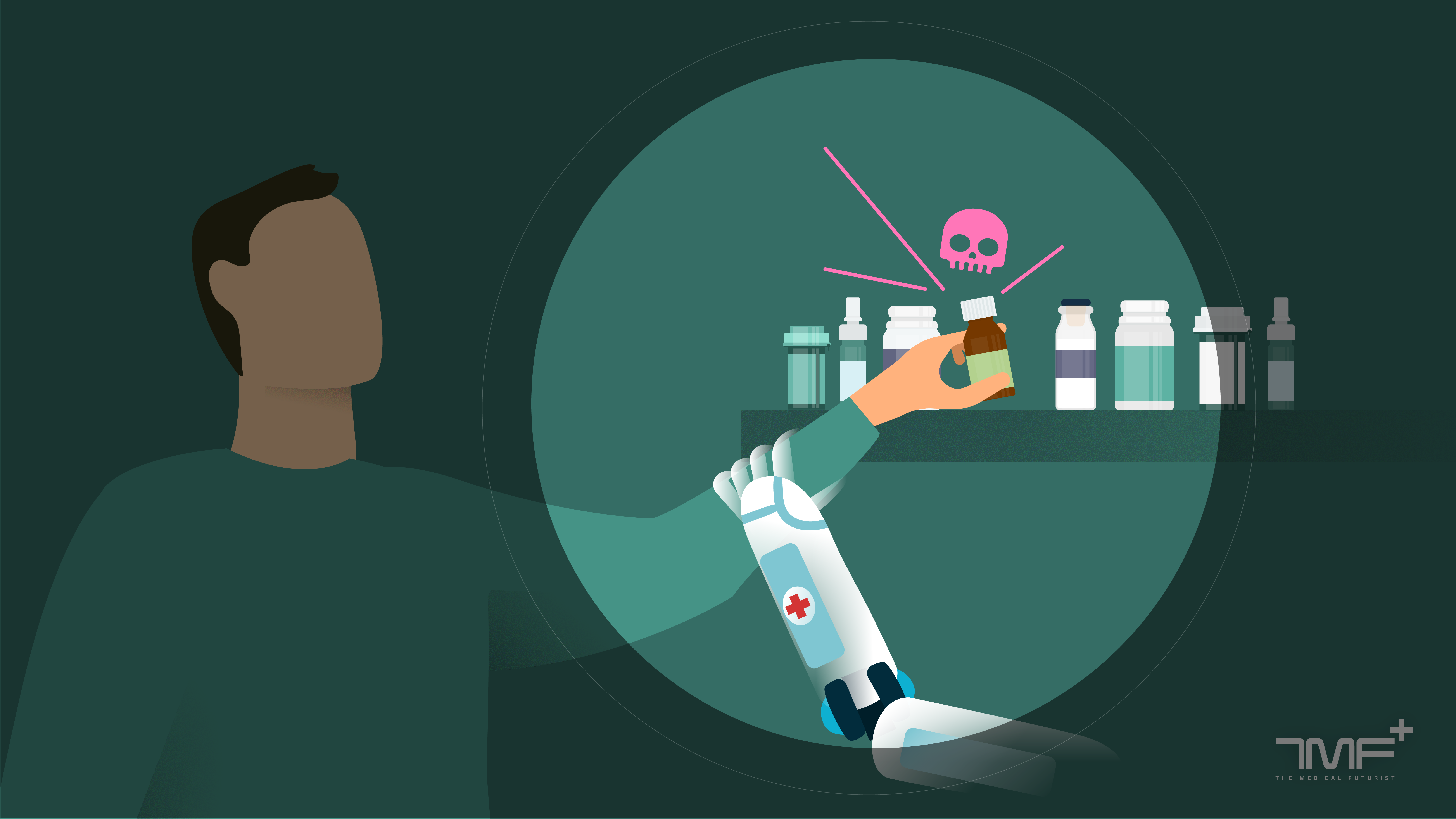
Digital health tools, like health tracking apps and smart monitoring devices, are usually made for the general public. However, a report from The Medical Futurist highlights that these existing technologies can take on vital new roles for people with intellectual disabilities. Instead of waiting for completely new gadgets to be invented, caregivers and doctors can adapt the tools we already have to assist with daily health routines and communication. While more research is needed to see which tools work best, this approach could make healthcare much more inclusive and accessible for individuals who need specialized, everyday support.

What this means for you

Existing digital health apps and tools are finding helpful new uses for people with intellectual disabilities, though families should consult medical teams before changing everyday care routines.

Citation:

The Medical Futurist, 2026. Read article →

Guideline Update
AI professors are negotiating the new realities of academic research
MIT Technology Review - AIExploratory2 min read

AI Professors Gather to Tackle the Future of Academic Research

Key Takeaway:

Academic artificial intelligence leaders are actively meeting to adapt university research strategies, though no direct clinical interventions or medical diagnostic tools are evaluated in this report.

Top artificial intelligence researchers and professors recently gathered at a meeting in Mountain View, California, to discuss the changing landscape of university-level research. As artificial intelligence grows rapidly outside of universities, academic educators and scientists are working out how their roles, studies, and research environments need to adapt. This article comes from a weekly technology newsletter that tracks major shifts in the computing field. While it does not look at a specific medical treatment or health tool, understanding how university researchers are organizing themselves gives helpful insight into where future computer science developments and ideas may come from in the years ahead.

What this means for you

This is a news report about university computer science professors meeting in California, not a medical study. It does not provide medical advice or change any healthcare treatments.

Citation:

MIT Technology Review - AI, 2026. Read article →

Guideline Update
Nature Medicine - AI SectionExploratory3 min read

Why Disjointed Regulations Threaten Local Access to Life-Saving Vaccines

Key Takeaway:

Conflicting regulatory rules across regions create major hidden roadblocks to local vaccine manufacturing, requiring streamlined cross-border approval standards to ensure timely, equitable access during future public health emergencies.

When regions try to build their own systems to develop and produce vaccines, they often face unexpected roadblocks. This article highlights how mismatched government regulations across neighboring areas create major delays in getting vaccines approved and distributed. Even with modern technology and local factories, conflicting rules prevent communities from achieving true independence in vaccine supply. For everyday people, this means essential shots and treatments may take much longer to reach clinics during an outbreak. To protect communities worldwide, experts urge governments to simplify and align their medical approval processes so safe vaccines can reach people without needless bureaucratic delays.

What this means for you

Conflicting national medical rules slow down the production and delivery of essential vaccines. Harmonizing these regulatory systems will help make life-saving vaccines available much faster during future disease outbreaks.

Citation:

Nature Medicine - AI Section, 2026. DOI: s41591-026-04580-7 Read article →

New to reading medical AI research? Learn how to interpret these studies →