Mednosis LogoMednosis
Jul 3, 2026

Clinical Innovation: Week of July 03, 2026

7 research items

Clinical Innovation: Week of July 03, 2026
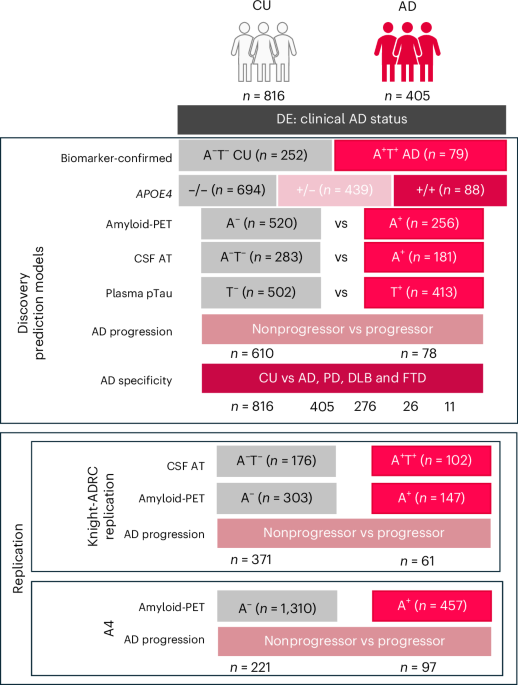
Blood-based circular RNAs for early diagnosis of Alzheimer’s disease
Nature Medicine - AI SectionPromising3 min read

Simple Blood Test Outperforms Brain Scans for Predicting Alzheimer's

Key Takeaway:

A new blood test measuring 34 circular RNA molecules can predict progression to symptomatic Alzheimer's disease more accurately than current gold-standard brain scans and protein tests.

Researchers have developed a new blood test that can predict if a person will develop symptoms of Alzheimer's disease. The test looks at 34 specific circular RNAs, which are stable genetic molecules found in our blood. When tested in large groups of people, this new RNA test actually performed better at predicting the disease than today's best methods, which include expensive brain scans (amyloid-PET) and specialized protein blood tests (pTau217). This is important because it could eventually give doctors a simpler, cheaper, and much more accurate way to spot Alzheimer's early, allowing patients to get help and plan ahead long before severe symptoms start to show.

What this means for you

Scientists found a blood test tracking 34 RNA molecules that predicts Alzheimer's progression better than current scans. This promising tool is not yet available; do not alter your current medical care.

Citation:

Nature Medicine - AI Section, 2026. DOI: s41591-026-04485-5 Read article →
Why high scores do not mean application readiness for health AI
Nature Medicine - AI SectionExploratory2 min read

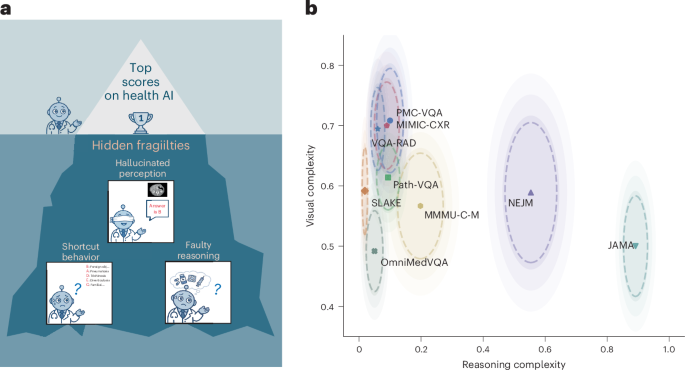
Why Top-Scoring Medical AI Isn't Ready for Patients Yet

Key Takeaway:

High test scores do not guarantee that medical artificial intelligence is safe or reliable enough for real-world patient care and clinical decision-making.

Large language models—the technology behind advanced artificial intelligence—often get incredibly high scores on medical tests. However, new research shows that these high scores are misleading. By putting the AI through stress tests designed to trip it up, researchers found that the technology often relies on shortcuts, struggles to correctly analyze medical images, and even makes up fake explanations to justify its answers. This means that while the AI looks smart on paper, it is still too fragile and unreliable to be trusted with real patient care or to help doctors make critical medical decisions.

What this means for you

Artificial intelligence tools might pass medical exams with high scores, but they still make hidden mistakes. Patients should not rely on these early-stage tools for medical advice.

Citation:

Nature Medicine - AI Section, 2026. DOI: s41591-026-04500-9 Read article →

Drug Watch
When the real world becomes the trial
Nature Medicine - AI SectionPromising2 min read

How Everyday Health Data Is Rewriting the Rules of Clinical Trials

Key Takeaway:

Real-world health data is now being used to emulate clinical trials and guide drug approvals, transforming how new medical treatments are evaluated and monitored in real time.

Traditionally, medical treatments are tested in highly controlled clinical trials before they reach the public, with real-world tracking only happening after approval. Now, researchers are using real-world evidence—like everyday electronic health records—to mimic clinical trials and guide official drug approvals in real time. This major shift means scientists can study how treatments work in a wider variety of real patients much faster than before. While this could bring helpful therapies to patients more quickly, researchers must still ensure this everyday data is just as reliable and safe as traditional, highly controlled medical studies.

What this means for you

Researchers are now using everyday health data to study how treatments work in the real world. This could speed up drug approvals, but patients should not alter their current treatments based on early observational data.

Citation:

Nature Medicine - AI Section, 2026. DOI: s41591-026-04484-6 Read article →

Safety Alert
Polypill for heart failure with reduced ejection fraction: the POLY-HF randomized trial
Nature Medicine - AI SectionPromising2 min read

New Three-in-One Pill Boosts Weak Hearts and Cuts Hospital Visits

Key Takeaway:

A new three-in-one daily pill significantly improves heart pumping function and reduces emergency hospital visits for heart failure patients within six months.

Living with heart failure often means taking a complicated handful of pills every day, which can be hard to manage. Researchers tested a new "polypill" that combines three common heart medications—metoprolol, spironolactone, and empagliflozin—into just one daily dose. They compared this single pill to standard care. After six months, patients taking the single combination pill showed improved heart-pumping strength. Even better, they had fewer emergency room visits and hospital stays. This simple change could make it much easier for patients to stay on track with their life-saving medicine and stay out of the hospital.

What this means for you

A new three-in-one pill helper improves heart strength and cuts emergency visits. This treatment is still being researched, so do not change your current heart medications without consulting your doctor.

Citation:

Nature Medicine - AI Section, 2026. DOI: s41591-026-04504-5 Read article →

Google News - AI in HealthcarePromising2 min read

New Government Office Formed to Oversee Healthcare AI and Telehealth

Key Takeaway:

The federal government's new CMS office will centralize regulations for healthcare AI and digital tools, aiming to improve patient data sharing and safety standards.

The Centers for Medicare & Medicaid Services, a major federal healthcare agency, has launched a new official office. This office is dedicated to supervising artificial intelligence, digital health tools, and telehealth services. Its main goal is to make sure different medical computer systems can securely talk to each other and share information, which is called interoperability. For everyday patients, this means the government is actively working to ensure that the digital health tools and virtual care platforms you use are safe, secure, and well-regulated. This move helps pave the way for safer, more connected healthcare technology in doctor's offices and hospitals nationwide.

What this means for you

A new government office will now oversee healthcare AI and telehealth to ensure these technologies are safe, secure, and helpful for patients nationwide.

Citation:

Google News - AI in Healthcare, 2026. Read article →

Guideline Update
ArXiv - AI in Healthcare (cs.AI + q-bio)Exploratory3 min read

How AI Exposes Hidden Biases in Scientific Data Analysis

Key Takeaway:

AI agents reveal how researchers can reach opposing, yet defensible, conclusions from the same data, highlighting the need for a new metric to evaluate scientific credibility.

When scientists analyze data, they make many small decisions about which statistical methods to use. This study shows that different, perfectly valid choices can lead to completely opposite conclusions from the exact same data. By giving AI agents different 'personalities,' researchers found the AI generated the same biased, opposing results that human scientists do. To fix this, the researchers created a new AI tool called 'Agentic Bootstrap.' This tool runs thousands of different analysis paths on the same data to see if a study's conclusion is a rare fluke or a highly consistent finding. This helps ensure we can truly trust scientific results before they influence public policy or healthcare.

What this means for you

Researchers using the same data can reach different conclusions just by making different analytical choices. This early-stage AI tool helps identify these biases, but does not immediately change your medical care.

Citation:

ArXiv, 2026. arXiv: 2607.01507 Read article →

Safety Alert
Claude Science is Anthropic’s newest flagship product
MIT Technology Review - AIExploratory2 min read

Anthropic Launches New AI Tool to Assist Scientific Research

Key Takeaway:

Anthropic's new autonomous AI tool, Claude Science, aims to accelerate biotechnology and pharmaceutical research by independently executing complex scientific tasks from simple instructions.

Anthropic has introduced a new AI tool called Claude Science, designed specifically to help scientists, biotech founders, and drug researchers. Just like virtual assistants can write software code, this new tool can independently carry out complex scientific tasks when given simple, high-level instructions. While we do not have specific data yet on how well it performs, the goal is to make scientific research faster and more efficient. For regular people, this means that the long process of discovering new medicines and understanding diseases could eventually be sped up using smart, autonomous technology.

What this means for you

A new AI tool has been announced to help scientists speed up medical research. It is in very early stages, so patients should not expect immediate changes to their medical care.

Citation:

MIT Technology Review - AI, 2026. Read article →

New to reading medical AI research? Learn how to interpret these studies →