Mednosis LogoMednosis
Jun 29, 2026

Clinical Innovation: Week of June 29, 2026

9 research items

Clinical Innovation: Week of June 29, 2026
Google News - AI in HealthcareExploratory2 min read

Testing the Safety of Powerful New AI Tools in Healthcare

Key Takeaway:

Evaluating large AI models ensures they are safe and reliable before they are used to assist doctors with patient care decisions in clinics.

Scientists are looking at how powerful new artificial intelligence systems, called frontier models, handle real-world medical tasks. While these AI tools are highly advanced, this study found that they can still make mistakes or lose accuracy when faced with slight changes in medical data. To fix this, researchers created a new testing system to measure the safety and reliability of these models. This matters to everyday people because we must ensure that any AI tool helping a doctor make decisions about your health is thoroughly tested, completely safe, and ready for the clinic before it is ever used in your actual medical care.

What this means for you

Researchers are testing new, powerful AI tools to make sure they are safe and accurate before they help doctors. These tools are not ready for general medical use yet.

Citation:

Google News - AI in Healthcare, 2026. Read article →
Agents AMIE and MIRA advance medical AI capabilities
Nature Medicine - AI SectionExploratory2 min read

New AI Assistants Aim to Help Doctors Make Hospital Decisions

Key Takeaway:

While advanced agentic AI models show promise in assisting with diagnosis and hospital admissions, they require further real-world testing and are not yet ready for clinical use.

Researchers are testing two new artificial intelligence systems, called AMIE and MIRA, designed to act as smart assistants for doctors. Unlike basic search tools, these advanced AI systems can think through complex medical situations to help with diagnosing illnesses, choosing treatments, and deciding when a patient needs to be admitted to the hospital. While the early results are promising, the technology is still in its beginning stages. Neither system has been tested on real patients in actual hospitals yet, meaning they are not ready for everyday medical use. For now, doctors will continue to make these critical decisions on their own while the technology is safely refined.

What this means for you

Scientists are testing new AI assistants to help doctors make diagnostic and hospital admission decisions, but these tools are still in early stages and not ready for real patient care.

Citation:

Nature Medicine - AI Section, 2026. Read article →

Why high scores do not mean application readiness for health AI
Nature Medicine - AI SectionExploratory2 min read

Why AI's High Test Scores Can Be Deceiving

Key Takeaway:

High test scores do not guarantee that medical artificial intelligence is safe or reliable enough for real-world patient care and clinical decision-making.

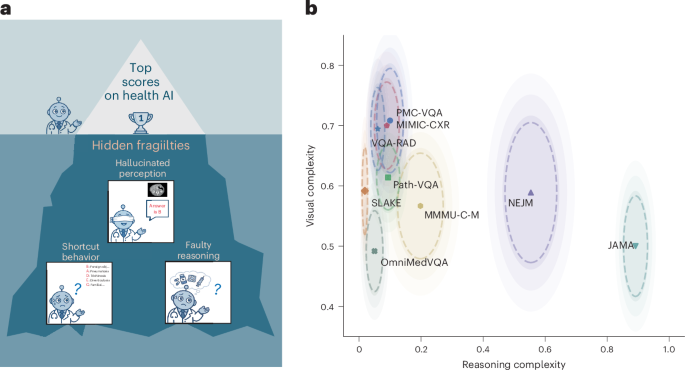
Recent tests show that artificial intelligence programs designed for healthcare are not as ready for the real world as their high test scores suggest. When researchers put these AI models through stress tests, they discovered major weaknesses. The AI programs often rely on shortcuts to get the right answer, struggle to accurately understand medical images, and even make up fake logical steps to explain their decisions. This means that while the AI looks smart on paper, it can easily fail when helping doctors or patients. For regular people, this is a reminder that medical AI still needs a lot of work and testing before it can be trusted to help make decisions about your health.

What this means for you

While medical AI programs get high scores on tests, they still make hidden errors and invent facts. Patients should not rely on these tools for medical advice.

Citation:

Nature Medicine - AI Section, 2026. DOI: s41591-026-04500-9 Read article →

Blood-based circular RNAs for early diagnosis of Alzheimer’s disease
Nature Medicine - AI SectionPromising2 min read

New Blood Test Outperforms Scans in Predicting Alzheimer's Symptoms

Key Takeaway:

A new blood test tracking 34 circular RNAs can predict progression to symptomatic Alzheimer's disease, outperforming current gold-standard PET scans and protein tests within two to five years.

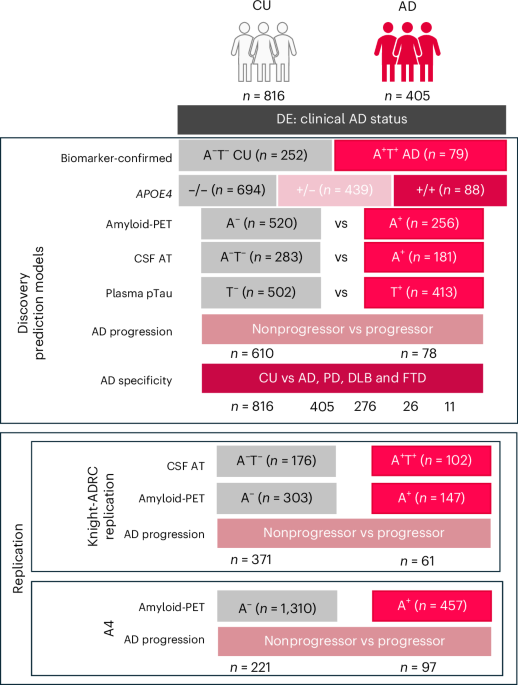
Scientists have developed a new blood test that can predict if and when a person will develop visible symptoms of Alzheimer's disease. Instead of looking for traditional proteins, this test measures 34 unique circular genetic markers in the blood called circular RNAs. When tested in large groups of people, this new method actually performed better than today's best tools, which include expensive brain scans and advanced protein blood tests. For regular families, this means that a simple, highly accurate, and affordable blood test to detect Alzheimer's early—long before severe memory loss sets in—is becoming a reality.

What this means for you

A new blood test showing 34 specific cell signals may predict Alzheimer's symptoms earlier than current scans. It is not yet available for general use; please do not alter your current medical care.

Citation:

Nature Medicine - AI Section, 2026. DOI: s41591-026-04485-5 Read article →

Drug Watch
Delivering the benefits of genomic data reanalysis for diagnosis equitably and at scale
Nature Medicine - AI SectionPromising2 min read

New Free Software Automatically Re-Analyzes DNA to Solve Rare Diseases

Key Takeaway:

An open-source AI tool called Talos automates rare disease genetic data reanalysis, offering a low-cost, scalable way to find new diagnoses as medical knowledge updates.

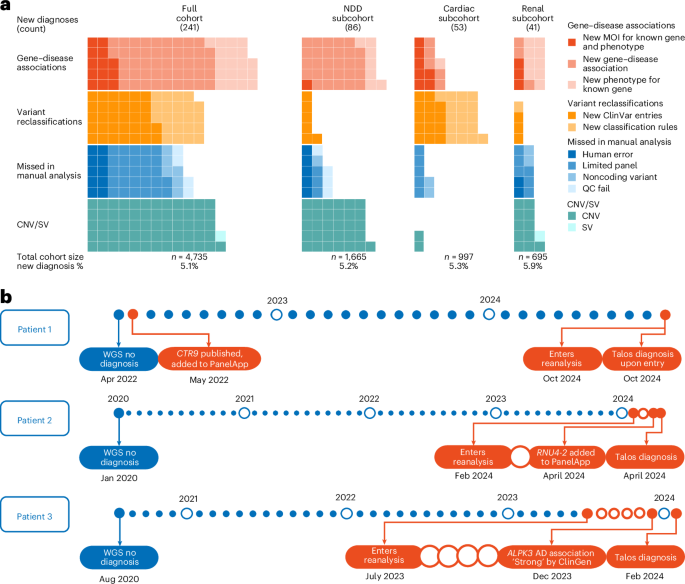
When patients with mysterious, rare illnesses get genetic tests, the results often do not provide immediate answers. However, as medical science advances, scientists discover new genetic clues every day. This means that re-checking a patient's old DNA data years later can often reveal the correct diagnosis. Because manual re-checking is too slow and expensive for doctors to do regularly, researchers created a new, free computer tool called Talos. Talos automates this entire process, allowing clinics to quickly and cheaply re-analyze patient DNA data on a large scale. This breakthrough could help thousands of families finally find the answers and treatments they have been waiting for.

What this means for you

Scientists created a free tool called Talos that automatically re-checks old genetic tests to find new clues for rare diseases. It is still in development, so patients should not change their care plans.

Citation:

Nature Medicine - AI Section, 2026. DOI: s41591-026-04516-1 Read article →

Guideline Update
ArXiv - AI in Healthcare (cs.AI + q-bio)Promising3 min read

Specialized Medical AI Beats General Chatbots on Real Doctor Queries

Key Takeaway:

Specialized clinical AI tools outperform general-purpose models on real-world medical questions, showing that tailored engineering is crucial for safe, accurate point-of-care decision support.

When doctors have questions during patient care, they are increasingly turning to AI for quick answers. However, most AI tools are tested on medical school exam questions rather than the messy, real-world questions doctors actually ask. To fix this, researchers had 149 practicing doctors grade answers to 620 real clinical questions. They compared general-purpose AI models, like GPT and Gemini, against an AI specifically designed for medicine. The specialized medical AI won by a landslide, scoring much higher in accuracy, usefulness, and trustworthiness. This shows that while general AI is impressive, we need highly customized, medically trained AI tools to ensure patient safety and reliable doctor support.

What this means for you

Doctors tested different AI tools on real medical questions and found that specialized medical AI is much more accurate than general-purpose AI. Always rely on your human doctor for actual medical decisions.

Citation:

ArXiv, 2026. arXiv: 2606.28960 Read article →

Safety Alert
Claude Science is Anthropic’s newest flagship product
MIT Technology Review - AIExploratory2 min read

Anthropic Launches Claude Science to Automate Scientific Research

Key Takeaway:

Anthropic's new autonomous AI tool, Claude Science, aims to accelerate medical and biotechnology research by independently executing complex scientific tasks from simple instructions.

Anthropic has announced a new artificial intelligence tool called Claude Science, designed specifically to help scientists, drug developers, and biotech researchers. Similar to how some AI tools help software engineers write code, Claude Science can take simple, written instructions from a researcher and independently carry out complex scientific tasks. While we do not have specific data yet on how well it performs, this tool represents a major shift toward AI assistants that can actively do research work rather than just answering questions. If successful, it could eventually help researchers discover new medicines and understand diseases much faster than they can today.

What this means for you

A new AI tool called Claude Science has been announced to help scientists do research faster. It is not ready for medical decision-making; always consult your doctor for care.

Citation:

MIT Technology Review - AI, 2026. Read article →

Guideline Update
ArXiv - Quantitative BiologyExploratory2 min read

Could Chemical Reactions, Not Moving Ions, Power Our Brains?

Key Takeaway:

A new theoretical model suggests brain signals are driven by chemical redox reactions rather than moving ions, potentially redefining how we understand and treat neurological disorders.

For decades, scientists believed that brain cells send electrical signals by moving charged atoms, called ions, back and forth across their membranes. This new study proposes a different idea: these signals are actually powered by chemical reactions involving oxygen and electron transfers, known as redox dynamics. The researchers created a model that links these chemical reactions to real-world brain activity, like how fast signals travel. This theory also applies to heart tissue and the eyes. While this is early-stage research that does not change current medical treatments, understanding the true chemistry of our cells could eventually lead to entirely new ways of diagnosing and treating brain and heart diseases.

What this means for you

This early research proposes a new theory on how brain cells communicate using chemical reactions. It does not change current medical treatments, and any practical applications are many years away.

Citation:

ArXiv, 2026. arXiv: 2605.00014 Read article →

Safety Alert
The Lab Mistake That Might Revolutionize Computing
IEEE Spectrum - BiomedicalExploratory2 min read

How a Common Computer Chip Mistake Could Mimic the Human Brain

Key Takeaway:

An accidental discovery utilizing standard computer transistors could reduce AI energy consumption thousandfold, paving the way for ultra-low-power medical devices and diagnostics.

Modern artificial intelligence requires massive amounts of electricity to run. To solve this, scientists are trying to build computer chips that mimic the human brain, which is a million times more energy-efficient than our best computers. Previously, mimicking a single brain cell required combining hundreds of electronic parts. Now, researchers have accidentally discovered that a single, ordinary computer transistor can act just like a brain cell. By slightly changing how electricity flows through this common component, they made it produce the same electrical spikes found in human brain cells. This discovery could eventually lead to ultra-efficient, brain-like smart devices that use a fraction of the power.

What this means for you

Scientists found a way to make computer chips mimic brain cells using everyday transistors, which could eventually power ultra-efficient medical devices. This technology is in early development and not yet available.

Citation:

IEEE Spectrum - Biomedical, 2026. Read article →

New to reading medical AI research? Learn how to interpret these studies →