Mednosis LogoMednosis
Jun 26, 2026

Clinical Innovation: Week of June 26, 2026

8 research items

Clinical Innovation: Week of June 26, 2026
Google News - AI in HealthcareExploratory2 min read

Are Advanced AI Models Ready for Real-World Healthcare?

Key Takeaway:

Researchers have established a new framework to test if advanced artificial intelligence models are safe, reliable, and ready for use in everyday medical settings.

As advanced artificial intelligence systems start entering the medical field, scientists need to know if they are truly ready for the high-stakes world of healthcare. This study, published in the journal Nature, looks at how we can thoroughly test these powerful AI models to make sure they are safe, reliable, and accurate. Instead of just checking if the AI gets easy questions right, the researchers designed ways to test how the AI handles complex medical situations. While the technology is still in its early testing phases, this work is incredibly important because it helps create the safety rules that will protect patients before these AI tools are allowed in real doctors' offices.

What this means for you

Scientists are testing how safely advanced AI can handle medical tasks. This technology is in early development stages, so patients should always consult their human doctors for medical decisions.

Citation:

Google News - AI in Healthcare, 2026. Read article →
Blood-based circular RNAs for early diagnosis of Alzheimer’s disease
Nature Medicine - AI SectionPromising2 min read

New Blood Test Outperforms Scans at Predicting Alzheimer's Symptoms

Key Takeaway:

A new blood test tracking 34 circular RNA molecules can predict progression to symptomatic Alzheimer's disease better than current gold-standard scans and protein tests within the next few years.

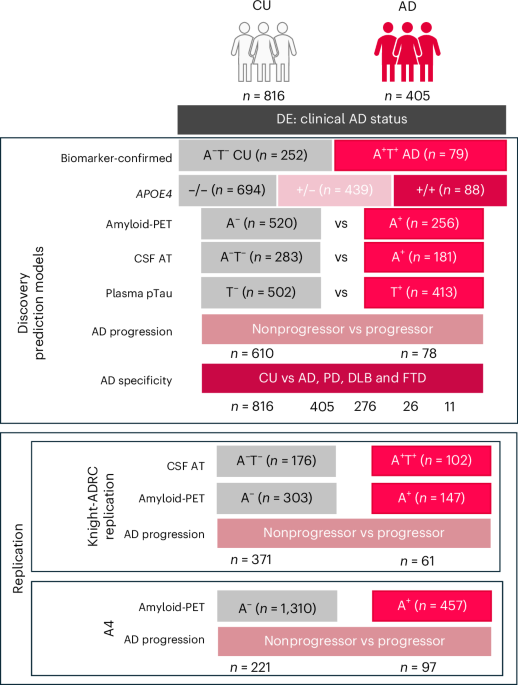
Researchers have developed a new blood test that can predict whether a person will develop Alzheimer's disease symptoms. The test looks at 34 specific circular RNAs, which are stable genetic molecules found in our blood. In a study of large groups of patients, this new blood test actually performed better than today's best methods, which include expensive brain scans and specialized protein blood tests. For regular people, this means we are getting closer to having a simple, highly accurate, and affordable blood test at the doctor's office that can spot Alzheimer's risk years before symptoms start, giving patients a head start on managing their brain health.

What this means for you

Scientists have developed a highly accurate blood test to predict Alzheimer's symptoms early. While promising, this test is not yet available for routine patient care and requires further clinical validation.

Citation:

Nature Medicine - AI Section, 2026. DOI: s41591-026-04485-5 Read article →

Immersive virtual reality with synchronous neurostimulation for upper-limb recovery after stroke: a randomized feasibility trial
Nature Medicine - AI SectionPromising2 min read

Virtual Reality and Nerve Stimulation Help Stroke Survivors Regain Movement

Key Takeaway:

A new virtual reality and nerve-stimulation therapy helps stroke survivors regain arm movement and touch sensation better than standard physical therapy.

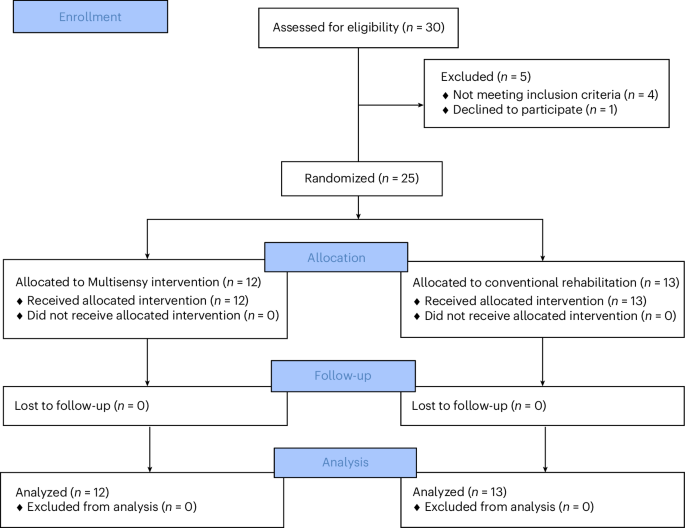
Researchers have tested a new therapy for stroke survivors that combines immersive virtual reality headsets with synchronized nerve stimulation on the skin. In a clinical study, this high-tech approach helped patients regain arm movement and improved their sense of touch far better than standard physical therapy. The system also uses built-in sensors to track a patient's physical progress automatically. While this technology is still in the testing phase and not yet available in standard clinics, it represents a major step forward in using digital tools to help the brain rewire itself and recover lost functions after a stroke.

What this means for you

A new virtual reality and nerve stimulation therapy shows promise in helping stroke survivors regain arm movement. This technology is still in testing and not yet widely available.

Citation:

Nature Medicine - AI Section, 2026. DOI: s41591-026-04486-4 Read article →

Re-administration of AAV-mediated gene therapy for OTOF-related deafness: a single-arm trial
Nature Medicine - AI SectionExploratory3 min read

Repeat Gene Therapy Safely Restores Hearing in Deaf Children

Key Takeaway:

Re-administering AAV gene therapy to four children with genetic deafness who had developed immune blocks was safe and successfully restored additional hearing.

Scientists tested a new way to help children born with genetic deafness due to a faulty OTOF gene. Usually, patients can only receive gene therapy once because their immune systems build up defenses, called neutralizing antibodies, that block a second dose. In this small study, researchers gave a second dose of the gene therapy to four children who already had these immune defenses. Surprisingly, the repeat treatment was completely safe and successfully gave the children further hearing improvements. This is a major breakthrough because it shows that gene therapies might be repeatable, offering hope for long-term treatments without being blocked by the body's natural immune response.

What this means for you

In a small study, repeating a gene therapy for genetic deafness was safe and improved hearing, even with immune system interference. This early-stage research is not yet widely available.

Citation:

Nature Medicine - AI Section, 2026. DOI: s41591-026-04505-4 Read article →

Guideline Update
ArXiv - AI in Healthcare (cs.AI + q-bio)Promising3 min read

Specialized Medical AI Beats General Bots at Real Doctor Questions

Key Takeaway:

Specialized clinical AI tools outperform general-purpose models in answering real-world medical questions, showing that targeted engineering provides safer, more accurate doctor decision support.

When doctors have questions during patient care, they increasingly turn to artificial intelligence for quick answers. However, most AI tools are tested on medical school exams rather than real-world patient cases. In this study, 149 doctors compared answers to real clinical questions generated by three popular general AI models and one specialized medical AI tool. The doctors rated the specialized tool much higher in accuracy, safety, and helpfulness. The specialized tool beat the general models by 25 to 39 percentage points. This means that while general AI is smart, highly customized medical AI is much safer and more reliable for helping doctors make real-world treatment decisions.

What this means for you

A new study shows that specialized medical AI tools are much better at answering real doctor questions than general AI. These tools are currently for doctors, so always consult your physician for medical advice.

Citation:

ArXiv, 2026. arXiv: 2606.28960 Read article →

Safety Alert
Claude Science is Anthropic’s newest flagship product
MIT Technology Review - AIExploratory2 min read

Anthropic Launches New Claude Science AI to Assist Researchers

Key Takeaway:

Anthropic has launched Claude Science, an autonomous AI tool designed to help researchers streamline scientific workflows and accelerate pharmaceutical development.

Anthropic has announced a new AI tool called Claude Science, designed to act as an assistant for scientists, biotech founders, and drug developers. Similar to how some AI tools help programmers write software, Claude Science can take simple, high-level instructions and independently carry out complex research tasks. While we do not have specific data yet on how well it performs, the goal is to help researchers work faster and more efficiently. For the general public, this represents an exciting step toward using artificial intelligence to potentially speed up the discovery of new medical treatments and scientific breakthroughs in the coming years.

What this means for you

A new AI tool called Claude Science has been announced to help scientists with research, but it is not yet ready to change everyday medical treatments.

Citation:

MIT Technology Review - AI, 2026. Read article →

Guideline Update
ArXiv - Quantitative BiologyExploratory2 min read

A New Theory Suggests Brain Electricity Runs on Chemical Energy

Key Takeaway:

This theoretical model suggests nerve signals are driven by chemical energy reactions rather than moving ions, potentially redefining how we treat neurological and cardiac disorders in the future.

For decades, scientists believed that brain cells send electrical signals by moving charged atoms, called ions, back and forth across their outer membranes. This new study proposes a different idea: these electrical signals are actually powered by chemical energy reactions, known as redox reactions, occurring inside the cells. The researchers created a mathematical model showing that this chemical process can explain nerve signals, heartbeats, and how our eyes detect light. While this theory is still in its very early stages and needs to be tested in labs, it could eventually change how we understand, diagnose, and treat brain and heart conditions.

What this means for you

Scientists are exploring a new theory on how brain cells communicate using chemical energy. This basic research is in its early stages and does not change current medical treatments.

Citation:

ArXiv, 2026. arXiv: 2605.00014 Read article →

Are Physicians Losing Skills Due To AI? What Is Cognitive Offloading?
The Medical FuturistExploratory2 min read

Is AI Making Doctors Lose Their Medical Skills?

Key Takeaway:

As doctors increasingly delegate mental tasks to artificial intelligence, they must balance reduced burnout against the potential risk of losing their core clinical skills.

Artificial intelligence is now helping doctors with many daily tasks, from sorting patients to assisting with paperwork. While this helps reduce doctor burnout, it introduces a concept called 'cognitive offloading'—which means handing our mental tasks over to technology. This article explores whether relying too much on AI might cause doctors to lose their own hard-earned medical skills over time. It is a crucial topic because, while AI is a fantastic helper, we still need highly skilled human doctors who can think on their feet when technology is not available.

What this means for you

As doctors start using AI tools to help manage busy workloads, this early research cautions that we must ensure technology supports, rather than replaces, human medical expertise.

Citation:

The Medical Futurist, 2026. Read article →

New to reading medical AI research? Learn how to interpret these studies →