Mednosis LogoMednosis
Jun 8, 2026

Clinical Innovation: Week of June 08, 2026

8 research items

Clinical Innovation: Week of June 08, 2026
Post-adjuvant chemotherapy in ctDNA-positive patients with resected colorectal cancer: a randomized phase 3 trial
Nature Medicine - AI SectionPromising3 min read

DNA-Guided Cancer Drug Fails to Delay Colorectal Recurrence

Key Takeaway:

Using chemotherapy to treat colorectal cancer patients who test positive for tumor DNA during recovery does not significantly delay cancer recurrence compared to a placebo.

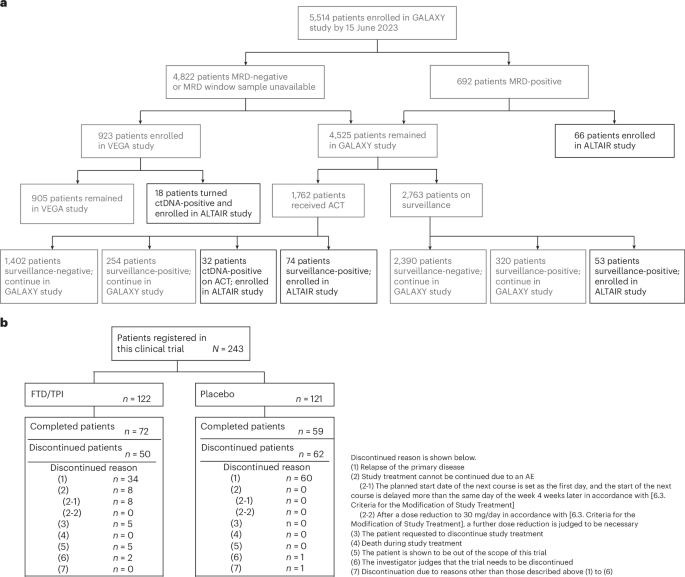
After colorectal cancer surgery, doctors can look for tiny pieces of tumor DNA (called ctDNA) floating in a patient's blood to see if the cancer might return. This study looked at whether giving a chemotherapy drug called trifluridine/tipiracil to patients with this trace DNA could help them stay cancer-free longer. Researchers compared the drug to a dummy pill (placebo) in a rigorous clinical trial. Surprisingly, they found that the chemotherapy did not significantly delay the return of the cancer. This means that while blood tests can find early warning signs of cancer, we still need to find better, more effective treatments to actually stop it from coming back.

What this means for you

This study shows that giving a specific chemotherapy drug to patients with trace cancer DNA in their blood did not delay cancer return. Do not alter your current treatment plan without consulting your oncologist.

Citation:

Nature Medicine - AI Section, 2026. DOI: s41591-026-04428-0 Read article →
Safety Alert
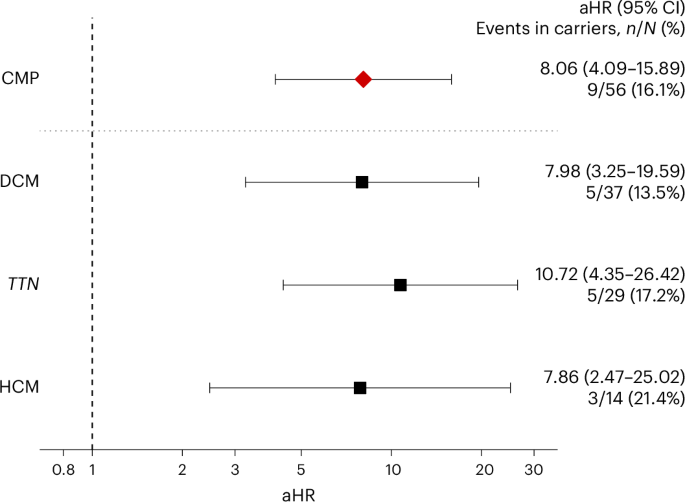
Effects of SGLT2 inhibition on incident heart failure in carriers of cardiomyopathy-associated genetic variants
Nature Medicine - AI SectionPromising3 min read

Common Diabetes Drug Offers Extra Heart Protection for High-Risk Genes

Key Takeaway:

Genetic testing may soon help doctors identify patients with type 2 diabetes who will benefit most from heart failure prevention drugs.

Researchers looked at the genetic data of people with type 2 diabetes to see how they responded to a common drug called dapagliflozin, which is known to help prevent heart failure. They discovered that the drug was significantly more effective at preventing heart failure hospitalizations in people who carried specific genetic mutations linked to heart muscle disease (cardiomyopathy). This means that in the future, a simple genetic test could help doctors pinpoint exactly which diabetes patients will get the absolute most heart-protecting benefit from this medication, moving us closer to truly personalized medicine.

What this means for you

This study shows a common diabetes drug may offer extra heart protection for people with specific genetic markers. Do not alter your medication without consulting your doctor.

Citation:

Nature Medicine - AI Section, 2026. Read article →

Safety Alert
Survodutide in adults with obesity and metabolic dysfunction-associated steatotic liver disease: SYNCHRONIZE-MASLD, a randomized, double-blind, placebo-controlled phase 3 trial
Nature Medicine - AI SectionPromising2 min read

Weekly Injection Cuts Liver Fat and Weight in New Trial

Key Takeaway:

A new weekly injection called survodutide significantly reduces both liver fat and body weight in adults with obesity and metabolic liver disease, offering a promising dual-action treatment within the next few years.

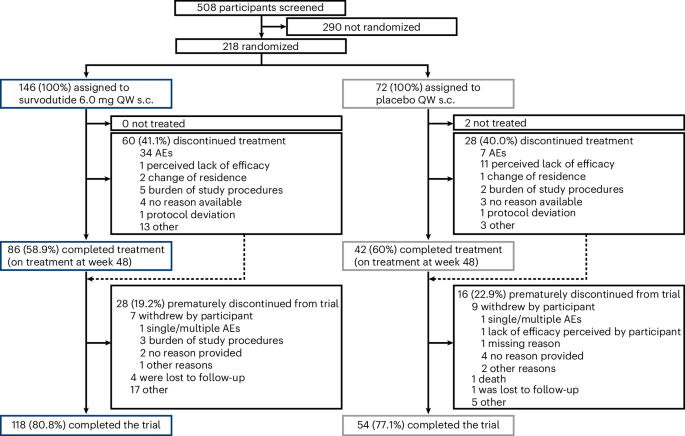
Researchers studied a new weekly injection called survodutide for adults struggling with obesity and a common liver condition called MASLD, which causes harmful fat buildup in the liver. In this high-quality study, patients who received the weekly injection lost significant body weight and successfully lowered the amount of fat in their livers compared to those who took a dummy shot, or placebo. This is important because excess liver fat can lead to permanent liver damage. While this treatment is not yet available at local pharmacies, it represents a major step forward in helping people manage both weight and liver health with a single medication.

What this means for you

A weekly injection called survodutide was shown to reduce liver fat and body weight. This promising treatment is still being studied and is not yet available; do not alter your current medical care.

Citation:

Nature Medicine - AI Section, 2026. DOI: s41591-026-04479-3 Read article →

Oral small molecule GLP-1 receptor agonist aleniglipron in people with overweight or obesity: a randomized, double-blind, placebo-controlled phase 2b trial
Nature Medicine - AI SectionPromising2 min read

New Weight-Loss Pill Shows Promising Results in Clinical Trial

Key Takeaway:

An oral pill called aleniglipron helped adults with overweight or obesity lose up to 11.3% of their body weight over 36 weeks in a mid-stage clinical trial.

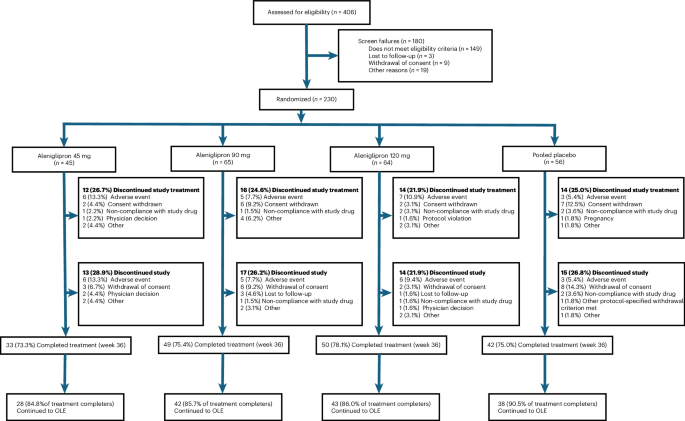
Researchers tested a new weight-loss pill called aleniglipron, which belongs to the same family of highly effective medications as current weekly weight-loss injections. The study looked at 230 adults who were overweight or had obesity. After taking the pill for 36 weeks, participants lost up to 11.3% of their body weight compared to those who took a dummy pill (placebo). This is exciting because a simple daily pill would be much easier for many people to take and store than weekly shots. While these early results are very promising, the drug must still go through larger, final-stage testing before it can be approved for the public.

What this means for you

A new daily weight-loss pill showed promising results in a 36-week study of 230 adults. It is still in testing and not yet available, so do not alter your current treatment plan.

Citation:

Nature Medicine - AI Section, 2026. DOI: s41591-026-04476-6 Read article →

Safety Alert
ArXiv - AI in Healthcare (cs.AI + q-bio)Exploratory3 min read

When Does a Computer Program Count as Real AI?

Key Takeaway:

This framework helps clarify which data-driven systems possess the 'capability to infer,' determining if they must comply with strict European AI Act regulations.

The European Union recently passed the AI Act to regulate artificial intelligence, especially in high-risk areas. However, the law only applies to systems that have the 'capability to infer'—meaning they can make decisions or predictions on their own—and it does not clearly define what this means. Researchers created a new framework to measure different levels of this decision-making capability. By testing it on credit scoring systems, they found that we must look at the entire data process, including human involvement, to decide if a system counts as AI. This matters because it determines which computer programs must follow strict safety rules before being used on the public.

What this means for you

This study looks at how new European laws define artificial intelligence. It helps decide which computer systems face strict safety rules, though it does not immediately change your medical care.

Citation:

ArXiv, 2026. arXiv: 2606.11769 Read article →

Guideline Update
ArXiv - Quantitative BiologyExploratory2 min read

Scientists Map Out How the Human Brain Actually Learns

Key Takeaway:

Researchers have simulated a brain-inspired learning model using spiking neurons, showing how error-driven predictive learning in brain circuits can replicate complex, human-like learning processes.

Researchers have proposed a new way to explain how the outer layer of the brain, called the neocortex, learns. They developed a computer simulation using 'spiking neurons'—virtual brain cells that communicate like real ones do. This model successfully learned to complete difficult tasks by predicting outcomes and correcting its own mistakes, mimicking real brain chemistry and circuitry. By showing how biological brain cells actually adapt and process information, this study helps us understand human intelligence. In the future, these findings could help computer scientists build smarter artificial intelligence that thinks more like a human, and help doctors better understand brain-related health conditions.

What this means for you

Scientists have created a computer model that mimics how the human brain learns. This is early-stage basic research, so it will not affect your medical care or treatment options today.

Citation:

ArXiv, 2026. arXiv: 2606.08720 Read article →

Four Scenarios of AI Scribe Adoption in Healthcare
The Medical FuturistExploratory2 min read

How AI Scribes Are Changing the Way Doctors Take Notes

Key Takeaway:

AI scribes listen to patient-doctor conversations and automatically write medical records, potentially reducing administrative burnout for healthcare providers in the near future.

Going to the doctor often means watching them type on a computer instead of making eye contact. Researchers are looking at how new artificial intelligence, called AI scribes, can help. These smart apps securely listen to the conversation between you and your doctor. They then automatically turn that talk into accurate medical notes for your health record. This means your doctor can spend less time doing paperwork and more time focusing on your care. While this technology is still in the early stages of being adopted, it aims to make doctor visits feel more personal and less rushed for patients.

What this means for you

New AI tools can listen to your doctor's visit and write up the medical notes, allowing your doctor to focus more on you rather than a computer screen.

Citation:

The Medical Futurist, 2026. Read article →

Guideline Update
Rehumanizing global health care with agentic AI
MIT Technology Review - AIExploratory2 min read

Can Smart AI Rescue Our Overburdened Healthcare System?

Key Takeaway:

Agentic AI could help address global healthcare strain and clinician burnout caused by underinvestment, though concrete implementation timelines remain undefined.

The global healthcare system is in trouble. Years of underfunding and difficulties in hiring new staff have collided with a growing demand for care from an aging population. This has led to fragmented patient care and extremely high rates of stress and burnout among doctors and nurses. This article explores how 'agentic AI'—smart computer systems designed to take independent action on tasks—could help manage the heavy workload. By taking over administrative burdens, this technology aims to free up medical staff so they can focus more on treating patients, potentially making healthcare more human and accessible for everyone.

What this means for you

Healthcare systems worldwide are facing extreme stress and staff shortages. While new artificial intelligence tools are being explored to help doctors, these technologies are still in early stages and not yet ready to change your daily care.

Citation:

MIT Technology Review - AI, 2026. Read article →

New to reading medical AI research? Learn how to interpret these studies →