Mednosis LogoMednosis
Jun 1, 2026

Clinical Innovation: Week of June 01, 2026

8 research items

Clinical Innovation: Week of June 01, 2026
Drug Watch
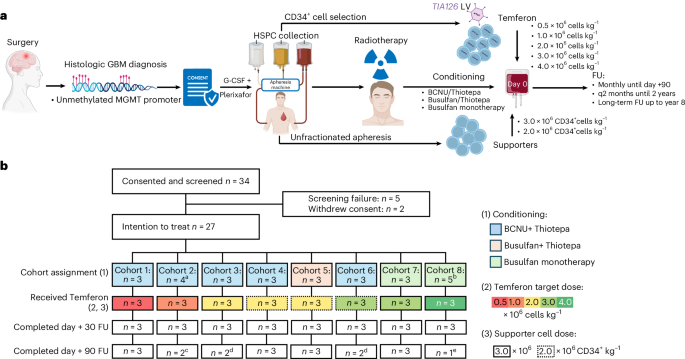
Tumor-targeted interferon-α gene therapy for glioblastoma: a phase 1 trial
Nature Medicine - AI SectionExploratory2 min read

Engineered Stem Cells Show Promise in Fighting Deadly Brain Tumors

Key Takeaway:

A novel stem cell gene therapy safely delivers localized immune-boosting interferon-α to glioblastoma tumors, showing promising immune changes in an early-phase trial of twenty-four patients.

Researchers are testing a new way to treat glioblastoma, a highly aggressive type of brain cancer. In an early-stage study of 24 patients, scientists used the patients' own stem cells, which were genetically modified in a lab, to deliver a powerful immune-boosting protein called interferon-α directly to the tumor. This targeted approach was safe, well-tolerated, and successfully triggered an immune response inside the tumor. While this is a promising step forward in brain cancer research, the treatment is still in the early testing phases and is not yet widely available for patients.

What this means for you

An early-stage study of 24 patients shows a new gene therapy safely targets brain tumors, but further research is needed before this treatment becomes widely available to the public.

Citation:

Nature Medicine - AI Section, 2026. DOI: s41591-026-04419-1 Read article →
Safety Alert
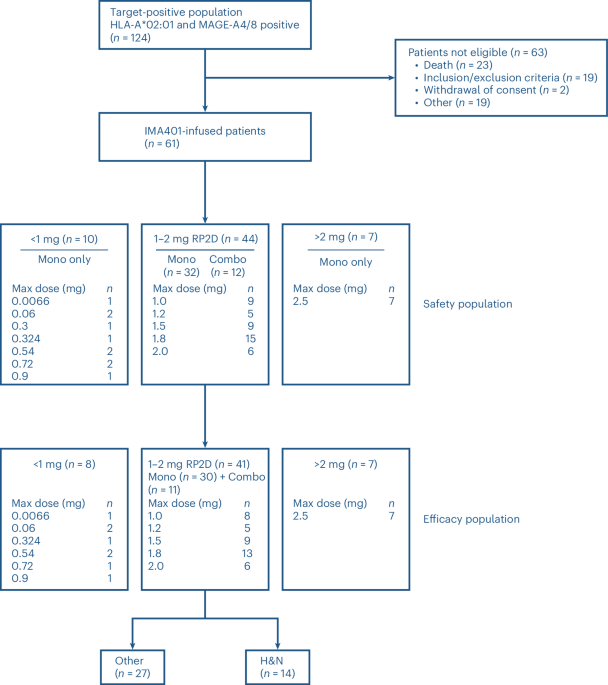
MAGE-A4/MAGE-A8-targeted TCR-based bispecific T cell engager in recurrent and/or refractory solid tumors: a phase 1 trial
Nature Medicine - AI SectionExploratory2 min read

New Immune-Boosting Drug Shows Early Promise Against Advanced Cancers

Key Takeaway:

An early-stage trial shows a new immune-boosting drug, IMA401, is safe and shows early promise against advanced head, neck, and skin cancers.

Researchers have tested a new type of immunotherapy drug called IMA401 in an early-stage clinical trial. This drug acts like a molecular bridge, helping the body's own immune cells find and destroy cancer cells by targeting specific proteins found in tumors. The study looked at patients with advanced head and neck cancers or melanoma (a severe skin cancer). The early results show that the treatment is safe and is starting to show signs of fighting the tumors, especially when combined with existing immune therapies. While this is an exciting step forward, the drug is still in the early stages of testing and is not yet widely available.

What this means for you

An early-stage study shows a new immunotherapy drug is safe and showing promising results against advanced cancers. It is still years away from general availability.

Citation:

Nature Medicine - AI Section, 2026. Read article →

Safety Alert
Pathogenic germline variants identify elevated cancer risk in pediatric patients referred for genetic testing
Nature Medicine - AI SectionPromising2 min read

Inherited Genes Help Predict Future Cancer Risk in Children

Key Takeaway:

Identifying inherited gene mutations in children helps doctors predict future tumor risks, allowing for early cancer screening and personalized monitoring plans.

Scientists studied the DNA of children who were sent for genetic testing to see if certain inherited gene changes, called germline variants, could predict future health issues. They discovered that children with these specific genetic changes have a much higher risk of developing tumors later on. This is important because knowing a child's genetic risk allows doctors to create personalized watchlists, catching potential cancers early when they are easiest to treat. For families, this means genetic testing could offer a vital roadmap for keeping their children safe and healthy.

What this means for you

Researchers found that certain inherited genes can show if a child has a higher risk of developing future tumors. This could help doctors catch cancers much earlier, though current treatment plans should not be changed without consulting your physician.

Citation:

Nature Medicine - AI Section, 2026. DOI: s41591-026-04451-1 Read article →

Google News - AI in HealthcarePromising3 min read

New Safety Guides Released for Using AI in Healthcare

Key Takeaway:

The Coalition for Health AI has launched new governance playbooks to help healthcare organizations safely, ethically, and responsibly adopt artificial intelligence technologies.

The Coalition for Health AI (CHAI) has released new instruction manuals, called governance playbooks, to help hospitals and doctors safely use artificial intelligence. As AI technology grows rapidly in medicine, there is a strong need for clear rules to protect patient privacy and ensure these tools work correctly. These new playbooks provide a step-by-step guide for healthcare systems to check, approve, and monitor AI tools before they are used in patient care. This matters to regular patients because it helps guarantee that any AI tool involved in their diagnosis or treatment has passed strict safety and ethical checks, making modern healthcare safer and more reliable for everyone.

What this means for you

A major health coalition has released new safety guides for hospitals using artificial intelligence. This aims to ensure AI tools are safe and secure before they affect your medical care.

Citation:

Google News - AI in Healthcare, 2026. Read article →

Healthcare IT NewsPromising3 min read

How smart technology is putting doctors' focus back on patients

Key Takeaway:

Implementing ambient AI in exam rooms reduces the administrative burden of electronic documentation, allowing clinicians to focus on building personal connections with patients during visits.

For years, patients have gone to the doctor only to watch them type on a computer screen. Doctors have had to balance listening to patients with a massive amount of paperwork, including typing up visit notes and referral letters. To solve this, Beth Israel Lahey Health introduced ambient artificial intelligence, a technology that listens in the background during your appointment. This smart system automatically writes up the medical notes, freeing the doctor from the keyboard. This means your doctor can look you in the eye, listen closely to your concerns, and focus entirely on your care instead of a computer screen.

What this means for you

A new ambient AI technology helps doctors spend less time typing on computers during appointments, allowing them to focus more on listening and talking directly to you.

Citation:

Healthcare IT News, 2026. Read article →

Safety Alert
ArXiv - AI in Healthcare (cs.AI + q-bio)Promising2 min read

Why Having AI Models Debate Each Other Makes Them Smarter

Key Takeaway:

This new protocol coordinates multiple cheap AI models to debate medical and scientific claims, successfully uncovering hidden biases and training blind spots at a fraction of the cost of larger systems.

When we ask a single AI for medical information, it might confidently give us an incorrect answer due to biases in its training. To solve this, researchers created the Consilium Protocol, a system where multiple cheap AI models are given different 'personalities' and forced to debate each other. Across 1,478 test debates, this collaborative arguing helped the AIs find 167 hidden blind spots and errors that they would have missed individually. Remarkably, this method allowed inexpensive AI models to perform just as well as giant, costly ones. This research could eventually lead to much more reliable, unbiased, and affordable AI assistants for doctors and patients.

What this means for you

Researchers created a system where multiple AI programs debate each other to find errors. While promising for making future medical AI safer, this technology is still in early testing and not ready for patient care.

Citation:

ArXiv, 2026. arXiv: 2606.00005 Read article →

Guideline Update
ArXiv - Quantitative BiologyExploratory3 min read

How Minds and Machines Remember: A New Mathematical Theory

Key Takeaway:

This new mathematical theory explains how biological and artificial minds organize memory and reasoning, which could eventually help researchers better understand human cognitive decline and design smarter medical AI.

Scientists have developed a new mathematical framework called Cognitive Field Theory to explain how both human brains and artificial intelligence learn, remember, and make decisions. Currently, researchers use different theories to describe these mental processes. This new model shows that learning and memory are controlled by organized, slow-moving patterns of activity that help the system hold onto information over long periods without forgetting. By mapping these patterns, the theory explains how complex reasoning naturally emerges in both biological minds and computer algorithms. While this is early-stage math research, it could eventually help us better understand memory loss in patients and build smarter medical software.

What this means for you

Scientists have created a new mathematical theory to explain how brains and AI learn and remember. This is early-stage basic science and does not change current medical treatments or health advice.

Citation:

ArXiv, 2026. arXiv: 2601.10221 Read article →

Guideline Update
Rehumanizing global health care with agentic AI
MIT Technology Review - AIExploratory2 min read

Can Smart AI Save Our Strained Global Healthcare System?

Key Takeaway:

Addressing global healthcare strain with agentic AI could soon help reduce widespread clinician burnout and improve fragmented patient access to essential medical services.

Our global healthcare system is under massive pressure. For decades, there has not been enough funding or staff recruitment, even as more people are growing older and needing care. This has left patients facing broken, hard-to-access services, while doctors and nurses are suffering from extreme stress and burnout. This article looks at how a new kind of smart technology, called agentic artificial intelligence, might help. By taking over administrative tasks and organizing care, these AI tools could give medical staff their time back. Ultimately, this could make healthcare feel more human and less rushed for patients everywhere.

What this means for you

Global healthcare is facing major strains and staff burnout. While new AI technology is being explored to help, these solutions are still in early stages and not yet ready to change your daily care.

Citation:

MIT Technology Review - AI, 2026. Read article →

New to reading medical AI research? Learn how to interpret these studies →