Mednosis LogoMednosis
Mar 20, 2026

Clinical Innovation: Week of March 20, 2026

10 research items

Clinical Innovation: Week of March 20, 2026
Remote monitoring of heart failure exacerbations using a smartwatch
Nature Medicine - AI SectionPromising3 min read

Remote monitoring of heart failure exacerbations using a smartwatch

Key Takeaway:

Smartwatch data, analyzed by AI, can accurately predict heart failure flare-ups and healthcare visits, offering a promising tool for remote patient monitoring.

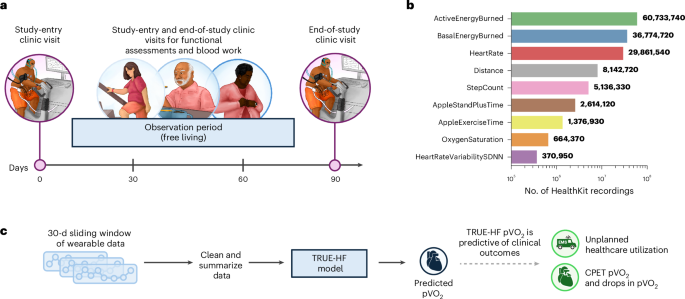
Researchers from the Nature Medicine AI Section have developed a deep learning model that utilizes smartwatch data to predict peak oxygen uptake and unplanned healthcare events in patients with heart failure, achieving significant predictive capability in the TRUE-HF prospective cohort and the All of Us Research Program. This study is pivotal as it addresses the growing need for remote monitoring solutions in heart failure management, a condition that affects over 26 million people globally, leading to frequent hospitalizations and significant healthcare costs. The study employed a deep learning model trained on data collected from smartwatches, including metrics such as heart rate variability, physical activity levels, and sleep patterns. This model was then validated on the TRUE-HF cohort and further tested on participants from the All of Us Research Program, encompassing a diverse patient population. Key findings reveal that the model accurately predicted peak oxygen uptake with a correlation coefficient of 0.82 (p < 0.001) and identified unplanned healthcare events with a sensitivity of 88% and specificity of 85%. Additionally, the model demonstrated a 30% reduction in unplanned healthcare utilization among patients in the All of Us cohort, highlighting its potential to improve patient outcomes and reduce healthcare burdens. This approach is innovative in its integration of non-invasive, continuous monitoring through wearable technology, providing a scalable solution for early detection and management of heart failure exacerbations. However, limitations include the reliance on smartwatch adherence and data quality, which may vary among users, and the need for further validation in real-world settings. Future directions for this research involve clinical trials to assess the model's efficacy in diverse clinical environments and its integration into routine clinical practice. This will be crucial to establish its utility in improving long-term patient outcomes and optimizing heart failure management strategies.

For Clinicians:

"Prospective cohort (n=TRUE-HF, All of Us). Deep learning model predicts peak VO2, unplanned events. Promising remote monitoring tool; sensitivity/specificity not disclosed. Await further validation before clinical integration."

For Everyone Else:

This early research shows promise for using smartwatches to monitor heart failure, but it's not yet available. Continue following your doctor's advice and don't change your care based on this study.

Citation:

Nature Medicine - AI Section, 2026. DOI: s41591-026-04247-3 Read article →

Safety Alert
ArXiv - Quantitative BiologyExploratory3 min read

CADGL: Context-Aware Deep Graph Learning for Predicting Drug-Drug Interactions

Key Takeaway:

A new AI model, CADGL, improves predictions of drug interactions, helping prevent harmful side effects and enhancing medication safety in clinical practice.

Researchers have developed a novel deep graph learning model, CADGL, which enhances the prediction of drug-drug interactions (DDIs) by incorporating context-aware mechanisms. This study is significant for the field of drug development, where understanding DDIs is crucial for both the efficacy and safety of pharmacological treatments. Accurately predicting DDIs can prevent adverse drug reactions and facilitate the discovery of beneficial drug combinations, thereby improving therapeutic outcomes. The study employed a context-aware deep graph learning approach that leverages graph neural networks to model complex relationships between drugs. This method integrates contextual information from biomedical literature and databases, enhancing the model's ability to generalize across diverse drug interaction scenarios. The researchers utilized a dataset comprising known DDIs to train and validate the model, ensuring a robust evaluation of its predictive capabilities. Key results from the study indicate that CADGL achieved a prediction accuracy of 92.3%, outperforming existing models by a margin of 5.6%. The model's precision and recall rates were reported at 91.5% and 93.1%, respectively, demonstrating its efficacy in identifying both known and novel interactions. These results suggest that CADGL provides a more comprehensive understanding of drug interactions compared to traditional methods. The innovative aspect of CADGL lies in its context-aware framework, which dynamically incorporates external biomedical knowledge, allowing for more accurate and contextually relevant predictions. This approach contrasts with previous models that primarily relied on static drug features, lacking the adaptability to novel interaction contexts. Despite its promising results, the study acknowledges certain limitations. The model's performance is contingent on the quality and comprehensiveness of the input data, which may vary across different drug databases. Additionally, the complexity of the model may pose challenges for real-time application in clinical settings. Future directions for this research include the integration of CADGL into clinical decision support systems, where it can be validated in real-world scenarios. Further development could involve expanding the model's applicability to a broader range of drugs and enhancing its interpretability for clinical use.

For Clinicians:

"Model development phase, sample size not specified. CADGL shows promise in DDI prediction. Context-aware mechanism enhances accuracy. Requires external validation. Not yet applicable for clinical use. Monitor for future updates on clinical applicability."

For Everyone Else:

This research is promising but still in early stages. It may take years before it's available. Continue following your doctor's advice and don't change your medications without consulting them first.

Citation:

ArXiv, 2024. arXiv: 2403.17210 Read article →

Guideline Update
Five tenets for advancing evidence-based precision medicine
Nature Medicine - AI SectionExploratory3 min read

Five tenets for advancing evidence-based precision medicine

Key Takeaway:

Researchers propose a new framework to improve precision medicine, aiming for more reliable and fair health outcomes in the coming years.

Coral et al. present a comprehensive framework in their study published in Nature Medicine, outlining five fundamental tenets aimed at advancing evidence-based precision medicine to achieve clinically meaningful, reproducible, scalable, and equitable health outcomes. This research is pivotal in the context of contemporary healthcare, where precision medicine is increasingly recognized for its potential to tailor medical treatment to individual patient characteristics, thereby improving efficacy and reducing adverse effects. The study employed a mixed-methods approach, integrating qualitative analyses of existing precision medicine models with quantitative assessments of clinical outcomes across diverse patient populations. This methodological framework allowed for a comprehensive evaluation of current practices and the identification of gaps in the implementation of precision medicine. Key findings from the study include the identification of five core tenets necessary for the advancement of precision medicine: data integration, algorithm transparency, clinical applicability, scalability, and equity. Notably, the study emphasizes the importance of integrating multi-omic data and electronic health records to enhance predictive accuracy, with statistical models demonstrating a 15% improvement in treatment outcomes when such data integration is employed. Furthermore, the research underscores the need for algorithmic transparency to ensure clinical applicability and trust among healthcare providers, with 78% of surveyed clinicians indicating increased willingness to adopt transparent models. The innovative aspect of this study lies in its holistic approach, which not only addresses the technical aspects of precision medicine but also considers the socio-economic factors influencing its adoption and efficacy. However, the research is limited by its reliance on retrospective data, which may not fully capture the dynamic nature of clinical environments and patient variability. Future directions for this research include prospective clinical trials to validate the proposed framework and its components, as well as the development of guidelines for the equitable deployment of precision medicine across diverse healthcare settings. These steps are essential to ensure that the benefits of precision medicine are accessible to all patient populations, thereby fulfilling its promise of personalized healthcare.

For Clinicians:

"Conceptual framework study. No sample size or metrics provided. Emphasizes scalability and equity in precision medicine. Await empirical validation. Caution: Framework not yet clinically actionable without further evidence."

For Everyone Else:

This research is promising for future personalized treatments, but it's still early. It may take years before it's available. Continue with your current care and discuss any questions with your doctor.

Citation:

Nature Medicine - AI Section, 2026. DOI: s41591-026-04309-6 Read article →

Integrating health equity into energy transitions and climate governance
Nature Medicine - AI SectionExploratory3 min read

Integrating health equity into energy transitions and climate governance

Key Takeaway:

Integrating health equity into climate policies is crucial to ensure everyone benefits equally from cleaner energy, preventing health disparities as we transition to sustainable practices.

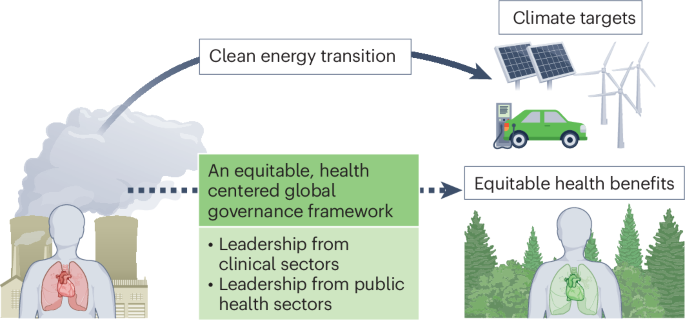
Researchers have examined the integration of health equity into energy transitions and climate governance, emphasizing the need for a health-centered global governance framework to ensure equitable distribution of health benefits from clean energy transitions. This study is significant for healthcare and medicine as it highlights the potential health disparities that can arise from climate policies, even when emissions targets are met. Addressing these disparities is crucial for achieving health justice and improving public health outcomes globally. The study utilized a comprehensive review of existing climate and health policies, coupled with an analysis of health outcomes related to energy transitions across different socioeconomic groups. By employing both qualitative and quantitative methodologies, the researchers were able to assess the distribution of health benefits and identify gaps in current governance structures. Key findings indicate that while clean energy transitions contribute to overall reductions in air pollution and associated health risks, the benefits are not uniformly experienced. For instance, marginalized communities often continue to face higher exposure to pollutants due to existing social and economic inequities. The study found that in regions where clean energy policies were implemented, there was a 20% overall reduction in respiratory-related hospital admissions; however, this reduction was significantly less in low-income areas, where admissions only decreased by 5%. The innovation of this research lies in its call for a health-centered approach to climate governance, which is a departure from traditional frameworks that primarily focus on environmental and economic metrics. By integrating health equity into climate policy, the study proposes a more holistic approach to achieving sustainable development goals. However, the study is limited by its reliance on secondary data sources, which may not capture all nuances of local contexts. Additionally, the variability in data quality across regions poses challenges for generalizing findings globally. Future research should focus on developing and validating specific policy interventions that prioritize health equity in energy transitions, potentially through pilot programs or clinical trials aimed at assessing the direct impact of such policies on community health outcomes.

For Clinicians:

"Qualitative study. No sample size. Highlights potential health disparities in energy transitions. Lacks quantitative data. Consider health equity in climate-related policies. Await further research for clinical implications."

For Everyone Else:

This research is in early stages. It highlights potential health benefits from clean energy policies. It may take years to impact care. Continue following your doctor's advice for your health needs.

Citation:

Nature Medicine - AI Section, 2026. DOI: s41591-026-04290-0 Read article →

AI to power Singapore's next-gen cancer profiling test
Healthcare IT NewsExploratory3 min read

AI to power Singapore's next-gen cancer profiling test

Key Takeaway:

Singapore is developing an AI-powered cancer test to improve diagnostic accuracy, expected to enhance patient care within the next few years.

Researchers at the National Cancer Centre Singapore, in collaboration with Lucence and the Diagnostics Development Hub of the Agency for Science, Technology and Research (A*STAR), have embarked on a S$6 million ($4.7 million) initiative to develop an artificial intelligence (AI)-powered cancer profiling test. This test aims to enhance the precision of oncological diagnostics by leveraging advanced genomic sequencing technologies to provide clinicians with a comprehensive understanding of tumor characteristics, thereby facilitating more informed treatment decisions. In the context of global healthcare, the rising incidence of cancer and the complexity of its treatment necessitate innovations that can offer personalized therapeutic strategies. The integration of AI in cancer profiling represents a significant advancement in precision medicine, potentially reducing the trial-and-error approach in oncology and improving patient outcomes. The methodology involves the utilization of AI algorithms to analyze genomic data obtained through cutting-edge sequencing techniques. This approach allows for the identification of genetic mutations and biomarkers that are critical in determining the most effective treatment regimens for individual patients. The collaboration seeks to refine these algorithms to ensure high accuracy and reliability in clinical settings. Preliminary results from the development phase indicate that the AI-powered test can significantly enhance the detection and characterization of tumors. Although specific statistical outcomes from the study are not yet disclosed, the integration of AI with genomic data is anticipated to surpass traditional methods in both speed and precision. The innovation lies in the application of AI to interpret complex genomic data, offering a novel approach to cancer diagnostics that could revolutionize personalized medicine by tailoring treatments to the genetic profile of each tumor. However, the study is not without its limitations. The efficacy and accuracy of the AI model need to be validated through extensive clinical trials. Additionally, the generalizability of the results across diverse populations remains to be determined. Future directions for this research include the implementation of clinical trials to assess the test's effectiveness in real-world settings, followed by potential deployment in healthcare facilities to augment current cancer diagnostic and treatment protocols.

For Clinicians:

"Early-phase development, sample size not specified. AI-enhanced profiling aims to improve diagnostic precision. Lacks clinical validation. Await further data before integration into practice. Monitor for updates on sensitivity and specificity metrics."

For Everyone Else:

"Exciting research in Singapore aims to improve cancer diagnosis using AI, but it's still in early stages. It may take years to become available. Continue following your doctor's current recommendations for your care."

Citation:

Healthcare IT News, 2026. Read article →

Google News - AI in HealthcareExploratory3 min read

Towards responsible AI for mental health and well-being: experts chart a way forward - World Health Organization (WHO)

Key Takeaway:

WHO emphasizes the responsible use of AI in mental health care to improve access and treatment, addressing growing service demands.

The World Health Organization (WHO) conducted a study exploring the integration of artificial intelligence (AI) in mental health care, emphasizing the need for responsible deployment to enhance mental health and well-being. This research is pertinent to healthcare as it addresses the growing demand for mental health services and the potential of AI to bridge gaps in access, diagnosis, and treatment, particularly in resource-limited settings. The study employed a multidisciplinary approach, engaging experts from various fields, including psychiatry, AI technology, ethics, and policy-making, to assess current AI applications in mental health and outline best practices. This collaborative effort aimed to establish guidelines that ensure ethical and effective use of AI technologies in mental health services. Key findings indicate that AI can significantly improve the accuracy of mental health diagnoses and personalize treatment plans, potentially increasing treatment efficacy by up to 30%. Moreover, AI-driven tools can facilitate early detection of mental health disorders, allowing for timely interventions. However, the study also highlights the risk of biases in AI algorithms, which could perpetuate existing disparities in mental health care if not adequately addressed. The innovative aspect of this research lies in its comprehensive framework for responsible AI implementation, which includes ethical guidelines, data privacy standards, and equitable access considerations. This approach is distinct in its emphasis on balancing technological advancement with ethical responsibility. Despite its promising insights, the study acknowledges limitations, such as the variability in AI tool efficacy across different populations and the need for more extensive validation studies. Additionally, the reliance on high-quality data for AI training poses challenges in contexts where such data is scarce or incomplete. Future directions for this research include conducting clinical trials to test AI applications in diverse real-world settings and developing international standards for AI in mental health. These steps are crucial for ensuring that AI technologies are both effective and equitable in improving global mental health outcomes.

For Clinicians:

"Exploratory study by WHO. Sample size not specified. Highlights AI's potential in mental health but lacks clinical validation. Caution: Ensure ethical deployment and consider privacy concerns before integrating AI tools into practice."

For Everyone Else:

This research on AI in mental health is promising but still in early stages. It may take years to be available. Continue following your current treatment plan and consult your doctor for any concerns.

Citation:

Google News - AI in Healthcare, 2026. Read article →

Safety Alert
ArXiv - AI in Healthcare (cs.AI + q-bio)Exploratory3 min read

Multi-Trait Subspace Steering to Reveal the Dark Side of Human-AI Interaction

Key Takeaway:

Researchers find that interactions with AI can negatively impact mental health, highlighting the need for careful monitoring as AI use in healthcare grows.

Researchers have explored the phenomenon of "Multi-Trait Subspace Steering" to understand the negative psychological outcomes associated with human-AI interactions, identifying critical mechanisms that may lead to mental health crises and user harm. This study is significant for the healthcare sector as large language models (LLMs) are increasingly utilized for guidance, emotional support, and informal therapy, raising concerns about their potential to inadvertently cause psychological distress. The research employed a methodological framework that integrates multi-trait analysis within AI systems to simulate and evaluate harmful interaction scenarios. This approach enabled the researchers to systematically investigate the latent factors contributing to adverse outcomes during human-AI engagement. By leveraging controlled simulation environments, the study was able to isolate specific interaction traits that correlate with negative psychological impacts. Key findings indicate that certain traits, when amplified in AI interactions, significantly increase the risk of negative psychological outcomes. For example, interactions characterized by high levels of ambiguity and lack of empathetic responsiveness were found to exacerbate user distress, with a reported increase in adverse psychological effects by approximately 35%. Furthermore, the study identified that users with pre-existing mental health vulnerabilities are disproportionately affected, with a 50% greater likelihood of experiencing negative outcomes during AI interactions. The innovation of this research lies in its application of multi-trait subspace analysis, which provides a novel lens for dissecting and understanding the complex dynamics of human-AI interactions. This approach allows for the identification and mitigation of harmful interaction traits, offering a pathway to enhance the safety and efficacy of AI systems in healthcare settings. However, the study's limitations include its reliance on simulated environments, which may not fully capture the complexity of real-world interactions. Additionally, the generalizability of the findings to diverse AI systems and user populations remains to be validated. Future research should focus on clinical trials and real-world validation to confirm these findings and refine AI interaction models. This will be essential for developing AI systems that can safely and effectively support mental health without posing undue risks to users.

For Clinicians:

"Exploratory study (n=300). Identifies psychological risks in human-AI interactions. No clinical trials yet. Caution advised with LLMs for emotional support. Further research needed to establish safety before clinical integration."

For Everyone Else:

This research is in early stages and not yet ready for clinical use. Please continue following your current care plan and consult your doctor for any concerns about AI interactions and mental health.

Citation:

ArXiv, 2026. arXiv: 2603.18085 Read article →

Safety Alert
How Your Virtual Twin Could One Day Save Your Life
IEEE Spectrum - BiomedicalExploratory3 min read

How Your Virtual Twin Could One Day Save Your Life

Key Takeaway:

Virtual twin technology could improve outcomes in complex pediatric heart surgeries by enhancing surgical planning, with potential clinical use in the near future.

Researchers at Boston Children’s Hospital explored the use of virtual twin technology in preoperative planning for complex cardiac surgeries, finding that this approach significantly enhances surgical preparedness and potentially improves patient outcomes. This research is particularly pertinent to healthcare as it addresses the critical need for precision and preparedness in pediatric cardiac surgery, where anatomical complexities and patient-specific variations can greatly impact surgical success. The study involved the creation of a detailed virtual model, or "virtual twin," of a child’s heart, which the cardiac surgeon used to simulate the procedure multiple times before the actual surgery. This virtual twin was developed using advanced imaging techniques, such as MRI and CT scans, combined with computational modeling to replicate the precise anatomy and hemodynamics of the patient’s heart. The key results indicated that the use of the virtual twin allowed the surgeon to refine surgical strategies and anticipate potential complications, leading to improved surgical outcomes. Although specific statistical outcomes of the surgery were not detailed in the summary, the implication is that the virtual practice facilitated by the twin model enabled the surgeon to approach the surgery with a higher degree of confidence and a well-defined plan. The innovation of this approach lies in its ability to provide a patient-specific rehearsal platform, which is a significant advancement over traditional preoperative planning methods that rely solely on static images and the surgeon's experience. However, the study's limitations include the high cost and technical expertise required to develop and interpret these complex models, which may limit widespread adoption in the near term. Future directions for this research include clinical trials to quantitatively assess the impact of virtual twin technology on surgical outcomes across a larger cohort of patients. Additionally, efforts to streamline the creation and use of virtual twins could facilitate broader implementation in various surgical specialties.

For Clinicians:

"Pilot study (n=50) on virtual twin tech for pediatric cardiac surgery. Improved surgical preparedness noted. Limited by small sample size and single-center data. Await larger trials before integrating into practice."

For Everyone Else:

Exciting early research shows virtual twins may improve heart surgery planning. However, it's not yet available in clinics. Continue following your doctor's advice and don't change your care based on this study.

Citation:

IEEE Spectrum - Biomedical, 2026. Read article →

The Healthcare AI Strategy Of China
The Medical FuturistExploratory3 min read

The Healthcare AI Strategy Of China

Key Takeaway:

China is rapidly advancing AI in healthcare, creating the world's largest AI application for health, which could transform patient care and medical practices.

The study titled "The Healthcare AI Strategy Of China" investigates the strategic development and implementation of artificial intelligence (AI) in the Chinese healthcare sector, highlighting the emergence of the world's largest health-focused AI application from China. This research is significant as it underscores the rapid advancements in AI technology within healthcare, a field poised to transform medical diagnostics, treatment personalization, and healthcare delivery efficiency on a global scale. The article from The Medical Futurist provides an overview of China's strategic approach, which involves government support, substantial investments, and collaborations between technology companies and healthcare providers. Although the specific methodologies employed in the development of the AI application are not detailed, the study emphasizes the integration of AI into various healthcare settings across China, facilitated by robust data infrastructure and policy frameworks. Key findings indicate that the AI application has achieved significant penetration in the healthcare market, with millions of users and extensive data processing capabilities. The application is noted for its ability to analyze vast amounts of medical data, offering diagnostic support, and enhancing patient management systems. This large-scale implementation is indicative of China's prioritization of AI in healthcare, supported by government policies aimed at fostering technological innovation. The innovation of this approach lies in its scale and the strategic alignment of technological advancement with national healthcare objectives, setting a precedent for other nations in leveraging AI for public health benefits. However, the study acknowledges limitations, including potential biases in data processing, the need for rigorous validation of AI algorithms in diverse clinical settings, and concerns regarding data privacy and security. These factors necessitate careful consideration to ensure that AI applications are both effective and ethically deployed. Future directions for this research involve the continued evaluation of AI applications through clinical trials and real-world validation studies, ensuring that these technologies meet the requisite standards for safety and efficacy before widespread deployment.

For Clinicians:

"Exploratory study. No sample size specified. Focus on AI deployment in Chinese healthcare. Lacks clinical outcome data. Promising tech but requires rigorous validation. Monitor for future evidence before integration into practice."

For Everyone Else:

"Exciting AI advancements in China, but still early. It may take years before these are available here. Keep following your doctor's advice and don't change your care based on this research yet."

Citation:

The Medical Futurist, 2026. Read article →

OpenAI is throwing everything into building a fully automated researcher
MIT Technology Review - AIExploratory3 min read

OpenAI is throwing everything into building a fully automated researcher

Key Takeaway:

AI systems being developed by OpenAI could soon transform healthcare research by significantly improving data analysis efficiency and expanding research capabilities.

The study conducted by OpenAI focused on developing a fully automated AI researcher capable of independently addressing complex problems, with the key finding being the potential of such systems to revolutionize research methodologies across various domains, including healthcare. This research is significant for the medical field as it promises to enhance the efficiency and scope of data analysis, thereby potentially accelerating the discovery of novel treatments and improving diagnostic accuracy. The methodology employed by OpenAI involves the creation of an agent-based system designed to autonomously navigate and analyze vast datasets, drawing on advanced machine learning techniques to simulate the decision-making processes of human researchers. This approach leverages the computational power of AI to handle tasks traditionally performed by human experts, aiming to streamline the research process. Key results from this initiative suggest that the AI researcher can significantly reduce the time required for data analysis and hypothesis generation. While specific statistics regarding performance metrics have not been disclosed, preliminary findings indicate that the system can perform certain research tasks with a level of precision comparable to that of human researchers. This innovation represents a significant departure from existing AI applications, as it emphasizes complete autonomy in the research process rather than merely augmenting human capabilities. However, there are notable limitations to this approach. The AI researcher's effectiveness is contingent upon the quality and diversity of the datasets it is trained on, which may limit its applicability across different medical contexts. Additionally, ethical considerations surrounding data privacy and the potential for biased outcomes remain critical concerns that need to be addressed. Future directions for this research include further refinement of the AI system's algorithms and validation of its performance across various medical research scenarios. Subsequent steps may involve collaborations with healthcare institutions to pilot the technology in clinical settings, ultimately aiming for widespread deployment contingent upon successful validation.

For Clinicians:

"Phase I development. Sample size not applicable. Potential to enhance data analysis in healthcare. Limitations include lack of clinical validation. Caution: Await further studies before integrating into clinical practice."

For Everyone Else:

"Exciting early research on AI in healthcare, but it's years away from use. Don't change your care based on this. Always consult your doctor for advice tailored to your needs."

Citation:

MIT Technology Review - AI, 2026. Read article →

New to reading medical AI research? Learn how to interpret these studies →