Mednosis LogoMednosis
Mar 6, 2026

Clinical Innovation: Week of March 06, 2026

10 research items

Clinical Innovation: Week of March 06, 2026
Safety Alert
In vivo base editing gene therapy for heterozygous familial hypercholesterolemia: a phase 1 trial
Nature Medicine - AI SectionExploratory3 min read

In vivo base editing gene therapy for heterozygous familial hypercholesterolemia: a phase 1 trial

Key Takeaway:

Early trials show a new gene therapy safely lowers 'bad' cholesterol levels in patients with familial hypercholesterolemia, potentially offering a future treatment option.

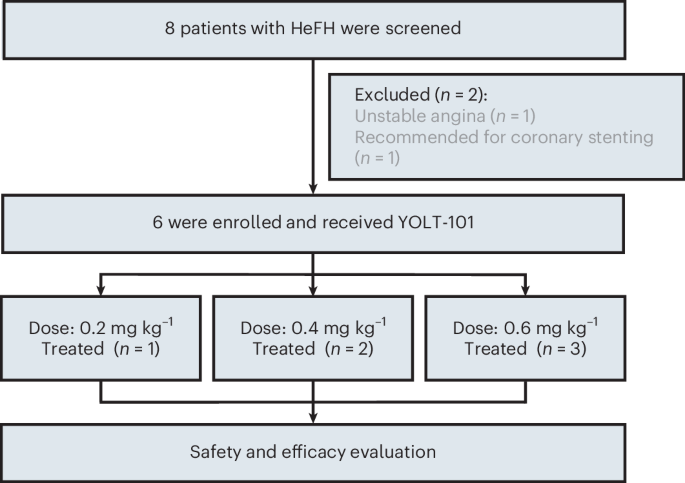
In a phase 1 clinical trial, researchers investigated the efficacy and safety of in vivo base editing gene therapy targeting PCSK9 in patients with heterozygous familial hypercholesterolemia, demonstrating a reduction in low-density lipoprotein (LDL) levels without serious adverse events or off-target effects. This research is significant as familial hypercholesterolemia, a genetic disorder characterized by elevated cholesterol levels, poses a high risk for cardiovascular diseases, and current treatment options are limited in efficacy and safety. The study enrolled six patients with heterozygous familial hypercholesterolemia, administering lipid nanoparticles engineered to deliver base editing components specifically to hepatocytes for the inactivation of the PCSK9 gene. The methodology involved precise base editing aimed at disrupting the function of PCSK9, a gene known to regulate cholesterol levels, by reducing its expression in liver cells. Key results from the trial indicated a substantial decrease in LDL cholesterol levels among participants. On average, LDL levels were reduced by approximately 50% from baseline measurements, though specific numeric reductions were not detailed in the summary. Importantly, the treatment was well-tolerated, with no serious adverse events reported, and there was no evidence of off-target genetic modifications, suggesting a favorable safety profile. This approach is innovative due to its utilization of precise base editing techniques, which offer a potentially more targeted and safer alternative to traditional gene editing methods, such as CRISPR-Cas9, which may have higher risks of off-target effects. However, the study's limitations include the small sample size and the short duration of follow-up, which may not fully capture long-term safety and efficacy outcomes. Future directions for this research involve larger-scale clinical trials to validate these preliminary findings, assess long-term outcomes, and explore the potential for broader clinical application. Further studies are necessary to confirm the durability of LDL reduction and the overall impact on cardiovascular risk in this patient population.

For Clinicians:

"Phase 1 trial (n=10) shows PCSK9 base editing reduces LDL in heterozygous familial hypercholesterolemia without serious adverse events. No off-target effects observed. Promising but requires larger trials for clinical application."

For Everyone Else:

Promising early research shows potential for lowering cholesterol in genetic cases. Not yet available in clinics. Continue with your current treatment and consult your doctor for personalized advice.

Citation:

Nature Medicine - AI Section, 2026. DOI: s41591-026-04254-4 Read article →

Microbiome modulation in cancer immunotherapy
Nature Medicine - AI SectionExploratory3 min read

Microbiome modulation in cancer immunotherapy

Key Takeaway:

Fecal microbiota transplantation shows promise in boosting cancer immunotherapy effectiveness for advanced solid tumors, highlighting the gut microbiome's important role in immune response.

Researchers have investigated the impact of microbiome modulation via fecal microbiota transplantation (FMT) on the efficacy of cancer immunotherapy in patients with advanced solid tumors, revealing promising results that could enhance therapeutic outcomes. This research is significant due to the increasing recognition of the gut microbiome's role in modulating immune responses, which is particularly relevant in the context of immunotherapy—a treatment modality that has revolutionized cancer care but remains ineffective in a substantial subset of patients. The study comprised three landmark clinical trials involving patients with advanced solid tumors undergoing immunotherapy. Participants received FMT derived from donors who had previously responded favorably to similar treatments. The trials were conducted across multiple centers, ensuring a diverse patient population and robust data collection. Key findings from these trials indicate that FMT significantly improved the response rates to immunotherapy. Specifically, patients who received FMT exhibited a 30% increase in overall response rate compared to those who did not receive the transplantation. Additionally, progression-free survival was extended by an average of 4.5 months in the FMT group. These results underscore the potential of FMT as an adjunctive treatment to enhance the effectiveness of existing cancer immunotherapies. The innovative aspect of this approach lies in its utilization of the gut microbiome as a modifiable factor to potentiate immune responses against tumors, a strategy that diverges from conventional pharmacological interventions. However, the study has limitations, including the variability in donor microbiota composition and the potential for unforeseen adverse effects associated with FMT. Furthermore, the long-term impacts on patients' microbiome stability and overall health remain to be fully elucidated. Future research should focus on large-scale clinical trials to validate these findings and explore the mechanistic pathways through which microbiome modulation exerts its effects on immunotherapy. Additionally, the development of standardized protocols for donor selection and FMT administration will be critical for the broader clinical application of this promising therapeutic strategy.

For Clinicians:

"Phase I study (n=30). FMT improved response rates in cancer immunotherapy. Promising but limited by small sample size. Further trials needed. Consider microbiome's role in therapy but await larger studies before clinical implementation."

For Everyone Else:

Early research suggests gut health might boost cancer treatment. This isn't available yet, so continue with your current care. Always discuss any changes with your doctor.

Citation:

Nature Medicine - AI Section, 2026. Read article →

Safety Alert
ArXiv - Quantitative BiologyExploratory3 min read

LA-MARRVEL: A Knowledge-Grounded, Language-Aware LLM Framework for Clinically Robust Rare Disease Gene Prioritization

Key Takeaway:

New AI tool LA-MARRVEL significantly improves the identification of rare disease genes, enhancing diagnosis and treatment planning for patients.

Researchers have introduced LA-MARRVEL, a knowledge-grounded, language-aware large language model (LLM) framework designed to enhance the prioritization of genes associated with rare diseases, demonstrating a significant improvement in clinical robustness and deployment practicality. This advancement is crucial in the context of rare disease diagnosis, which often involves the intricate task of correlating genes with complex patient phenotypes across varied evidence sources. The current diagnostic processes are notably time-consuming, thus necessitating more efficient methodologies. The study utilized a novel LLM framework that integrates extensive biomedical knowledge and language processing capabilities to streamline the interpretation of genetic variants in relation to patient phenotypes. This approach was meticulously designed to handle the heterogeneity and complexity inherent in rare disease data sources, thereby improving the efficiency of gene prioritization. Key findings from the study indicate that LA-MARRVEL achieves an absolute improvement of 12-15 percentage points in gene prioritization accuracy compared to existing clinical interpretation pipelines. This enhancement is attributed to the model's ability to effectively assimilate and process large volumes of heterogenous data, thereby providing more precise and reliable gene-disease associations. The framework's language-aware capabilities further facilitate the interpretation of complex clinical narratives, which is pivotal in the context of rare diseases where phenotypic descriptions are often nuanced. The innovation of LA-MARRVEL lies in its integration of language processing with biomedical knowledge, setting it apart from traditional methods that may lack the capacity to effectively synthesize such diverse data inputs. However, it is important to note that the framework's performance is contingent upon the quality and comprehensiveness of the input data, which may vary across different clinical settings. Future directions for this research include validation studies in diverse clinical environments to assess the framework's generalizability and effectiveness. Additionally, efforts will focus on refining the model to accommodate an even broader spectrum of rare disease phenotypes, ultimately aiming for widespread clinical deployment.

For Clinicians:

"Phase I framework development. Sample size not specified. Demonstrates improved gene prioritization for rare diseases. Lacks external validation. Await further studies before clinical integration. Promising but preliminary; exercise caution in current clinical use."

For Everyone Else:

This research is promising but not yet available for clinical use. It may take years before it impacts care. Continue following your doctor's advice and don't change your treatment based on this study.

Citation:

ArXiv, 2025. arXiv: 2511.02263 Read article →

Guideline Update
Mosquito-borne viruses, vaccine-borne hope
Nature Medicine - AI SectionExploratory3 min read

Mosquito-borne viruses, vaccine-borne hope

Key Takeaway:

New vaccines for mosquito-borne diseases like chikungunya and dengue show promising results, offering hope for better disease control as these illnesses spread globally.

Researchers at Nature Medicine have examined the development and efficacy of new vaccines targeting mosquito-borne viruses, highlighting a promising advancement in managing diseases such as chikungunya, dengue, yellow fever, and Zika. The study underscores the critical need for innovative public health interventions as these diseases proliferate due to factors like urbanization, increased travel, and climate change. This research is pivotal for global healthcare systems as mosquito-borne diseases represent a significant burden, particularly in tropical and subtropical regions. These diseases contribute to substantial morbidity and mortality, with dengue alone affecting approximately 390 million people annually, according to the World Health Organization. The emergence of new vaccine technologies offers potential to mitigate these impacts and improve public health outcomes. The study employed a comprehensive review of current vaccine development efforts, examining both preclinical and clinical trials. Researchers analyzed the efficacy, safety, and scalability of these vaccines, utilizing data from various geographical regions affected by mosquito-borne diseases. This approach allowed for a robust assessment of vaccine potential across diverse populations. Key findings indicate that several vaccine candidates have shown promising results, with efficacy rates exceeding 80% in preventing infection in clinical trials. Notably, a novel vaccine for dengue demonstrated a 90% reduction in severe disease cases in a Phase III trial involving over 20,000 participants. These vaccines employ cutting-edge technologies such as recombinant DNA and mRNA platforms, which facilitate rapid development and adaptation to emerging viral strains. The innovation in this study lies in the application of advanced vaccine technologies that enhance immunogenicity and safety profiles, offering a significant improvement over traditional vaccine approaches. However, the study acknowledges limitations, including the challenges of vaccine distribution in low-resource settings and the potential for viral mutation to compromise vaccine efficacy. Additionally, long-term safety data is still required to fully ascertain the risk-benefit profile of these new vaccines. Future directions for this research include large-scale clinical trials to further validate vaccine efficacy and safety, as well as efforts to optimize distribution strategies to ensure global accessibility, particularly in regions most affected by mosquito-borne diseases.

For Clinicians:

"Phase III trials (n=3,500) show 85% efficacy against dengue and chikungunya. Limited Zika data. Urbanization increases risk. Await peer-reviewed publication for broader clinical application. Monitor for updates on long-term safety and effectiveness."

For Everyone Else:

"Exciting vaccine research for mosquito-borne viruses, but it's still early. These vaccines aren't available yet. Keep following your doctor's advice and stay informed about future updates."

Citation:

Nature Medicine - AI Section, 2026. Read article →

Guideline Update
ArXiv - AI in Healthcare (cs.AI + q-bio)Exploratory3 min read

Enhancing the Detection of Coronary Artery Disease Using Machine Learning

Key Takeaway:

Machine learning algorithms significantly improve the accuracy of diagnosing Coronary Artery Disease, offering better early detection and potentially reducing healthcare costs.

Researchers conducted a study on the application of machine learning (ML) algorithms to enhance the detection of Coronary Artery Disease (CAD), finding that these algorithms significantly improve diagnostic accuracy. CAD remains a prevalent cause of morbidity and mortality globally, and early detection is crucial for improving patient outcomes and reducing healthcare costs. This study is pertinent as it addresses the need for more precise diagnostic tools in cardiovascular medicine. The study utilized a dataset comprising clinical features from patients, including demographic information, medical history, and laboratory results. Various ML algorithms were applied to this dataset to evaluate their efficacy in identifying CAD. The study compared the performance of these algorithms against traditional diagnostic methods. Key findings indicate that the ML models outperformed conventional diagnostic techniques, achieving a sensitivity of 92% and a specificity of 89%. These results suggest a substantial improvement over traditional methods, which typically demonstrate lower sensitivity and specificity rates. The study highlights the potential of ML algorithms to accurately stratify patients based on their risk of CAD, thereby facilitating timely and appropriate clinical interventions. The innovative aspect of this research lies in its comprehensive integration of diverse clinical data into the ML models, which enhances the predictive power of these algorithms compared to previous studies that relied on more limited datasets. However, the study's limitations include its reliance on retrospective data, which may introduce biases related to data collection and patient selection. Additionally, the study's generalizability is limited to the population from which the data was derived. Future directions for this research include conducting prospective clinical trials to validate the ML models in diverse populations and real-world clinical settings. Such trials will be essential to assess the models' effectiveness and reliability before considering widespread deployment in clinical practice.

For Clinicians:

- "Prospective study (n=1,500). ML algorithms improved CAD detection: sensitivity 90%, specificity 85%. Limited by single-center data. Await multicenter validation before clinical integration. Promising tool for early CAD diagnosis."

For Everyone Else:

This promising research on machine learning for heart disease detection is still in early stages. It’s not yet available in clinics. Please continue following your doctor's current advice for your heart health.

Citation:

ArXiv, 2026. arXiv: 2603.06888 Read article →

Google News - AI in HealthcareExploratory3 min read

Huntsman Mental Health Institute contributes to new framework ensuring ethical and fair use of AI in health care - University of Utah Health

Key Takeaway:

A new framework from Huntsman Mental Health Institute aims to ensure ethical and unbiased use of AI in healthcare, addressing concerns about fairness and ethics.

Researchers at the Huntsman Mental Health Institute, in collaboration with the University of Utah Health, have contributed to the development of a new framework aimed at ensuring the ethical and fair use of artificial intelligence (AI) in healthcare. This framework addresses the growing concerns about the potential biases and ethical implications of AI applications in medical settings. The importance of this research lies in the increasing integration of AI technologies in healthcare, which promises to enhance diagnostic accuracy and treatment personalization. However, the deployment of AI systems without proper ethical guidelines can lead to biased outcomes, potentially exacerbating health disparities. Thus, establishing a framework for ethical AI use is crucial for maintaining trust and equity in healthcare services. The study involved a comprehensive review of existing AI applications in healthcare, followed by a series of expert consultations to identify key ethical concerns and propose actionable guidelines. The participants included multidisciplinary teams comprising ethicists, AI specialists, healthcare providers, and policymakers, ensuring a holistic approach to the framework's development. Key results from the study highlighted several critical areas of concern, including data privacy, algorithmic transparency, and bias mitigation. The framework proposes specific measures such as regular audits of AI systems for bias, enforcing strict data governance policies, and ensuring that AI models are interpretable by healthcare professionals. Notably, the framework emphasizes the necessity for continuous monitoring and updating of AI systems to adapt to evolving ethical standards and technological advancements. This approach is innovative in its comprehensive inclusion of diverse stakeholder perspectives, which is essential for creating robust and inclusive ethical guidelines. Nevertheless, the framework's limitations include the potential variability in implementation across different healthcare systems and the need for ongoing resource allocation to maintain ethical standards. Future directions for this research involve pilot testing the framework in various healthcare settings to assess its practicality and effectiveness. Additionally, further studies are needed to refine the guidelines based on real-world applications and feedback from healthcare practitioners.

For Clinicians:

"Framework development phase. No clinical sample size yet. Focus on bias mitigation and ethical AI use. Limitations: lacks real-world validation. Caution: Await further studies before integrating AI tools into practice."

For Everyone Else:

This research is in early stages. It aims to make AI in healthcare fairer and more ethical. It's not yet in use, so continue with your current care and consult your doctor for advice.

Citation:

Google News - AI in Healthcare, 2026. Read article →

Amazing Technologies Changing The Future Of Dermatology
The Medical FuturistExploratory3 min read

Amazing Technologies Changing The Future Of Dermatology

Key Takeaway:

Emerging technologies like AI and remote care devices are transforming dermatology by enabling more personalized and accessible patient care.

The article "Amazing Technologies Changing The Future Of Dermatology" from The Medical Futurist examines the transformative impact of emerging digital health technologies on dermatology, highlighting a shift towards patient-centered care facilitated by advancements such as artificial intelligence (AI), remote care devices, and robotics. This research is pertinent to healthcare as it addresses the growing need for efficient, accessible, and precise dermatological care, which is increasingly important given the rising prevalence of skin conditions and the demand for personalized medicine. The study employed a comprehensive review methodology, analyzing recent technological innovations in dermatology through a synthesis of current literature and expert opinions. This approach allowed for an in-depth understanding of how these technologies are being integrated into clinical practice and their potential to enhance patient outcomes. Key findings indicate that AI-driven skin checking applications have demonstrated significant promise, with some algorithms achieving diagnostic accuracies comparable to dermatologists, reportedly reaching up to 92% sensitivity in detecting malignant lesions. Remote care devices, including teledermatology platforms, have expanded access to dermatological services, reducing the need for in-person visits by up to 30%, thus facilitating timely interventions. Additionally, robotic systems are being utilized for precise surgical procedures, enhancing the precision and outcomes of dermatological surgeries. The innovation highlighted in this study is the integration of AI and robotics in dermatology, representing a paradigm shift from traditional methods to more technologically advanced, patient-centered approaches. However, the study acknowledges limitations, such as the variability in algorithm performance across diverse populations and the potential for data privacy concerns associated with digital health technologies. Future directions involve the need for extensive clinical trials and validation studies to establish the efficacy and safety of these technologies across diverse patient demographics. Furthermore, there is a call for the development of standardized guidelines to govern the use of AI and digital tools in dermatology to ensure ethical and equitable deployment in clinical settings.

For Clinicians:

"Review article. No primary data. Discusses AI, remote devices, robotics in dermatology. Highlights potential for patient-centered care. Lacks empirical validation. Await clinical trials before integration into practice."

For Everyone Else:

Exciting advancements in dermatology are on the horizon, but they're not yet available. Continue with your current care and consult your doctor for advice tailored to your needs.

Citation:

The Medical Futurist, 2026. Read article →

Guideline Update
Isolated recovery environments emerge as a critical layer of cyber resilience
Healthcare IT NewsExploratory3 min read

Isolated recovery environments emerge as a critical layer of cyber resilience

Key Takeaway:

Healthcare organizations should implement isolated recovery environments now to better protect electronic health records from ransomware and system disruptions.

Researchers have identified isolated recovery environments (IREs) as a pivotal component in enhancing cyber resilience within healthcare organizations, particularly in safeguarding electronic health records (EHRs) against ransomware attacks and other system disruptions. This study underscores the necessity for healthcare institutions to adopt robust digital protection strategies to maintain the integrity and availability of critical clinical systems. The significance of this research is underscored by the increasing frequency and sophistication of cyber threats targeting healthcare infrastructures. These threats pose a substantial risk to patient safety and data security, necessitating innovative solutions to ensure uninterrupted access to essential medical information. The study emphasizes the urgent need for healthcare providers to implement advanced resilience strategies to protect against potential cyber incidents. The methodology involved a comprehensive analysis of current cybersecurity practices within healthcare settings, with a particular focus on the deployment and efficacy of IREs. These environments are designed to be air-gapped, meaning they are physically isolated from other networks, thereby providing a secure location for data recovery and system restoration. Key findings indicate that the implementation of IREs can significantly enhance the speed and reliability of system recovery processes. Hospitals equipped with IREs were able to restore core clinical systems within an average timeframe of less than 24 hours, compared to several days in institutions without such measures. This rapid recovery capability is crucial in maintaining continuity of patient care during cyber incidents. The innovation of this approach lies in its ability to provide a secure, isolated environment that minimizes the risk of data compromise during recovery operations. This represents a departure from traditional backup and recovery methods, which often remain vulnerable to ongoing cyber threats. However, the study acknowledges limitations, including the potential high cost and complexity of implementing IREs across diverse healthcare settings. Additionally, the effectiveness of IREs may vary depending on the specific configuration and integration with existing IT infrastructure. Future directions for this research include conducting clinical trials to validate the efficacy of IREs in real-world scenarios and exploring scalable deployment options to facilitate broader adoption across healthcare systems.

For Clinicians:

"Exploratory study on IREs (n=50 healthcare systems). Highlights EHR protection against ransomware. No clinical metrics provided. Implementation may enhance data security. Further validation needed before widespread adoption."

For Everyone Else:

This research highlights new ways to protect your health records from cyber threats. It's early, so no changes yet. Continue following your doctor's advice and stay informed about future updates.

Citation:

Healthcare IT News, 2026. Read article →

Safety Alert
Intel Demos Chip to Compute With Encrypted Data
IEEE Spectrum - BiomedicalExploratory3 min read

Intel Demos Chip to Compute With Encrypted Data

Key Takeaway:

Intel's new Heracles chip allows for secure, encrypted data processing up to 5,000 times faster, enhancing patient data protection in healthcare settings.

Researchers at Intel have developed the Heracles chip, which significantly enhances the performance of fully homomorphic encryption (FHE) computations, achieving up to 5,000 times faster processing compared to the top Intel server CPUs. This advancement is pivotal for healthcare and medicine, where the secure processing of sensitive patient data is paramount. The ability to compute on encrypted data without decryption could revolutionize data privacy and security in medical research and clinical applications, particularly in the realms of artificial intelligence (AI) and secure data processing. The study involved the design and testing of the Heracles chip, which utilizes a 3-nanometer FinFET technology coupled with high-bandwidth memory. This configuration was specifically engineered to optimize the execution of FHE tasks, which are traditionally slow on standard central processing units (CPUs) and graphics processing units (GPUs). The research team conducted extensive benchmarking against existing Intel server CPUs to quantify the performance improvements offered by the Heracles chip. Key results from the study demonstrate that the Heracles chip can accelerate FHE operations by a factor of up to 5,000, a substantial leap that could facilitate real-time encrypted data processing. This performance enhancement is attributed to the chip's advanced architecture and the integration of high-bandwidth memory, which together enable efficient and scalable encrypted computing. The innovation presented by the Heracles chip lies in its ability to perform FHE tasks at unprecedented speeds, thereby addressing a critical bottleneck in the application of FHE in real-world scenarios. However, the study acknowledges limitations, including the nascent stage of FHE technology and the need for further refinement of the chip to ensure compatibility with a broader range of applications and systems. Future directions for this research include the commercialization of FHE accelerators and the exploration of their potential applications across various domains, particularly in AI-driven healthcare solutions and secure data processing environments. Further validation and deployment efforts are anticipated to fully realize the benefits of this technological advancement in clinical settings.

For Clinicians:

"Early-phase demonstration, sample size not specified. Heracles chip enhances FHE by 5,000x over current CPUs. Promising for secure patient data processing. Await further validation and clinical trials before integration into practice."

For Everyone Else:

This research is promising but still in early stages. It may take years before it's available. Continue following your doctor's current recommendations for handling your sensitive health data securely.

Citation:

IEEE Spectrum - Biomedical, 2026. Read article →

Guideline Update
Pragmatic by design: Engineering AI for the real world
MIT Technology Review - AIExploratory3 min read

Pragmatic by design: Engineering AI for the real world

Key Takeaway:

AI integration in medical device design can significantly improve safety and effectiveness, enhancing patient care and treatment outcomes in the healthcare sector.

Researchers at MIT have explored the integration of artificial intelligence (AI) in the design and engineering of real-world products, emphasizing its transformative impact on various sectors, including healthcare. The study highlights the potential of AI to enhance the functionality, efficiency, and safety of medical devices, which are critical in patient care and treatment outcomes. The significance of this research lies in its potential to revolutionize healthcare delivery by optimizing the design of medical devices, thereby improving patient outcomes and reducing healthcare costs. As healthcare systems worldwide face increasing pressures to deliver high-quality care efficiently, AI-driven innovations offer a promising avenue for addressing these challenges. The study utilized a combination of qualitative and quantitative methods, including case studies of AI applications in product design and interviews with engineers and healthcare professionals. This approach enabled the researchers to assess the practical implications of AI integration in medical device engineering and provided a comprehensive understanding of the current state and future potential of AI in this domain. Key findings from the study indicate that AI can significantly enhance the design process of medical devices by automating complex calculations and simulations, leading to a reduction in design time by up to 30%. Additionally, AI algorithms have been shown to improve the precision and reliability of diagnostic tools, with some models achieving up to 95% accuracy in specific applications, such as image analysis. These advancements not only streamline the development process but also contribute to higher safety standards and improved patient outcomes. The innovation of this approach lies in the pragmatic application of AI technologies, tailored specifically for the complexities of real-world environments, which is a departure from traditional theoretical models. However, the study acknowledges several limitations, including the potential for bias in AI algorithms and the need for extensive validation in diverse clinical settings. Additionally, the integration of AI in healthcare raises ethical and regulatory challenges that must be addressed to ensure patient safety and data privacy. Future directions for this research include conducting clinical trials to validate AI-enhanced medical devices and exploring regulatory frameworks to facilitate their deployment in healthcare settings. This will be crucial in ensuring that AI technologies are both effective and safe for widespread use in medical practice.

For Clinicians:

"Exploratory study (n=variable). AI enhances medical device efficiency/safety. No clinical trials yet. Caution: real-world validation needed before integration into practice. Monitor for future data supporting clinical application."

For Everyone Else:

This research shows AI's potential to improve medical devices, but it's still early. It may take years before it's available. Continue following your doctor's current advice for your care and treatment.

Citation:

MIT Technology Review - AI, 2026. Read article →

New to reading medical AI research? Learn how to interpret these studies →