Mednosis LogoMednosis
Nov 24, 2025

Clinical Innovation: Week of November 24, 2025

9 research items

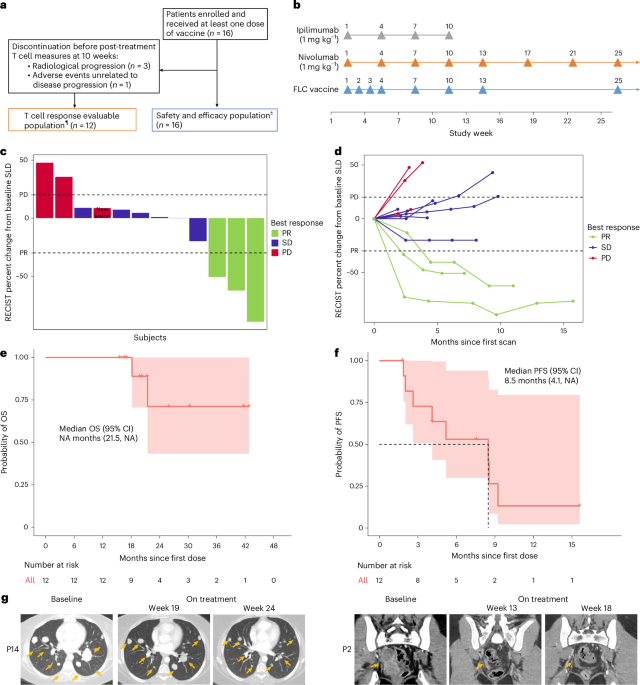
A therapeutic peptide vaccine for fibrolamellar hepatocellular carcinoma: a phase 1 trial
Nature Medicine - AI SectionExploratory3 min read

Personalized vaccine shows promise against rare, aggressive liver cancer

Key Takeaway:

A new vaccine shows promise in early trials for treating a rare liver cancer, potentially enhancing outcomes when used with current immune therapies.

Researchers investigated a new therapeutic peptide vaccine designed to target a specific genetic driver in fibrolamellar hepatocellular carcinoma, an aggressive liver cancer. In an early-stage clinical trial, patients received the vaccine alongside two established immunotherapy drugs, nivolumab and ipilimumab. The combination therapy was well-tolerated and showed promising initial clinical activity. By training the immune system to recognize the specific molecular signature of these rare tumors, this treatment strategy could eventually offer a highly targeted, more effective option for patients facing advanced stages of this difficult disease.

What this means for you

This early research on a vaccine for a rare liver cancer is promising, but it's not yet available. It may take years before it's ready. Continue with your current care and consult your doctor for guidance.

Citation:

Nature Medicine - AI Section, 2025. Read article →

Nature Medicine - AI SectionExploratory3 min read

Targeted interventions identified to shield vulnerable groups from climate risks

Key Takeaway:

Researchers identify critical interventions to protect women, children, and adolescents from climate-related health risks, emphasizing the urgent need for climate resilience in healthcare strategies.

A study by researchers in the Nature Medicine AI Section analyzed global health databases and literature to find solutions for protecting women, children, and adolescents from climate-related health hazards. Using advanced statistical models, the team evaluated how different healthcare interventions could mitigate environmental risks. The findings highlight key, evidence-based strategies that healthcare systems can implement to build resilience, ensuring that the most vulnerable populations receive adequate protection as global temperatures and environmental instability rise.

What this means for you

This research highlights climate solutions for women's, children's, and adolescents' health. It's early-stage, so don't change your care yet. Discuss any concerns with your doctor and follow current health advice.

Citation:

Nature Medicine - AI Section, 2025. Read article →

Google News - AI in HealthcareExploratory3 min read

NVIDIA partners with top medical centers to decode the genome

Key Takeaway:

Researchers are using AI to decode the human genome, which could soon improve personalized medicine and understanding of genetic disorders.

Sheba Medical Center, Mount Sinai, and tech giant NVIDIA have launched a collaborative initiative to analyze the human genome using advanced artificial intelligence. Because the genome contains an overwhelming amount of data, traditional analysis methods often miss subtle genetic variations that influence health. By leveraging NVIDIA's massive computing power and sophisticated AI algorithms, the researchers aim to uncover these hidden genetic details. This work could soon lead to highly precise diagnostics and therapies tailored to an individual's unique genetic code.

What this means for you

"Exciting early research using AI to understand genetics better. It may take years before it's available for patient care. Continue following your doctor's advice and don't change your treatment based on this study yet."

Citation:

Google News - AI in Healthcare, 2025. Read article →

Nature Medicine - AI SectionExploratory3 min read

Cambridge study highlights gap between medical AI potential and reality

Key Takeaway:

AI in healthcare shows promise but needs better alignment with clinical needs to truly improve patient care, according to a University of Cambridge study.

University of Cambridge researchers conducted a comprehensive analysis of artificial intelligence in medicine, revealing a significant gap between the theoretical promise of AI and its actual value in real-world clinics. Despite rapid technological advancements, many AI tools fail to translate into better patient care or smoother hospital operations. The study calls for a shift in how these tools are designed, urging developers to focus on actual clinical utility and collaborate closely with healthcare professionals to ensure the technology delivers practical, tangible benefits.

What this means for you

"Early research shows AI's potential in healthcare, but it's not yet ready for clinical use. Continue following your doctor's advice and don't change your care based on this study."

Citation:

Nature Medicine - AI Section, 2025. DOI: s41591-025-04050-6 Read article →

ArXiv - AI in Healthcare (cs.AI + q-bio)Exploratory3 min read

New language model framework aims for trustworthy depression diagnosis

Key Takeaway:

New AI tool using language models could improve depression diagnosis accuracy and trust, potentially aiding mental health care within the next few years.

Researchers have developed a new two-stage diagnostic framework called Evidence-Guided Diagnostic Reasoning to make AI-assisted mental health evaluations more transparent. While large language models show potential in medicine, subjective fields like depression diagnosis require high accuracy and clear reasoning to gain clinician trust. This new system guides the AI to generate structured, step-by-step diagnostic outputs that align directly with established clinical standards. By making the AI's decision-making process easy to audit, the framework helps doctors feel more confident using automated tools to support mental health diagnoses.

What this means for you

This research is promising but still in early stages. It may take years before it's available. Continue following your current treatment plan and consult your doctor for any concerns about your depression care.

Citation:

ArXiv, 2025. arXiv: 2511.17947 Read article →

ArXiv - Quantitative BiologyExploratory3 min read

Smart AI model improves diagnosis of challenging skin tumors

Key Takeaway:

A new AI model improves spitzoid tumor diagnosis using partial DNA data, potentially reducing misdiagnosis and optimizing treatment plans for patients.

Distinguishing benign spitzoid tumors from malignant melanomas is notoriously difficult because they look highly similar under a microscope. To solve this, researchers developed a specialized artificial intelligence model that analyzes DNA methylation, a type of chemical signature on DNA. Because real-world genetic samples often have missing or incomplete data, the team built a masked autoencoder model that can make highly accurate classifications even with partial information. This robust AI approach helps pathologists reliably identify these tumors, ensuring patients receive the correct level of care.

What this means for you

This research is promising but not yet available for clinical use. It's important to continue following your doctor's current recommendations and discuss any concerns about spitzoid tumors with them.

Citation:

ArXiv, 2025. arXiv: 2511.19535 Read article →

Mental health AI breaking through to core operations in 2026
Healthcare IT NewsExploratory3 min read

Mental health AI poised for core operational breakthrough by 2026

Key Takeaway:

By 2026, artificial intelligence is expected to significantly improve the efficiency of mental health care systems, addressing the growing need for innovative treatment solutions.

Experts from Iris Telehealth analyzed current pilot programs using artificial intelligence in behavioral health settings. Based on their findings, they predict that AI will transition from isolated trial projects to core clinical operations by the year 2026. This shift is expected to dramatically streamline administrative and clinical workflows, helping clinics manage high patient demand and limited resources. By automating routine tasks and optimizing care coordination, this operational breakthrough could make mental health services far more accessible and efficient.

What this means for you

"Exciting AI research in mental health, but not available until 2026. Keep following your current treatment plan and consult your doctor for advice tailored to your needs."

Citation:

Healthcare IT News, 2025. Read article →

What’s next for AlphaFold: A conversation with a Google DeepMind Nobel laureate
MIT Technology Review - AIExploratory3 min read

DeepMind's AlphaFold continues to reshape drug discovery and biology

Key Takeaway:

AlphaFold, an AI tool by Google DeepMind, has greatly improved protein structure predictions, aiding drug development and disease research, with ongoing advancements expected to enhance healthcare applications.

Google DeepMind researchers, including Nobel laureate John Jumper, discussed the future trajectory of AlphaFold, their groundbreaking AI model that predicts three-dimensional protein structures from simple genetic sequences. Historically, mapping these structures required years of difficult laboratory work. AlphaFold uses deep learning trained on massive biological datasets to predict these shapes in minutes. Ongoing developments aim to make the tool even more precise, accelerating the discovery of new drugs and deepening our understanding of complex cellular mechanisms.

What this means for you

"Exciting AI research could improve future treatments, but it's still in early stages. It may take years to be available. Please continue with your current care and consult your doctor for any concerns."

Citation:

MIT Technology Review - AI, 2025. Read article →

Top Smart Algorithms In Healthcare
The Medical FuturistExploratory3 min read

Smart algorithms are quietly transforming modern clinical workflows

Key Takeaway:

Smart algorithms are currently enhancing healthcare by improving diagnostic accuracy, patient care, and disease prediction through the integration of artificial intelligence.

A comprehensive review by The Medical Futurist examined the top smart algorithms currently making waves in the healthcare industry. The study evaluated how these artificial intelligence tools perform across various medical specialties, focusing on their ability to predict disease, assist in patient care, and improve diagnostic accuracy. By integrating these smart algorithms into daily routines, hospital systems can achieve greater operational efficiency while giving doctors data-driven insights to make safer, faster treatment decisions for their patients.

What this means for you

Exciting research on AI in healthcare, but it's still early. It may take years before it's available. Continue with your current care plan and discuss any questions with your doctor.

Citation:

The Medical Futurist, 2025. Read article →

New to reading medical AI research? Learn how to interpret these studies →