Mednosis LogoMednosis
May 29, 2026

Clinical Innovation: Week of May 29, 2026

8 research items

Clinical Innovation: Week of May 29, 2026
Safety Alert
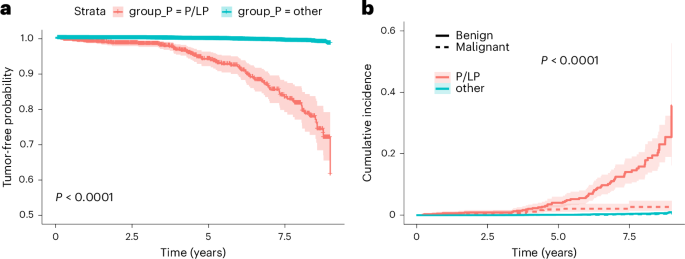
Pathogenic germline variants identify elevated cancer risk in pediatric patients referred for genetic testing
Nature Medicine - AI SectionPromising2 min read

Genetic testing predicts future tumor risks in children

Key Takeaway:

Identifying inherited genetic risk variants in children helps doctors predict future tumor risks, enabling personalized counseling and early cancer surveillance starting today.

A new study published in Nature Medicine analyzed large genomic datasets from children referred for genetic testing. Researchers discovered that identifying specific inherited genetic mutations, known as pathogenic germline variants, provides a highly reliable way to predict a child's future risk of developing tumors. By tracking these genetic markers alongside long-term patient outcomes, the study establishes a clear link between these specific genes and elevated cancer risks. This breakthrough provides doctors with a solid scientific foundation to design personalized cancer monitoring and early intervention plans, potentially catching tumors at their earliest, most treatable stages.

What this means for you

This study shows that genetic testing can identify children at higher risk for future tumors. If your child had genetic testing, discuss these findings with your doctor before changing any medical plans.

Citation:

Nature Medicine - AI Section, 2026. DOI: s41591-026-04451-1 Read article →

Drug Watch
Fibroblast growth factor receptor inhibition for succinate dehydrogenase-deficient gastrointestinal stromal tumors: a phase 2 trial
Nature Medicine - AI SectionPromising2 min read

New drug targets rare, drug-resistant stomach cancer

Key Takeaway:

A phase 2 trial shows the drug rogaratinib targets a specific genetic pathway to successfully treat a rare, drug-resistant form of gastrointestinal stomach cancer.

A multicenter phase 2 clinical trial evaluated a new drug called rogaratinib for patients with a rare subtype of gastrointestinal stromal tumor. This specific cancer is notoriously difficult to treat because it resists the standard drugs used for other stomach tumors. Rogaratinib works by blocking a specific cellular pathway to stop the cancer from growing. The trial results showed encouraging clinical effectiveness, proving that targeting this specific genetic pathway can successfully treat this stubborn form of cancer and offering patients a much-needed new treatment option.

What this means for you

This early-stage study shows a new drug, rogaratinib, may help treat a rare stomach cancer. It is not yet widely available, and patients should not change their current treatment plans.

Citation:

Nature Medicine - AI Section, 2026. DOI: s41591-026-04376-9 Read article →

Google News - AI in HealthcarePromising2 min read

New guidelines released for safe hospital AI adoption

Key Takeaway:

The Coalition for Health AI has released new governance playbooks to help healthcare organizations safely and responsibly adopt artificial intelligence technologies starting now.

The Coalition for Health AI has released new governance playbooks to help healthcare organizations safely and responsibly adopt artificial intelligence. As AI tools are rapidly integrated into both clinical care and administrative tasks, hospitals have lacked a unified framework to manage them. These new playbooks offer actionable best practices, risk mitigation strategies, and continuous monitoring guidelines. By establishing these industry-wide standards, the coalition aims to help medical institutions deploy AI technologies without compromising patient safety, data privacy, or treatment equity.

What this means for you

A health coalition has released new guidelines to help hospitals use artificial intelligence safely. These guidelines are available now to help ensure AI tools protect patient safety and privacy.

Citation:

Google News - AI in Healthcare, 2026. Read article →

Safety Alert
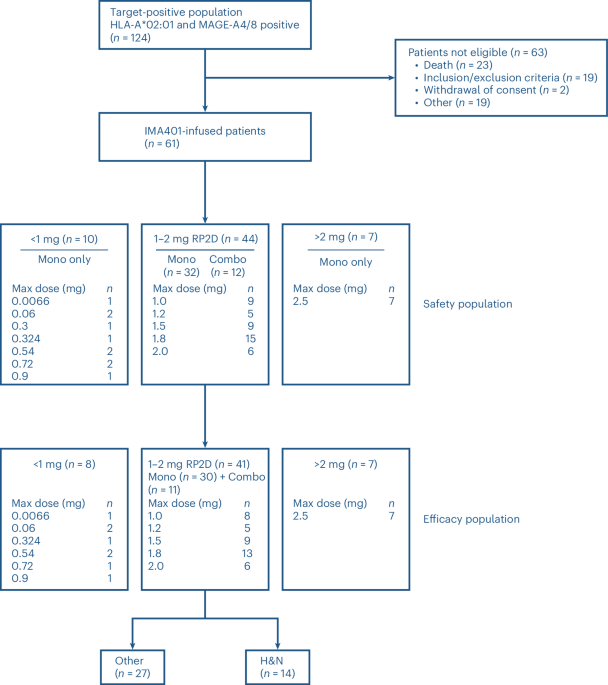
MAGE-A4/MAGE-A8-targeted TCR-based bispecific T cell engager in recurrent and/or refractory solid tumors: a phase 1 trial
Nature Medicine - AI SectionExploratory2 min read

Novel immunotherapy shows early promise for advanced cancers

Key Takeaway:

This early-stage trial shows that a novel T-cell-engaging immunotherapy, IMA401, is safe and shows early promise for treating advanced head and neck cancers and melanoma.

An early-stage clinical trial presented at the 2026 ASCO Annual Meeting evaluated a new immunotherapy drug called IMA401. This drug is a bispecific T-cell engager, designed to help the body's immune system recognize and attack specific proteins found on tumor cells. The trial tested the drug on patients with advanced solid tumors that had returned or resisted other treatments. Early results showed that the drug is safe and has already shown positive signs of shrinking tumors in patients with head and neck cancers as well as melanoma, whether used alone or with other therapies.

What this means for you

This early-stage study shows a new immune-boosting drug, IMA401, is safe and showing early promise against advanced melanoma and head and neck cancers. It is not yet widely available.

Citation:

Nature Medicine - AI Section, 2026. Read article →

Healthcare IT NewsPromising2 min read

Joint Commission launches voluntary ethical AI certification

Key Takeaway:

The Joint Commission's new voluntary certification helps healthcare organizations safely and ethically deploy artificial intelligence, focusing on institutional governance rather than certifying individual software tools.

The Joint Commission has introduced a new voluntary certification program called "Responsible Use of AI in Healthcare." Instead of testing and certifying individual AI algorithms or software products, this program evaluates the hospital's overall organizational governance and oversight. The goal is to help healthcare systems build safe, transparent, and ethical infrastructure around how they use AI. Because the certification is voluntary, hospitals are not required to participate, but it provides a clear framework for institutions looking to prove they use AI responsibly.

What this means for you

A new voluntary certification program encourages hospitals to use artificial intelligence safely and ethically. This program is available now, but patients should know it rates hospital management, not individual medical tools.

Citation:

Healthcare IT News, 2026. Read article →

Safety Alert
ArXiv - AI in Healthcare (cs.AI + q-bio)Promising3 min read

Debating AI models team up to expose medical biases

Key Takeaway:

This new protocol helps multiple AI models debate medical and scientific topics to uncover hidden biases and training blind spots, potentially lowering reasoning costs.

Researchers have introduced the Consilium Protocol, a system that allows multiple AI models to debate complex topics. Instead of treating disagreements between AI models as errors, this protocol uses those disagreements to find blind spots and biases in the models' training data. By assigning different "personas" to the models and using validation methods from finance, the system ran over 1,400 debates across various domains. The study found that structured debate, rather than the size of the AI model, drives better reasoning, meaning cheaper AI models can produce highly accurate analytical results.

What this means for you

Researchers are using a new debate method to make AI systems more reliable and less biased. This technology is in early development and should not be used for medical advice.

Citation:

ArXiv, 2026. arXiv: 2606.00005 Read article →

Guideline Update
ArXiv - Quantitative BiologyExploratory2 min read

New math theory explains how brains and AI learn

Key Takeaway:

This new mathematical framework explains how brain-like systems organize memory and reasoning, which could eventually help design more adaptive, human-like medical artificial intelligence.

A new theoretical study has introduced "cognitive field theory," a mathematical framework designed to unify how humans and machines learn, remember, and reason. Currently, different scientific fields use separate rules to describe biological brains and artificial intelligence. This new theory uses complex equations to show how memory and reasoning naturally organize themselves within a high-dimensional mental space. By explaining how minds adapt and retain information over time, this framework could eventually help engineers design advanced medical AI that thinks and learns more like a human doctor.

What this means for you

This early research proposes a new mathematical theory on how the brain and AI learn. It does not affect current medical treatments or patient care.

Citation:

ArXiv, 2026. arXiv: 2601.10221 Read article →

Guideline Update
Rehumanizing global health care with agentic AI
MIT Technology Review - AIExploratory2 min read

Can "agentic AI" save healthcare from global burnout?

Key Takeaway:

Agentic AI aims to reduce clinician burnout and improve global care access by automating administrative tasks, though widespread clinical implementation timelines remain undefined.

Global healthcare systems are facing severe strain from underfunding, staff shortages, and an aging population. This analysis looks at how "agentic AI"—AI systems designed to independently perform complex tasks—could help. The technology could ease the burden on stressed medical staff by automating tedious administrative work and improving patient access to care. However, while the potential to reduce clinician burnout is significant, the actual timeline for when these advanced AI agents will be widely used in real-world clinics remains undefined.

What this means for you

Global healthcare faces shortages, and researchers hope AI can help free up doctors' time. This technology is still in early development, so your current care remains unchanged.

Citation:

MIT Technology Review - AI, 2026. Read article →

New to reading medical AI research? Learn how to interpret these studies →