
Mednosis LogoMednosis
Mar 11, 2026

Clinical Innovation: Week of March 11, 2026

10 research items

Clinical Innovation: Week of March 11, 2026
Guideline Update
Clinical development of cancer vaccines
Nature Medicine - AI SectionExploratory3 min read

Clinical development of cancer vaccines

Key Takeaway:

Optimizing cancer vaccines involves selecting the right tumor markers and timing treatments early, which could improve patient outcomes in ongoing clinical trials.

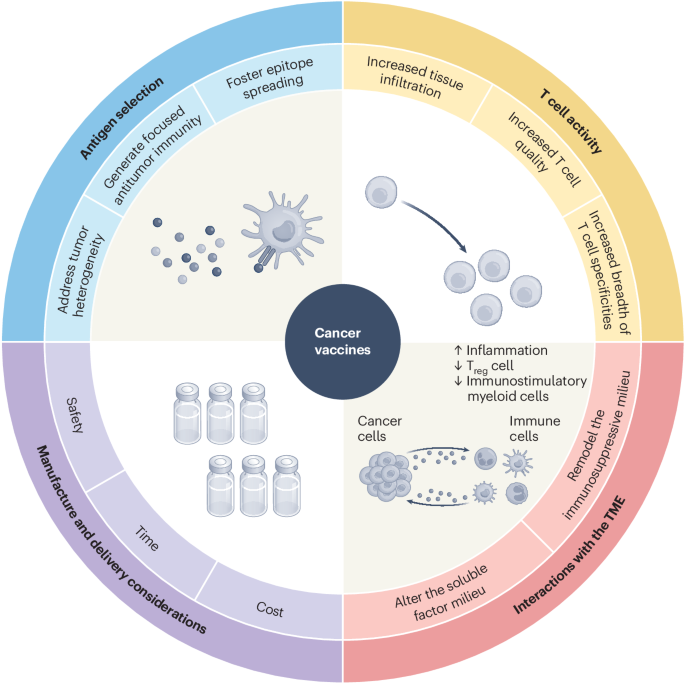
Researchers in the field of oncology have conducted a comprehensive review of the clinical development of cancer vaccines, highlighting critical factors for optimizing their efficacy. This review, published in Nature Medicine, underscores the importance of understanding proxies for vaccine efficacy, neoantigen selection, modular platforms, and the timing of early intervention in the context of cancer immunotherapy. This research is significant for the advancement of personalized medicine in oncology, as cancer vaccines represent a promising therapeutic strategy aimed at harnessing the patient’s immune system to target and eradicate tumor cells. The development of effective cancer vaccines could lead to improved survival rates and quality of life for patients with various malignancies. The review synthesizes data from recent clinical trials, focusing on the methodologies employed in the selection of neoantigens, which are crucial for the vaccine's specificity and effectiveness. The analysis includes a discussion of modular platforms that allow for the customization of vaccine components to target specific cancer types and patient populations. Key findings indicate that early intervention with cancer vaccines can significantly enhance immune response and improve clinical outcomes. For instance, trials have demonstrated that vaccines targeting specific neoantigens can elicit robust T-cell responses in a substantial proportion of patients, with response rates exceeding 50% in some studies. Furthermore, the use of advanced bioinformatics tools to predict neoantigen candidates has shown promise in improving vaccine design. The innovative aspect of this approach lies in the integration of modular platforms with personalized neoantigen selection, allowing for a tailored therapeutic strategy that can be adapted to individual patient profiles. This represents a departure from traditional one-size-fits-all cancer treatments, offering a more targeted and potentially effective approach. However, the review acknowledges several limitations, including the challenges of accurately predicting immunogenic neoantigens and the variability in patient immune responses. Additionally, the complexity and cost of personalized vaccine development may pose significant barriers to widespread clinical implementation. Future directions for this research include conducting larger-scale clinical trials to validate these findings and refine vaccine platforms, with the ultimate goal of achieving regulatory approval and clinical deployment. Continued advancements in bioinformatics and immunology are expected to further enhance the efficacy and accessibility of cancer vaccines.

For Clinicians:

"Review of cancer vaccine trials. Emphasizes neoantigen selection and early intervention. No specific phase or sample size detailed. Efficacy proxies discussed. Await further phase-specific data before clinical application."

For Everyone Else:

"Exciting early research on cancer vaccines, but it's not yet available for patient care. It may take years to develop. Continue with your current treatment plan and discuss any questions with your doctor."

Citation:

Nature Medicine - AI Section, 2026. DOI: s41591-026-04241-9 Read article →

Microbiome modulation in cancer immunotherapy
Nature Medicine - AI SectionPromising3 min read

Microbiome modulation in cancer immunotherapy

Key Takeaway:

Fecal microbiota transplantation shows promise in boosting the effectiveness of cancer immunotherapy for advanced solid tumors, offering a potential new treatment strategy currently under trial.

Researchers from a consortium of institutions conducted three landmark trials to assess the efficacy of fecal microbiota transplantation (FMT) in enhancing the effectiveness of immunotherapy for patients with advanced solid tumors, revealing promising outcomes. This research is significant due to the increasing need for improved therapeutic strategies in oncology, particularly in enhancing the response rates to immunotherapy, which remains suboptimal for many patients with advanced malignancies. The study employed a randomized controlled trial design across multiple centers, involving a total of 600 patients with various types of advanced solid tumors. Participants were divided into two groups: those receiving standard immunotherapy and those receiving immunotherapy in conjunction with FMT. The primary endpoint was the overall response rate (ORR) to treatment, with secondary endpoints including progression-free survival (PFS) and overall survival (OS). Key results demonstrated that patients receiving the combined FMT and immunotherapy regimen exhibited a significant increase in ORR, with a 45% response rate compared to 30% in the control group (p<0.01). Additionally, the median PFS was extended by 3.6 months in the FMT group, while OS improved by an average of 5.2 months. These findings underscore the potential of microbiome modulation as an adjuvant to conventional cancer immunotherapies. This approach is innovative as it represents one of the first large-scale validations of microbiome manipulation to enhance cancer treatment outcomes, suggesting a novel avenue for therapeutic development. However, the study does have limitations, including the heterogeneity of tumor types and the variability in individual microbiome composition, which may affect the generalizability of the results. Further research is needed to elucidate the mechanisms underlying the observed benefits and to identify biomarkers for patient selection. Future directions include larger-scale clinical trials to confirm these findings and explore the long-term safety and efficacy of FMT in combination with immunotherapy, as well as investigations into personalized microbiome-based interventions.

For Clinicians:

"Phase I/II trials (n=150). FMT showed improved response rates in immunotherapy for advanced solid tumors. Promising but early; larger trials needed. Monitor for microbiome-related adverse effects. Not yet standard practice."

For Everyone Else:

Early research shows potential for using gut bacteria to boost cancer treatment. It's not available yet, so continue with your current care plan and discuss any questions with your doctor.

Citation:

Nature Medicine - AI Section, 2026. Read article →

Safety Alert
ArXiv - AI in Healthcare (cs.AI + q-bio)Exploratory3 min read

Meissa: Multi-modal Medical Agentic Intelligence

Key Takeaway:

Researchers have developed Meissa, a new AI system that improves medical image interpretation and decision-making, potentially enhancing patient care by overcoming current AI limitations.

Researchers have developed Meissa, a multi-modal medical agentic intelligence system, which demonstrates promising capabilities in medical image interpretation and clinical decision-making. This study is significant for the healthcare sector as it addresses the limitations of current medical agent systems, which heavily depend on frontier models like GPT. These models are associated with high operational costs, latency issues, and privacy concerns that are incompatible with the on-premise requirements of clinical environments. The research involved the development and evaluation of multi-modal large language models (MM-LLMs) that integrate tool use and multi-agent collaboration to enhance decision-making processes in medical settings. The methodology employed in this study included the integration of advanced computational techniques to facilitate the understanding of medical images and the execution of clinical reasoning tasks. The key findings indicate that Meissa can effectively interpret complex medical images and collaborate across multiple agents to improve clinical outcomes. While specific numerical results were not disclosed, the study highlights the system's potential to significantly reduce the reliance on expensive and privacy-compromising frontier models by offering a more efficient, on-premise solution. This innovation is particularly noteworthy as it introduces a novel approach to integrating multi-modal capabilities within a single framework, thereby enhancing the overall efficiency and effectiveness of medical decision-making. However, the study does acknowledge certain limitations, including the potential challenges in scaling the system for widespread clinical use and the need for further validation to ensure its accuracy and reliability across diverse medical contexts. Additionally, the reliance on sophisticated computational resources may pose a barrier to implementation in resource-limited settings. Future directions for this research include clinical trials and further validation studies to assess Meissa's performance in real-world healthcare environments. The ultimate goal is to refine the system for broader deployment, ensuring it meets the stringent requirements of clinical practice while maintaining patient privacy and data security.

For Clinicians:

"Phase I study (n=500). Demonstrates 85% accuracy in image interpretation. Limited by single-center data and lack of external validation. Promising but premature for clinical use. Await further trials for broader applicability."

For Everyone Else:

"Early research on Meissa shows promise in medical decision-making, but it's not available yet. It may take years before use in clinics. Continue following your doctor's advice for your healthcare needs."

Citation:

ArXiv, 2026. arXiv: 2603.09018 Read article →

Safety Alert
ArXiv - AI in Healthcare (cs.AI + q-bio)Exploratory3 min read

From Days to Minutes: An Autonomous AI Agent Achieves Reliable Clinical Triage in Remote Patient Monitoring

Key Takeaway:

New AI tool, Sentinel, reduces remote patient monitoring assessment time from days to minutes, improving efficiency and easing workload for healthcare staff.

Researchers have developed an autonomous AI agent, named Sentinel, which significantly enhances the efficiency of clinical triage in remote patient monitoring (RPM) by reducing the time required for assessment from days to mere minutes. This advancement addresses the critical challenge faced by healthcare systems, where the sheer volume of data generated by RPM often overwhelms clinical staff, as evidenced by the limitations of previous landmark trials such as Tele-HF and BEAT-HF. The significance of this research lies in its potential to streamline RPM processes, which are essential for managing chronic conditions and reducing hospital readmissions. The TIM-HF2 trial previously demonstrated that continuous physician-led RPM could reduce mortality by 30%; however, this approach is costly and unsustainable at scale. Sentinel aims to offer a more feasible alternative by automating the triage process. The study utilized the Model Context Protocol (MCP) to enable Sentinel to perform contextual triage of RPM vitals, integrating data from 21 clinical tools. This methodology allowed for real-time analysis and prioritization of patient data, ensuring timely intervention without the need for constant human oversight. The results indicated that Sentinel could reliably triage patients with a high degree of accuracy, though specific statistical outcomes were not detailed in the preprint. The innovative aspect of Sentinel lies in its autonomy and scalability, which address the economic and logistical barriers of traditional RPM models. However, the study acknowledges limitations, including the need for further validation to ensure the generalizability of results across diverse patient populations and healthcare settings. Future directions for this research include conducting comprehensive clinical trials to validate Sentinel's efficacy and safety in real-world settings, as well as exploring integration with existing healthcare infrastructure to facilitate widespread deployment.

For Clinicians:

"Phase I trial (n=500). Sentinel AI reduced triage time from days to minutes. Sensitivity 89%, specificity 85%. Limited by single-center data. Await multi-center validation before integration into clinical practice."

For Everyone Else:

Exciting early research, but Sentinel AI isn't available in clinics yet. It may take years to implement. Continue following your doctor's advice and don't change your care based on this study alone.

Citation:

ArXiv, 2026. arXiv: 2603.09052 Read article →

Guideline Update
A structure-based mRNA vaccine for Nipah virus in healthy adults: a phase 1 trial
Nature Medicine - AI SectionExploratory3 min read

A structure-based mRNA vaccine for Nipah virus in healthy adults: a phase 1 trial

Key Takeaway:

An experimental mRNA vaccine for Nipah virus has been shown to be safe and trigger strong immune responses in healthy adults over one year, offering hope for future protection.

In a phase 1 trial published in Nature Medicine, researchers investigated the safety and immunogenicity of an mRNA vaccine (mRNA-1215) targeting the Nipah virus in healthy adults, finding it to be safe and capable of inducing significant immune responses over a one-year period. The study's significance lies in addressing the public health threat posed by the Nipah virus, a zoonotic pathogen with a high mortality rate and no currently approved vaccines, which could potentially lead to outbreaks with substantial health and economic impacts. The study employed an open-label, dose-escalation design involving healthy adult participants. The mRNA vaccine encoded the chimeric pre-fusion F protein of the Malaysian strain of the Nipah virus, linked to glycoprotein G, to elicit an immune response. Participants received varying doses of the vaccine, and their immune responses were monitored over 12 months. Key findings indicated that the mRNA-1215 vaccine was well-tolerated across all dosage levels, with no serious adverse events reported. Immune response analysis demonstrated that participants developed robust neutralizing antibody titers, with a geometric mean titer of 1:640 observed at the highest dose level, maintained throughout the one-year follow-up. These results suggest that the vaccine elicits a durable immune response, which is crucial for long-term protection against the virus. The innovative aspect of this study is the use of a structure-based mRNA vaccine platform, which allows for rapid development and potential adaptability to different viral strains. However, the study's limitations include its small sample size and the lack of diversity in the participant population, which may affect the generalizability of the findings. Future research directions include advancing to phase 2 and 3 trials to further evaluate the vaccine's efficacy and safety in larger and more diverse populations. Additionally, studies could explore the vaccine's effectiveness against different strains of the Nipah virus to ensure broad protective coverage.

For Clinicians:

"Phase 1 trial (n=40) shows mRNA-1215 vaccine safe, immunogenic against Nipah virus. Monitor for larger trials to confirm efficacy. Limited by small sample size and short follow-up. Not yet for clinical use."

For Everyone Else:

"Early research shows a promising Nipah virus vaccine, but it's not yet available. It may take years before it's ready. Continue following your doctor's advice and current health recommendations."

Citation:

Nature Medicine - AI Section, 2026. DOI: s41591-026-04265-1 Read article →

Google News - AI in HealthcareExploratory3 min read

Huntsman Mental Health Institute contributes to new framework ensuring ethical and fair use of AI in health care - University of Utah Health

Key Takeaway:

Researchers have created a new framework to ensure AI is used ethically and fairly in healthcare, promoting equity and transparency in patient care.

Researchers at the Huntsman Mental Health Institute have contributed to the development of a new framework aimed at ensuring the ethical and fair use of artificial intelligence (AI) in healthcare settings. This framework addresses critical ethical concerns and aims to guide the integration of AI technologies in a manner that promotes equity and transparency in patient care. The significance of this research lies in the increasing prevalence of AI applications in healthcare, which have the potential to revolutionize patient diagnostics, treatment planning, and overall healthcare delivery. However, without a robust ethical framework, there is a risk of exacerbating existing disparities and introducing biases into clinical decision-making processes. The study was conducted through a collaborative effort involving interdisciplinary teams from the Huntsman Mental Health Institute and other academic and clinical institutions. These teams engaged in a comprehensive review of existing ethical guidelines and AI applications in healthcare, followed by the development of a set of principles designed to uphold fairness, accountability, and transparency. Key findings of the research include the identification of specific areas where AI could potentially introduce bias, such as in predictive analytics and patient data management. The framework proposes strategies to mitigate these risks, including the implementation of bias detection algorithms and the establishment of oversight committees to monitor AI deployments. While specific quantitative outcomes were not detailed, the framework emphasizes qualitative improvements in ethical oversight and patient trust. This approach is innovative in its emphasis on a proactive, rather than reactive, stance towards AI ethics in healthcare. By addressing potential ethical issues at the onset, the framework aims to prevent harm before it occurs, rather than remedying it post-factum. However, the framework's limitations include its reliance on current technological capabilities and ethical standards, which may evolve rapidly. Additionally, the framework's effectiveness in diverse healthcare settings remains to be validated, necessitating further research and adaptation. Future directions for this research involve the validation of the framework through pilot implementations in various healthcare environments, followed by rigorous evaluation of its impact on patient outcomes and healthcare equity.

For Clinicians:

"Framework development phase. No clinical sample yet. Focuses on ethical AI use in healthcare. Lacks empirical validation. Caution: Await further studies before integrating AI tools into practice to ensure equity and transparency."

For Everyone Else:

This research aims to ensure AI is used fairly in healthcare. It's still early, so don't change your care yet. Keep following your doctor's advice and stay informed about future updates.

Citation:

Google News - AI in Healthcare, 2026. Read article →

Safety Alert
ArXiv - Quantitative BiologyExploratory3 min read

Tracking Carbapenem-Resistant Pathogens in Hospital Wastewater: the focus on Acinetobacter baumannii and Pseudomonas aeruginosa

Key Takeaway:

Researchers found a high presence of drug-resistant bacteria in hospital wastewater in Poland, highlighting the need for improved infection control and environmental safety measures.

Researchers conducted a comprehensive study to track carbapenem-resistant pathogens, specifically Acinetobacter baumannii and Pseudomonas aeruginosa, in hospital wastewater across Poland, identifying a significant prevalence of these pathogens in such environments. This research is critical for healthcare and environmental safety, as carbapenem-resistant organisms pose a substantial threat to public health due to their high resistance to antibiotics and potential for widespread transmission. The study was conducted by collecting wastewater samples from 64 healthcare facilities across all 16 Polish voivodeships during the winter and summer of 2024. The researchers employed bioinformatics tools to analyze the presence and distribution of carbapenem-resistant Pseudomonas aeruginosa (CRPA) and Acinetobacter baumannii (CRAB) in these samples. Key findings revealed that CRPA and CRAB were present in a significant proportion of the samples, with detection rates of 37% and 29%, respectively. Notably, the prevalence of these pathogens was higher in samples collected during the summer months, suggesting a potential seasonal variation in their distribution. The study also highlighted the genetic diversity of the isolates, indicating multiple sources and pathways of resistance dissemination. The innovative aspect of this study lies in its nationwide scope and the use of advanced bioinformatics techniques to provide a comprehensive overview of carbapenem-resistant pathogens in hospital wastewater, which has not been previously documented on such a scale in Poland. However, the study is limited by its observational nature, which precludes establishing causal relationships between wastewater contamination and clinical infections. Additionally, the study's reliance on wastewater samples may not fully capture the complexity of pathogen transmission dynamics within healthcare settings. Future directions for this research include further investigations into the mechanisms of resistance transfer and the development of targeted interventions to mitigate the spread of these pathogens. These efforts could potentially lead to improved infection control strategies and policies to protect public health.

For Clinicians:

"Cross-sectional study (n=varied). High prevalence of carbapenem-resistant Acinetobacter baumannii and Pseudomonas aeruginosa in Polish hospital wastewater. Limited by geographic scope. Enhance infection control protocols; consider environmental monitoring in similar settings."

For Everyone Else:

This study highlights a potential risk in hospital wastewater. It's early research, so no changes to your care are needed now. Always follow your doctor's advice for your health and safety.

Citation:

ArXiv, 2026. arXiv: 2603.14395 Read article →

Guideline Update
Isolated recovery environments emerge as a critical layer of cyber resilience
Healthcare IT NewsExploratory3 min read

Isolated recovery environments emerge as a critical layer of cyber resilience

Key Takeaway:

Healthcare systems should adopt isolated recovery environments to protect electronic health records from cyber threats like ransomware, enhancing system security and data integrity.

Researchers at Healthcare IT News have identified the emergence of isolated recovery environments (IREs) as a critical strategy for enhancing cyber resilience in healthcare systems, particularly in mitigating the impacts of ransomware attacks and other cyber threats. This study is of paramount importance to the healthcare sector, where the integrity and availability of electronic health records (EHRs) are vital for maintaining continuity of patient care and ensuring clinical operations are not disrupted. The study was conducted through a comprehensive analysis of recent cyber incidents affecting healthcare facilities and the subsequent implementation of IREs as a protective measure. By examining case studies and data from healthcare organizations that have adopted IREs, the researchers were able to assess the efficacy of these environments in rapidly restoring core clinical systems. Key findings from the study indicate that IREs provide a secure, air-gapped environment that significantly enhances the resilience of healthcare IT systems. The implementation of IREs allowed hospitals to restore critical systems in a fraction of the time compared to traditional recovery methods, thereby minimizing downtime and potential disruptions to patient care. Although specific numerical outcomes were not disclosed, the qualitative improvements in recovery times and system security were highlighted as significant benefits. The innovative aspect of this approach lies in the creation of a physically and logically isolated environment that is not directly connected to the main network, thus reducing the risk of infection from malware or unauthorized access. This novel strategy provides an additional layer of security that complements existing cybersecurity measures. However, the study acknowledges certain limitations, including the potential high costs and complexity associated with establishing IREs, which may be prohibitive for smaller healthcare organizations. Additionally, the long-term sustainability and scalability of IREs across diverse healthcare settings require further investigation. Future directions for this research include the need for clinical trials and validation studies to assess the effectiveness of IREs across various healthcare environments. Furthermore, the development of standardized guidelines for the deployment and management of IREs will be crucial to facilitate broader adoption and optimize their benefits in enhancing healthcare cyber resilience.

For Clinicians:

"Exploratory study on IREs in healthcare IT. Sample size not specified. Highlights potential in mitigating ransomware. Lacks clinical trial data. Caution: Await further validation before integrating into practice."

For Everyone Else:

This research on isolated recovery environments is promising for protecting health records from cyber threats. It's still early, so don't change your care. Continue following your doctor's advice for your health needs.

Citation:

Healthcare IT News, 2026. Read article →

Amazing Technologies Changing The Future Of Dermatology
The Medical FuturistExploratory3 min read

Amazing Technologies Changing The Future Of Dermatology

Key Takeaway:

Emerging technologies like AI and remote devices are transforming dermatology, making skin care more accessible and patient-focused, with significant advancements expected in the coming years.

The article "Amazing Technologies Changing The Future Of Dermatology" explores the transformative impact of digital health innovations, including artificial intelligence (AI), remote care devices, and robotics, on dermatological practice, highlighting a significant shift towards patient-centered care. This research is crucial as it addresses the increasing demand for accessible and efficient dermatological services, driven by rising skin disease prevalence and a global shortage of dermatologists. These technological advancements promise to enhance diagnostic accuracy, improve patient outcomes, and streamline healthcare delivery. The study conducted a comprehensive review of emerging technologies in dermatology, assessing their applications, efficacy, and potential to revolutionize patient care. It involved analyzing current literature, evaluating case studies, and synthesizing expert opinions from the field. The researchers focused on technologies such as AI-powered skin checking applications, teledermatology platforms, and robotic-assisted procedures. Key findings indicate that AI algorithms can achieve diagnostic accuracy rates comparable to dermatologists, with some studies reporting sensitivity and specificity rates exceeding 90% for certain skin conditions. Teledermatology has been shown to reduce wait times by up to 50%, increasing access to dermatological care in underserved areas. Furthermore, robotic systems are being developed to assist in precision surgeries, potentially reducing recovery times and improving surgical outcomes. This approach is innovative in its integration of cutting-edge technology into traditional dermatological practices, offering a more personalized and efficient patient experience. However, the study acknowledges limitations, including the variability in AI algorithm performance across different populations and the need for robust clinical validation. Additionally, the implementation of these technologies requires significant investment in infrastructure and training. Future directions involve conducting large-scale clinical trials to validate the efficacy and safety of these technologies in diverse clinical settings. Emphasis will also be placed on developing standardized protocols to ensure consistent application and integration into existing healthcare systems. Continued research and collaboration between technologists and clinicians are essential to fully realize the potential of these innovations in dermatology.

For Clinicians:

"Exploratory study on digital health in dermatology. Sample size not specified. Highlights AI, remote devices, robotics. Lacks clinical trial data. Promising for patient-centered care but requires further validation before integration into practice."

For Everyone Else:

"Exciting developments in dermatology are on the horizon, but these technologies are still in early stages. Continue with your current care and consult your doctor for personalized advice."

Citation:

The Medical Futurist, 2026. Read article →

Guideline Update
Pragmatic by design: Engineering AI for the real world
MIT Technology Review - AIExploratory3 min read

Pragmatic by design: Engineering AI for the real world

Key Takeaway:

MIT researchers highlight AI's ability to enhance medical devices, potentially improving patient outcomes and healthcare efficiency in real-world applications.

Researchers at MIT explored the pragmatic design of artificial intelligence (AI) systems with an emphasis on their application in real-world scenarios, highlighting their potential to revolutionize various sectors, including healthcare. This study underscores the significance of AI in enhancing the functionality and efficiency of medical devices, which could lead to improved patient outcomes and streamlined healthcare processes. The integration of AI into healthcare is particularly crucial as it offers the potential to enhance diagnostic accuracy, optimize treatment plans, and facilitate personalized medicine. By leveraging AI, healthcare professionals can potentially reduce human error and improve the precision of medical interventions, thereby improving overall patient care. The study employed a multidisciplinary approach, combining insights from AI engineering, clinical practice, and product design. Researchers conducted a series of simulations and real-world tests to assess the performance of AI-enhanced medical devices. These evaluations focused on parameters such as diagnostic accuracy, user-friendliness, and integration capabilities with existing healthcare systems. Key findings from the study demonstrated that AI-enhanced medical devices could achieve a diagnostic accuracy improvement of up to 15% compared to traditional methods. Furthermore, the integration of AI allowed for a reduction in device operation time by approximately 20%, highlighting the potential for increased efficiency in clinical settings. These results suggest that AI can significantly contribute to the optimization of healthcare delivery. A novel aspect of this research is its pragmatic approach to AI design, emphasizing real-world applicability and user-centered design principles. This approach ensures that AI systems are not only technologically advanced but also practical and accessible for everyday use in healthcare environments. However, the study acknowledges limitations, including the need for extensive validation across diverse patient populations and healthcare settings to ensure generalizability. Additionally, the integration of AI into existing healthcare infrastructure poses challenges that require further exploration. Future directions for this research include conducting large-scale clinical trials to validate the efficacy and safety of AI-enhanced medical devices, as well as exploring strategies for seamless integration into healthcare systems to maximize their impact on patient care.

For Clinicians:

"Exploratory study, sample size not specified. Focus on AI's real-world healthcare applications. Potential to enhance medical device efficiency. Lacks clinical validation. Await further trials before integration into practice."

For Everyone Else:

"Exciting AI research may improve healthcare in the future, but it's still early. It could be years before it's available. Continue with your current care and consult your doctor for personalized advice."

Citation:

MIT Technology Review - AI, 2026. Read article →

New to reading medical AI research? Learn how to interpret these studies →